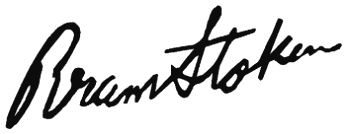
life
Biography
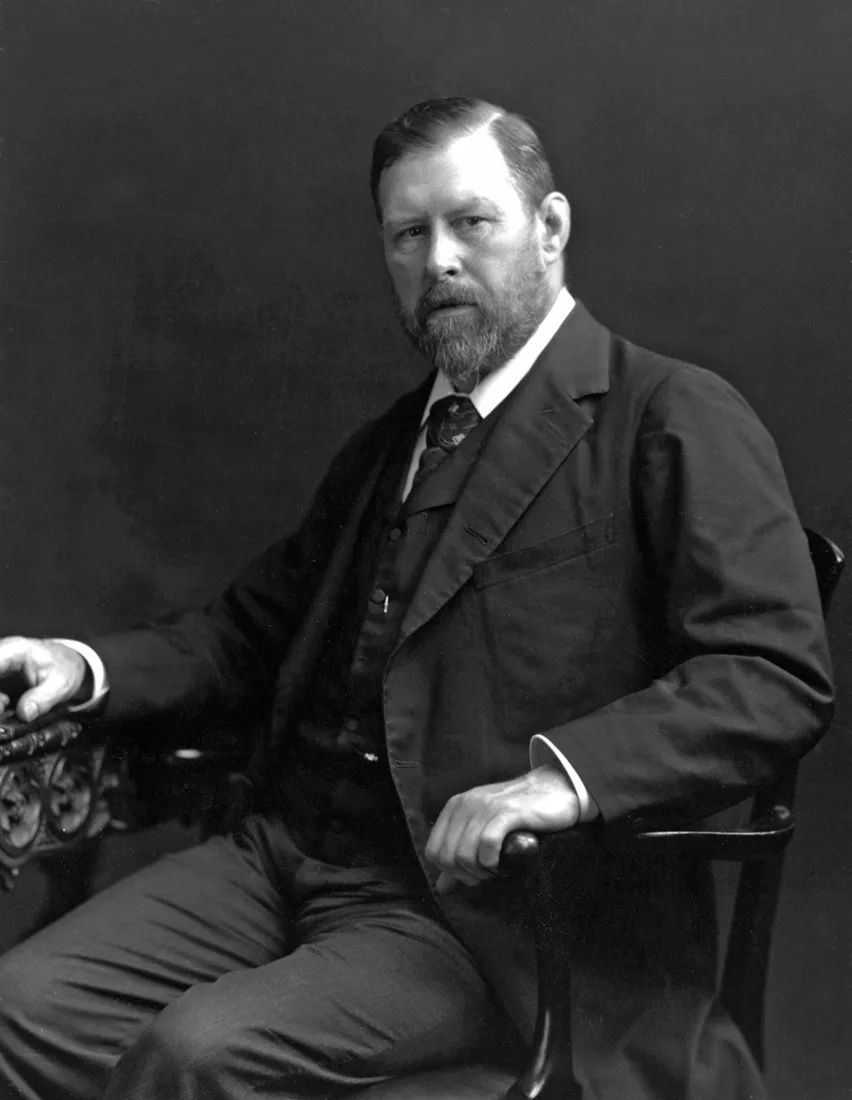
Abraham “Bram” Stoker (8 November 1847–20 April 1912) was a Dublin civil servant, critic, theatre manager and novelist, and he is most remembered today as the author of Dracula (1897). In his own lifetime, he was much better known as Sir Henry Irving’s business manager at the Lyceum Theatre in London, a post he held for 27 years. This role brought him into contact with many leading figures in London’s cultural and social life.
Meet his wife Florence, his parents Abraham and Charlotte, and Bram’s siblings and descendants — the people behind the public career.
Childhood in Clontarf
Bram was born at 15 Marino Crescent, Clontarf, then a seaside suburb north of Dublin. He was the third of seven children of Abraham Stoker (1799–1876), a civil servant in the Chief Secretary’s Office at Dublin Castle for over fifty years, and Charlotte Matilda Blake Thornley (1818–1901), who was raised in Sligo. The family moved to Artane Lodge, Dublin when he was two.

Bram’s childhood was marked by an unexplained illness, said to have kept him bedridden until about the age of seven. Treatments of the day, such as bloodletting, laudanum and other opiates, may have been used, though this is not confirmed. Some have speculated that this long seclusion and these treatments, along with the grim stories his mother told him, helped shape the imagination that later produced Dracula.
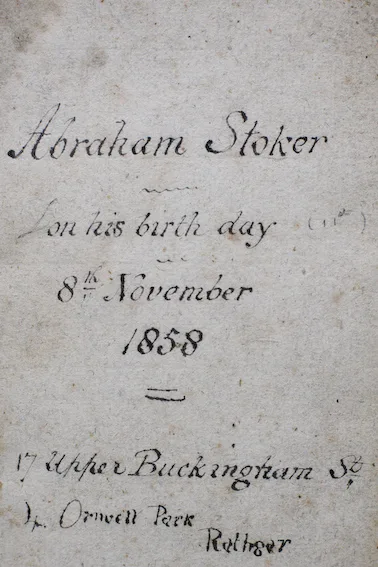
An inscribed Bible
An inscription in Bram’s Bible records his name and the date 8 November 1858 — his eleventh birthday.
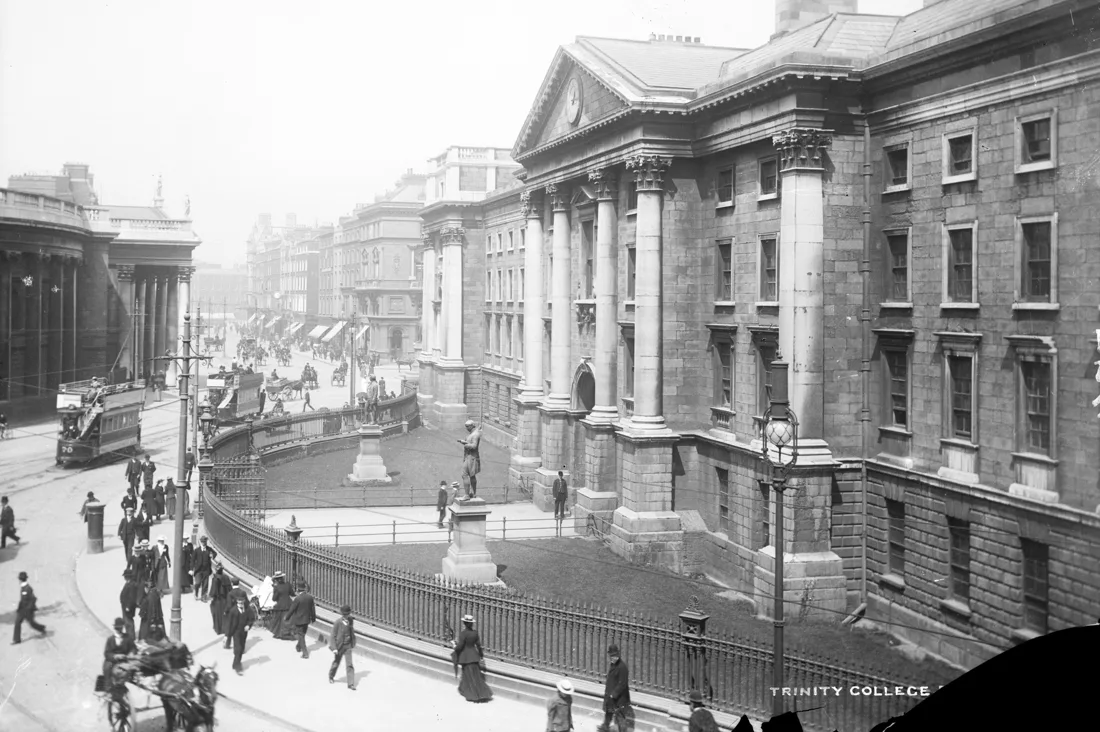
Trinity College Dublin
At Trinity College Dublin, Bram became known as an athlete and debater. College life gave him opportunities to compete, lead student societies and speak before an audience.
At six feet two inches tall, Bram was a striking figure. He was named University Athlete, competed in walking races and played rugby for Trinity College. He won a number of cups; the prize cups and trophy shown below recall this sporting side of his student life.

See the trophy tankard in detail

Bram remains the only person in Trinity’s history to have served as both Auditor of the College Historical Society and President of the University Philosophical Society. The Historical Society, founded in 1770, was the college’s debating union; the Philosophical Society was its philosophical and literary counterpart.
The Historical Society medal survives among the family keepsakes. Its two faces are shown below.
See the Historical Society medal, front and reverse


His paper “Sensationalism in Fiction and Society” considered a subject that would remain relevant to his writing; his 1872 inaugural address, “The Necessity for Political Honesty”, addressed public life. These society activities place the future novelist within Dublin’s culture of debate.
At Trinity, Bram appears to have followed the general Arts course, which covered classics, mathematics, some science and philosophical texts. He graduated with a BA in 1870. Trinity conferred his MA in 1875 without further study, as was customary at the college.
Civil servant and theatre critic
Like his father, Bram joined the civil service at Dublin Castle, rising to Inspector of Petty Sessions. His handbook The Duties of Clerks of Petty Sessions in Ireland (1879) became a standard handbook and remained in use for over fifty years. Alongside official work, he wrote theatre criticism for the Dublin Evening Mail and helped found the Dublin Sketching Club. See Early works for his early serial fiction, court handbook and fairy tales.
He also briefly edited The Irish Echo, a Dublin evening newspaper launched in November 1873. Renamed The Halfpenny Press, it ran into financial difficulties, and Bram left after about four months. His Dublin career therefore included newspaper editing as well as reviewing.
In December 1876 he gave a warm review of Henry Irving’s Hamlet at the Theatre Royal, Dublin. Irving invited him to dinner at the Shelbourne Hotel, and from that very long evening, a lifelong friendship began.
Bram recalls an introduction after a Tuesday review, supper that evening, and a further dinner on the following Sunday after his second notice. The distinction matters: an introduction and the memorable recitation after dinner need not have happened on the same date.
London and the Lyceum
In 1878 Irving took over the Lyceum Theatre in London and asked Bram to be his acting manager. Bram married Florence Anne Lemon Balcombe at St Ann’s Church, Dawson Street, Dublin on 4 December 1878, and the couple left for London within days. Their only child, Irving Noel Thornley Stoker, was born on 30 December 1879, with Henry Irving as godfather.

Bram’s work with Irving ranged from accounts and publicity to organising tours and welcoming guests. The Theatre and the Lyceum page tells the story of this demanding working life and the company around him.
Bram described his theatre post as “Acting Manager” in his 1911 application to the Royal Literary Fund.
Managing the Lyceum brought Bram into Irving’s working life, and when he wrote his memoir of Irving he drew on their years together. Some passages about Bram himself dropped out before it appeared in 1906. The earlier draft gives a fuller sense of how he understood his own part in the partnership.
Bram also stayed involved in Irish literary life while working in London. He belonged to the Irish Literary Society, founded in the city in 1892 to promote Irish writing and culture. Oscar Wilde was among its members.
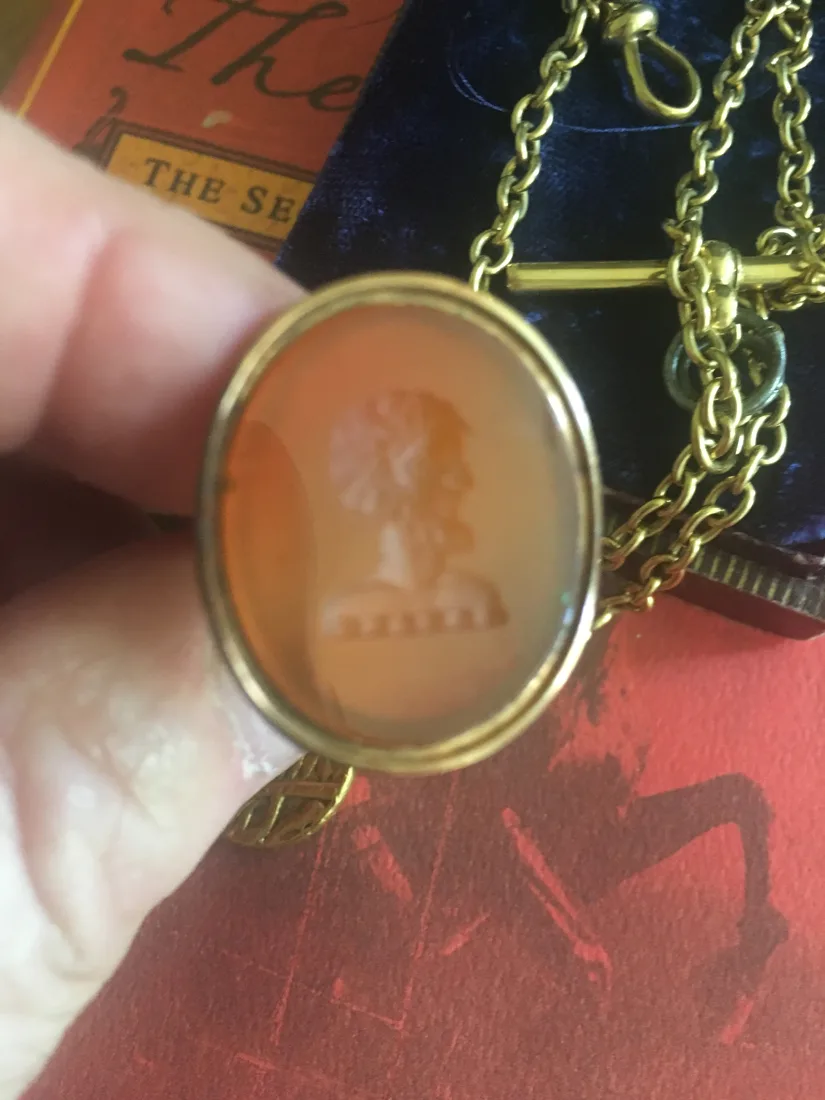
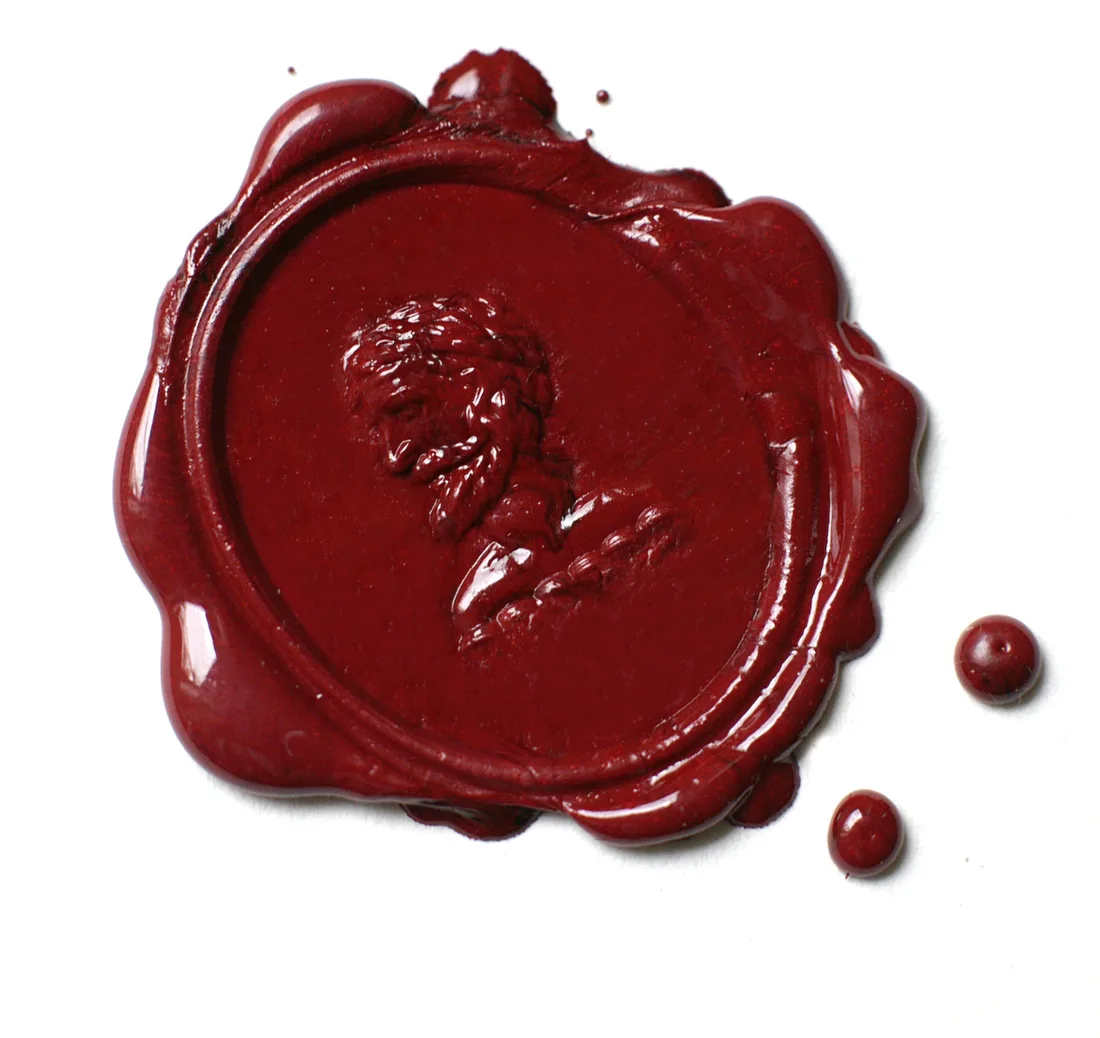
Bram’s watch fob and seal
Bram’s watch fob, keys and carnelian seal are small reminders of his daily life. The close-up and the impression in red wax show the seal’s engraved design.
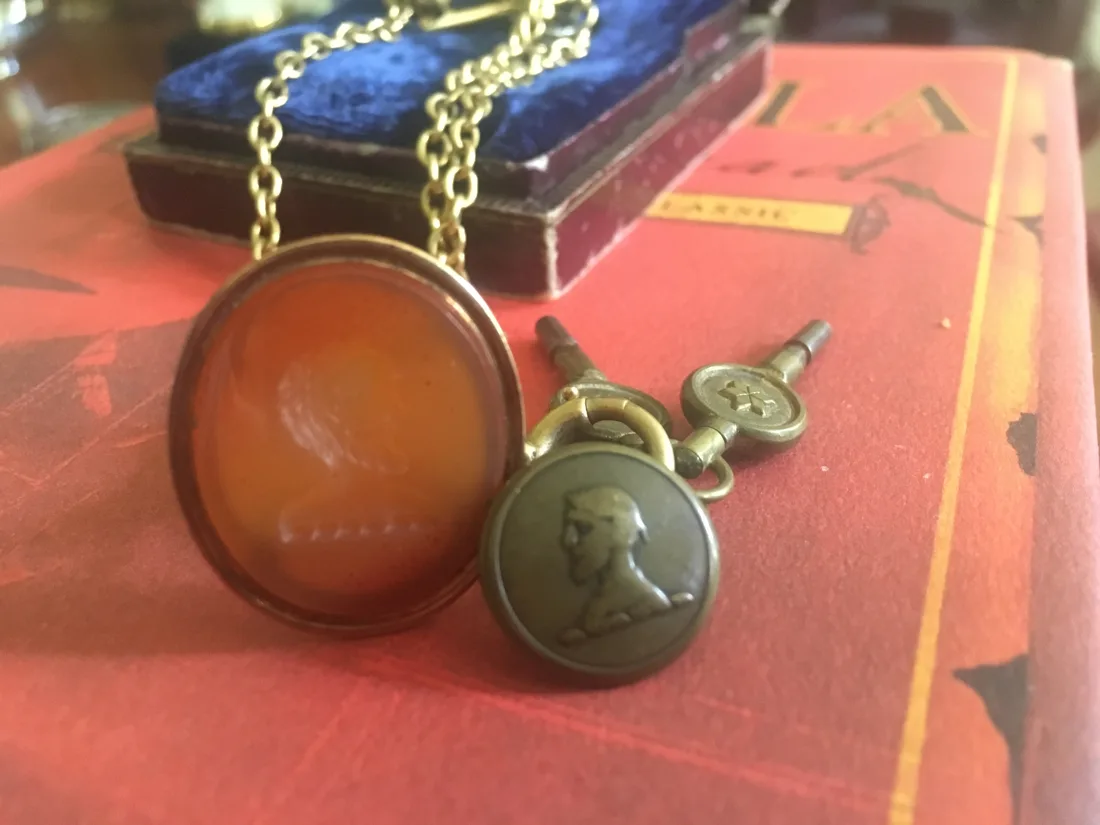
See the seal and its wax impression
Bram as a father
Bram’s work for Henry Irving often kept him away from his only child, Irving Noel Thornley Stoker, usually known as Noel. Organising eight American tours meant arranging Atlantic crossings, hotels and trains for the company, its costumes and scenery, with absences lasting months. Combined with Noel’s boarding-school education, these demands limited their time together. Noel’s grandson Richard Noel later believed that Bram nevertheless exerted considerable influence on his son. Bram also dedicated Under the Sunset, his collection of fairy tales published in 1881, to the young Noel.
Two stories offer a more intimate glimpse of their relationship. Noel remembered his father as a “red-bearded Giant” who came home in the afternoon, lay at full length on the drawing-room carpet and let his young son climb about his chest — an affectionate memory recorded in his typescript Bram Stoker, by his Son. Bram, in turn, recalled taking Noel backstage during Faust, where Irving transformed the boy’s face with a few strokes of make-up. The seven-year-old was delighted by his new appearance as Mephistopheles, and Bram remembered the transformation with evident pleasure.
A rescuer
In 1882 Bram received a Royal Humane Society bronze medal for a rescue attempt in the River Thames in London. He had jumped from a steamer into the river to help a man who had gone overboard. Attempts to revive the man failed. The episode deserves a place beside his literary achievements, and the medal is one of the objects through which his family remembers his life.


Bram’s son Noel Thornley Stoker describes the episode in his typescript recollection of his father. In Noel’s account, Bram jumped from a Thames steamboat on 14 September 1882 to recover an elderly fellow passenger. Although the man was brought aboard and taken to Bram’s home, attempts to revive him failed. Noel records that Bram received the Society’s bronze medal for his bravery.
Read Noel Thornley Stoker’s account, ending with the move around 1884
Transcribed from the supplied photograph of page 2 of “Bram Stoker, by his Son, Noel Thornley Stoker”. This extract ends before the following childhood recollections. Original wording is retained; line-break hyphenation is joined.
When they came to London, at the end of 1878, my Parents lived on the Top Floor of 7 Southampton Street, Bloomsbury. Some time before 1882, they moved to 26 Cheyne Walk, whence my Father used to journey to the Lyceum by Steamboat. On the Evening of Thursday the 14th September of that year, an elderly Fellow-Passenger, bent on Suicide, jumped off the Boat. Ignoring the strong Tide, my Father, without hesitating a moment, threw off his Coat and leapt in after him. Five minutes later, the Body had been got on board again. As Life was not apparently extinct, my Father had the man brought to his own House, but no Efforts could resuscitate him. For this Act of conspicuous Bravery, he was awarded the bronze medal of the Royal Humane Society, not being eligible for the Silver Medal, as Life had not been saved.
Henry Irving’s letter to my Father, on this occasion reads “Sunday. My dear Bram. Look out tomorrow morning. You’ll find yourself immortalised in the ‘Telegraph’, or I’m a Dutchman. It serves you right old man! H.I.” Unfortunately, the Recollection of a clammy Corpse in the Dining Room, made my mother take a Dislike to the House; and, in due course, they moved to 17 St. Leonard’s Terrace, Chelsea. This would be about 1884.
Noel’s recollection is presented as a family account. His explanation of the medal classes is his own wording.
The rescue in the newspapers. Noel also preserved Henry Irving’s teasing promise that Bram would find himself “immortalised in the ‘Telegraph’”. The illustrated notice below offers another contemporary response to the episode. It is an illustration, rather than a photograph of the rescue.
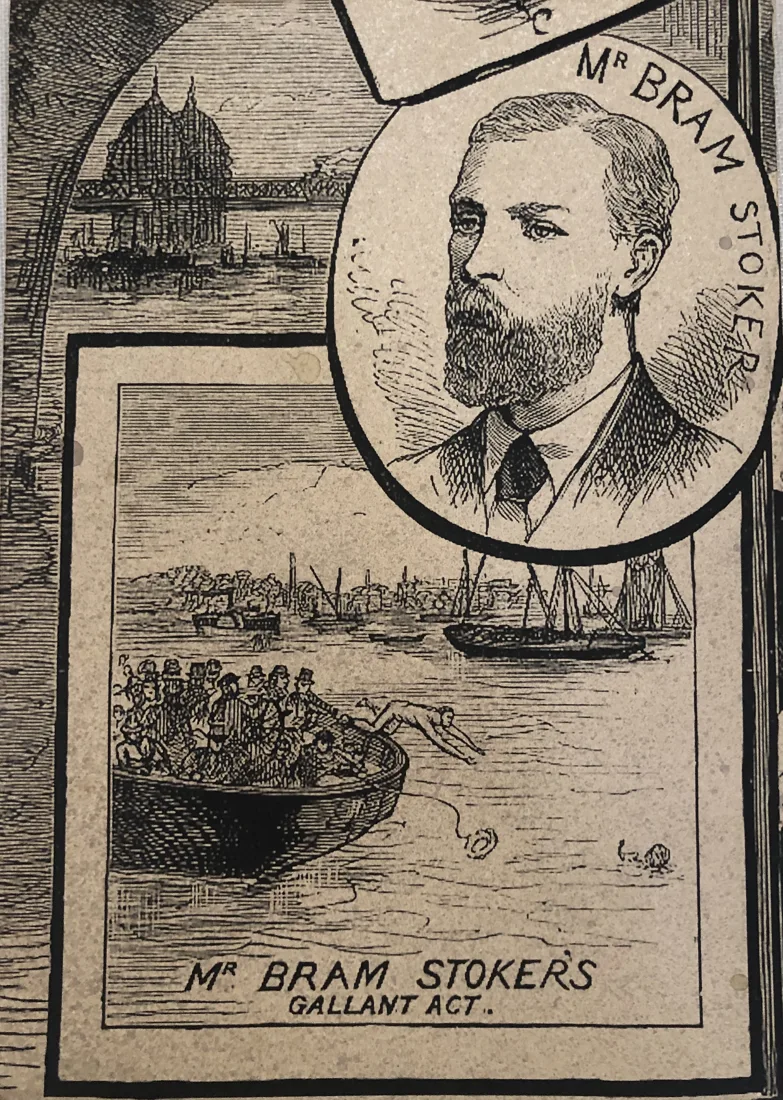
“Mr Bram Stoker’s gallant act” appeared in The Penny Illustrated Paper, 4 November 1882, page 296, as part of a feature on Royal Humane Society medal winners. See the bibliographic reference ↗
The Times report, 18 September 1882. The Royal Humane Society reproduces the contemporary inquest report in its 2012 annual report, page 23. It records Bram’s evidence that he jumped from the steamer to help the man and brought him back aboard, where attempts to revive him failed. The Society records the award of his bronze medal on 17 October 1882, case 21,808. Read the report reproduced by the Royal Humane Society ↗ (the Telegraph article Irving mentions has not been traced)
A lawyer
Bram also qualified as a barrister, joining the Inner Temple in 1886 and being called to the Bar on 30 April 1890, although he never practised. Asked why he had undertaken legal training alongside his demanding theatrical career, he joked that it was to avoid jury service. Sally Smith, a current writer and barrister, suggests other possible motives: impressing Irving, or acquiring knowledge useful in business and management. She also suggests that the professional standing of the qualification appealed to Florence. Whatever his reasons, law became another strand of a working life already spanning administration, theatre and writing. The Inner Temple library, a short walk from the Lyceum, also gave him a place to work.
Bram put his legal knowledge to work in his substantial 1890 essay “Actor-Managers”. In Personal Reminiscences of Henry Irving, he recalls spending “many, many hours” in the Inner Temple library researching the laws for it. He traced the laws governing actors’ dress, their treatment under vagrancy legislation and their permission to perform. This detailed legal and historical argument supported his defence of the system in which leading actors also ran theatres and companies. Irving contributed his own defence, very much from the actor-manager’s perspective, in the same June issue of The Nineteenth Century.
That legal knowledge also found its way into Dracula. Jonathan Harker is a solicitor, while Van Helsing describes himself as “a lawyer as well as a doctor”. Even the Count impresses Harker as someone who “would have made a wonderful solicitor”, because he anticipates every difficulty. The professional joke becomes sharper when the vampire-hunters prepare to enter Dracula’s Piccadilly house. Lord Godalming advises Harker to leave the locksmith arrangements to him and Quincey Morris: “But you are a solicitor and the Incorporated Law Society might tell you that you should have known better.”
Writing in the margins
Bram continued to write fiction and other books alongside his theatrical work, writing at home and during holidays. After his move to London, his writing included the lecture A Glimpse of America, his contribution to the collaborative novel The Fate of Fenella, and the Californian romance The Shoulder of Shasta. Dracula was published on 26 May 1897.
He had been developing Dracula since 1890, gathering reading extracts, planning characters and working out the sequence of events. His surviving working notes reveal a story shaped through research and revision. Travel books helped him imagine Transylvania, which he never visited, while his stay in Whitby supplied a harbour, cliff-top churchyard and maritime atmosphere. The typescript sent to his publisher still bore the title The Un-Dead.
The novel brings its supernatural threat into a recognisably modern world of trains, telegrams, medicine and recorded information. Its events emerge through diaries, letters, newspaper reports, a ship’s log and accounts recorded on a phonograph. Mina’s work bringing these records together helps the characters understand a danger that none can grasp alone; the reader joins them in piecing together the evidence. See Bram Stoker’s works for his other books and free reading editions, or read Dracula on this website. For reading guides, themes and classroom resources, explore Studying Dracula.
Later years
The closing years of Bram’s partnership with Irving were marked by the decline of their Lyceum enterprise. On 18 February 1898, a fire at its Southwark store destroyed scenery for forty-four plays, a loss that severely damaged Irving’s repertory. Irving handed the theatre to a syndicate in 1899 and gave his last season there in 1902. The building was then substantially rebuilt and reopened as a music hall in 1904. Bram continued to work with Irving, who died on tour in Bradford on 13 October 1905. The following year Bram published his two-volume Personal Reminiscences of Henry Irving, which was widely reviewed. He also briefly managed David Bispham’s light opera The Vicar of Wakefield.
Bram suffered a stroke in 1906. In the years after Irving’s death, journalism became an important part of his working life, including work for the Daily Telegraph and other papers. Drawing on his experience of the theatre and his wide circle of acquaintances, he wrote profiles, interviews and accounts of places he visited. His conversations with Arthur Conan Doyle and Winston Churchill appeared in the New York World in 1907, with versions in London’s Daily Chronicle in 1908. During an Irish visit in 1907 he also reported on the Irish International Exhibition in Dublin and Harland and Wolff’s Belfast shipyard, bringing an eye for organisation and practical detail to subjects beyond the stage. He continued writing books, including The Lady of the Shroud (1909), Famous Impostors (1910) and The Lair of the White Worm (1911).
As ill health limited his ability to earn, Bram applied to the Royal Literary Fund for support. In a letter dated 25 February 1911, written from 4 Durham Place, Chelsea, he described his stroke in 1906 and a further breakdown about a year before the letter. He explained that he could not be certain of returning to literary work. He said that the only work he had managed in the preceding year was to finish Famous Impostors, a book he had already begun. He expected little income from it for about a year. The Fund awarded him £100. He signed the receipt on 9 March 1911.
See Bram’s letter to the Royal Literary Fund
Bram Stoker to the Royal Literary Fund, 25 February 1911
Bram’s application form is dated 22 February 1911 and his three-page letter 25 February. The letter sets out his civil service and theatre career, his work as a writer and the effect of illness on his income. Lady Ritchie’s letter to the Fund is dated 20 February.
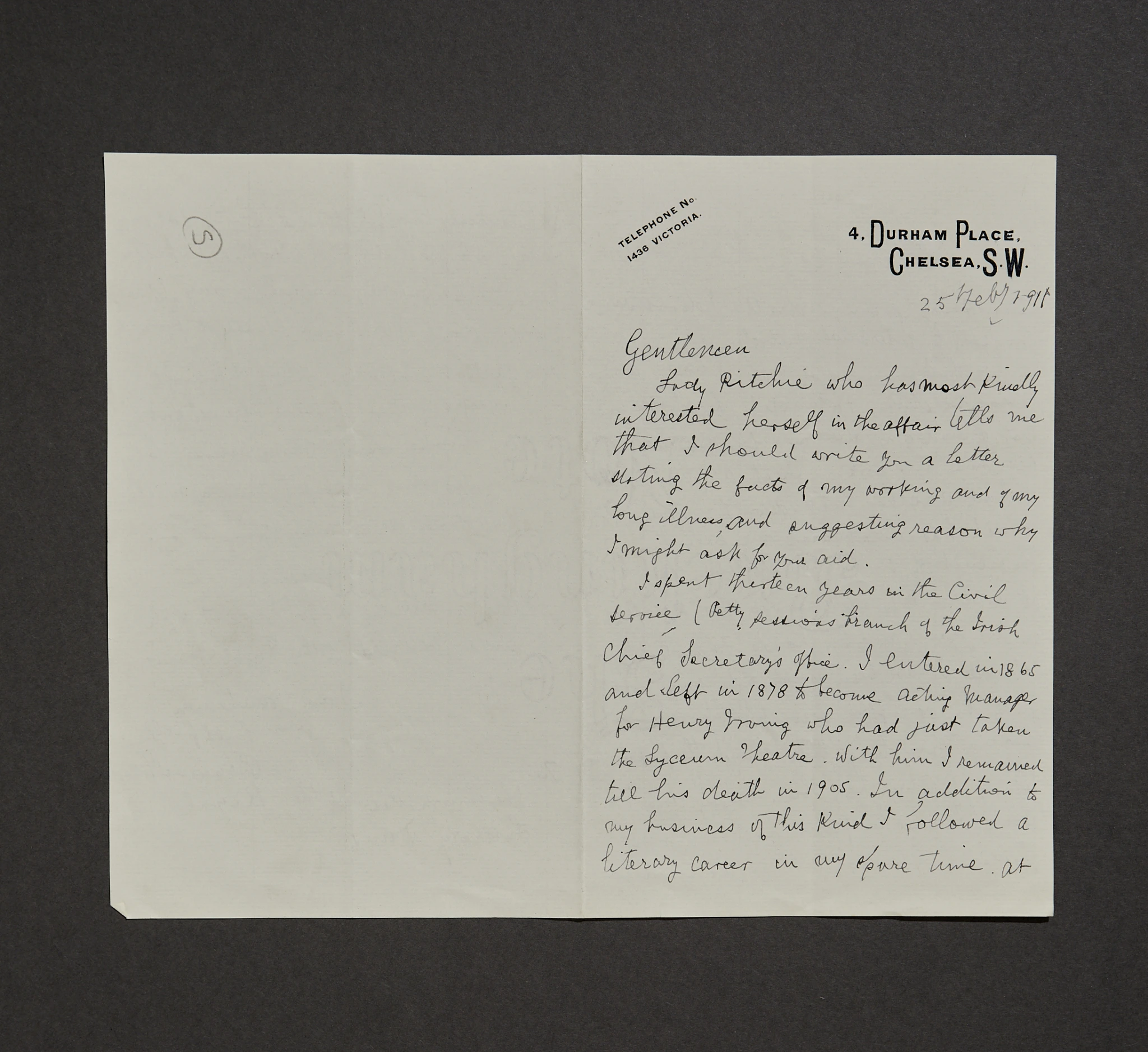
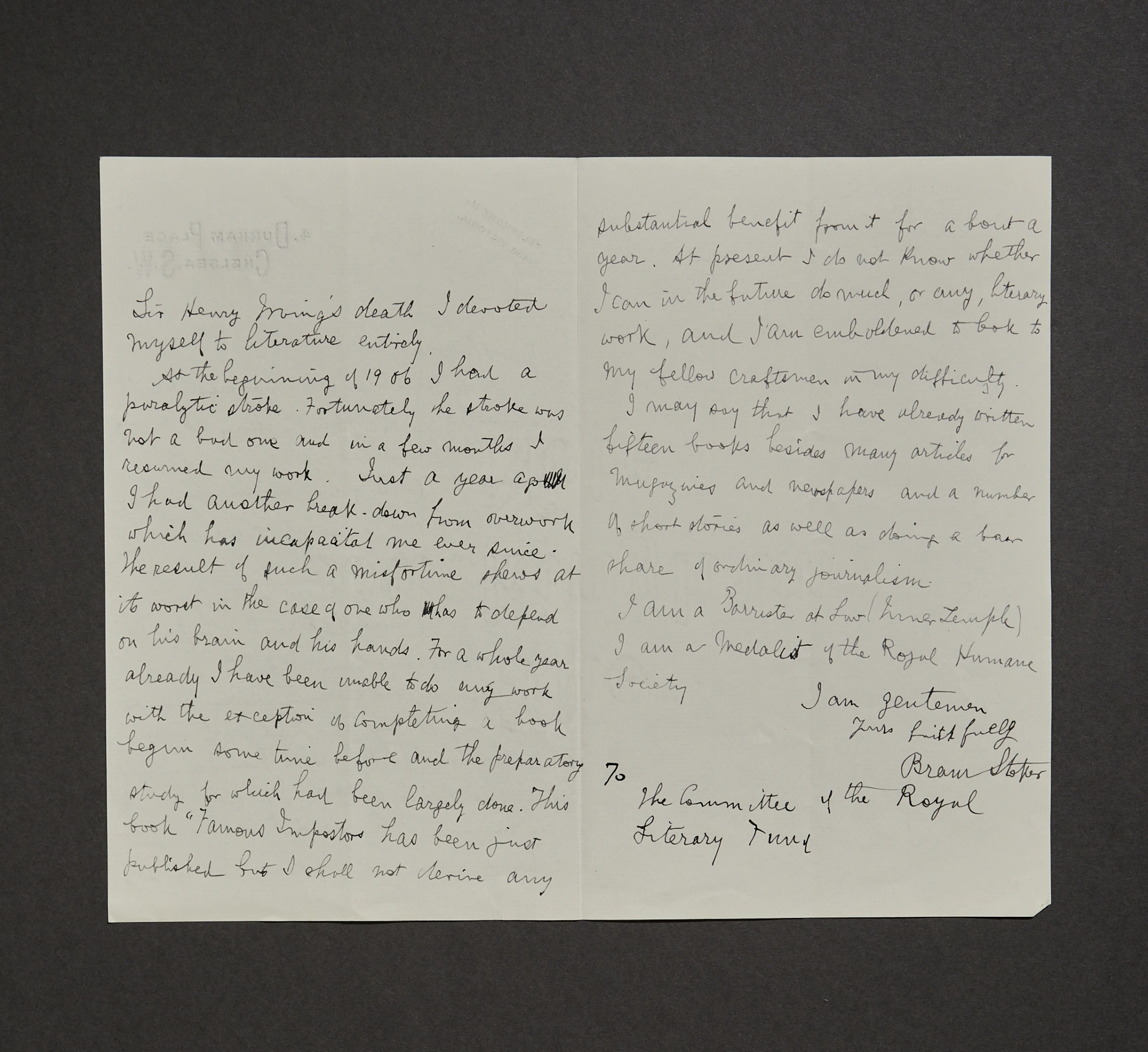
Transcription
4, Durham Place,
Chelsea, S.W.
25 Feby 1911
Gentlemen
Lady Ritchie who has most kindly interested herself in the affair tells me that I should write you a letter stating the facts of my working and of my long illness, and suggesting reason why I might ask for your aid.
I spent thirteen years in the Civil Service (Petty Sessions Branch of the Irish Chief Secretary’s Office. I entered in 1865 and left in 1878 to become Acting Manager for Henry Irving who had just taken the Lyceum Theatre. With him I remained till his death in 1905. In addition to my business of this kind I followed a literary career in my spare time. At Sir Henry Irving’s death I devoted myself to literature entirely.
At the beginning of 1906 I had a paralytic stroke. Fortunately the stroke was not a bad one and in a few months I resumed my work. Just a year ago I had another break-down from overwork which has incapacitated me ever since. The result of such a misfortune shows at its worst in the case of one who has to depend on his brain and his hands. For a whole year already I have been unable to do any work with the exception of completing a book begun some time before and the preparatory study for which had been largely done. This book “Famous Impostors” has been just published but I shall not derive any substantial benefit from it for about a year. At present I do not know whether I can in the future do much, or any, literary work, and I am emboldened to look to my fellow craftsmen in my difficulty.
I may say that I have already written fifteen books besides many articles for magazines and newspapers and a number of short stories as well as doing a fair share of ordinary journalism.
I am a Barrister at Law (Inner Temple)
I am a Medalist of the Royal Humane Society
I am Gentlemen
Yours faithfully
Bram Stoker
To
The Committee of the Royal Literary Fund
That May, Florence sought further help for Bram through a Civil List pension. She turned to Eleanor Birrell, daughter of the poet Frederick Locker-Lampson and widow of Lionel Tennyson, the younger son of Alfred, Lord Tennyson. She belonged to the Tennyson circle that Bram and Florence knew socially. They had been to Lionel’s home and in 1892 visited Lord and Lady Tennyson at Aldworth. Bram had also helped arrange Irving’s production of Tennyson’s Becket at the Lyceum. Eleanor remarried in 1888, to Augustine Birrell, who was Chief Secretary for Ireland.
On 5 May [1911], Florence thanked the Birrells for their help and asked Eleanor to extend that kindness “by bringing the matter to the notice of Mr. Winston Churchill”. Eleanor forwarded the letter the next day. She relayed Lady Ritchie’s fear that Bram would “probably not live more than a year, — or two possibly” and suggested that “a grant might be acceptable” if a pension could not be obtained.
Florence and Eleanor Birrell’s letters seeking a Civil List pension for Bram
Florence Stoker to Eleanor Birrell, 5 May [1911]
Florence wrote from 4 Durham Place. Her letter refers to Churchill’s earlier acquaintance with Bram and the interview he gave him for an American newspaper. She said Bram had been advised to let others make the pension appeal. On 6 May, Eleanor asked Churchill to approach the Prime Minister or Mr Meiklejohn.


Transcription
May 5th [1911]
4. Durham Place,
Chelsea, S.W.
Dear Mrs. Birrell,
Lady Ritchie has told us how exceedingly kind, you & your husband have been over Bram’s petition to the Prime Minister for a Civil List Pension. I wonder if you would extend your kindness by bringing the matter to the notice of Mr. Winston Churchill & induce him, also, to interest himself on Bram’s behalf —
He knew Bram when he was a boy & used to frequent the Lyceum with his Father, & about three years ago, was most kind in giving Bram an Interview for an American paper. Bram would write to him himself, but, he has been told it would not be etiquette for him to do so, that, in this matter of a Civil List Pension, he must leave it entirely to others.
With our Remembrances to you —
Sincerely yours
Florence [initials unclear] Bram Stoker
Churchill Papers catalogue · Florence’s letter, CHAR 2/52/20. Eleanor’s covering letter, CHAR 2/52/21.
Later in 1911 the Stokers moved from Chelsea to 26 St George’s Square, Pimlico, where it was probably cheaper for them to live. Lady Ritchie was already living at number 109 in the same square, her address from 1901 to 1912. Bram died at home on 20 April 1912, aged 64. His death entry records his occupation as “Author” and names his son Noel as the informant, present at the death.

Bram was cremated at Golders Green. His ashes were later joined there by those of his son Noel.

How Bram was remembered
The obituaries published after Bram’s death reveal how differently his contemporaries weighed his achievements. Some did not mention Dracula at all. The Globe called him “Irving’s Boswell” and treated his memoir of the actor as his chief memorial. The Westminster Gazette praised his theatre management, tact, patience and courtesy. Neither of the surviving clippings reproduced below names the novel.
The Irish Times obituary of 23 April 1912 likewise omitted Dracula, looking back instead to his popularity at Trinity College and his long working relationship with Irving. The Times did mention the novel, but expected his Irving memoir to be his lasting literary achievement. The New York Times also listed Dracula among his novels while calling Personal Reminiscences of Henry Irving his best-known publication.
Others already recognised the novel’s importance. A notice attributed in the Estate archives to The Literary World, “British Books”, identified Dracula as the work that had made Bram famous. Clement Shorter, writing in The Sphere on 4 May 1912, challenged the emphasis on the Irving memoir and predicted that Dracula would endure alongside Frankenstein. These contrasting judgments show that Bram’s reputation was already being debated.
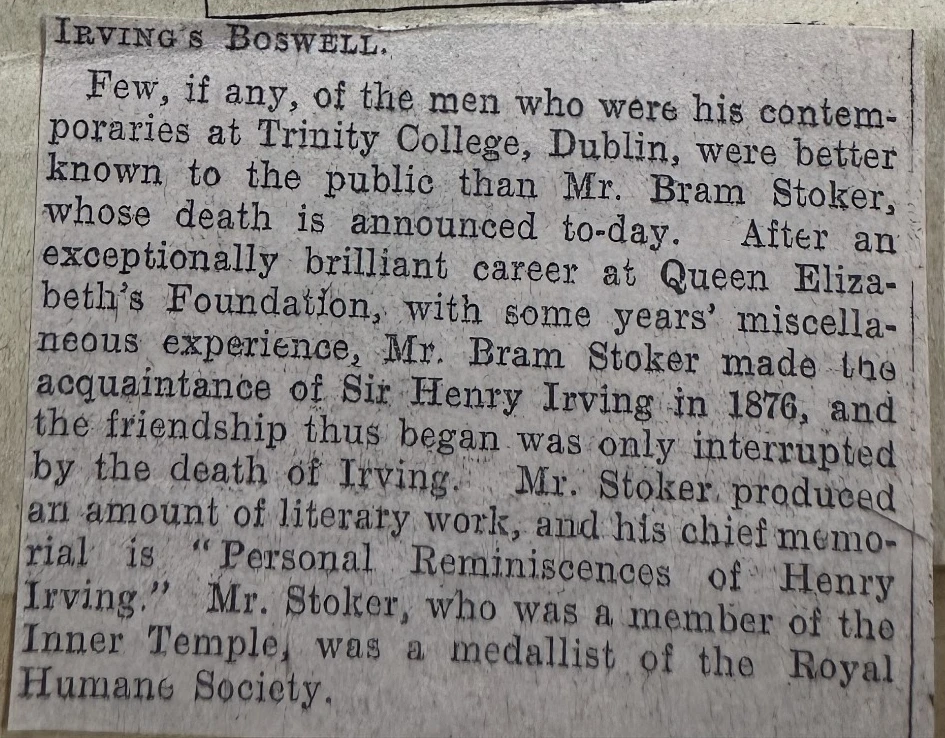
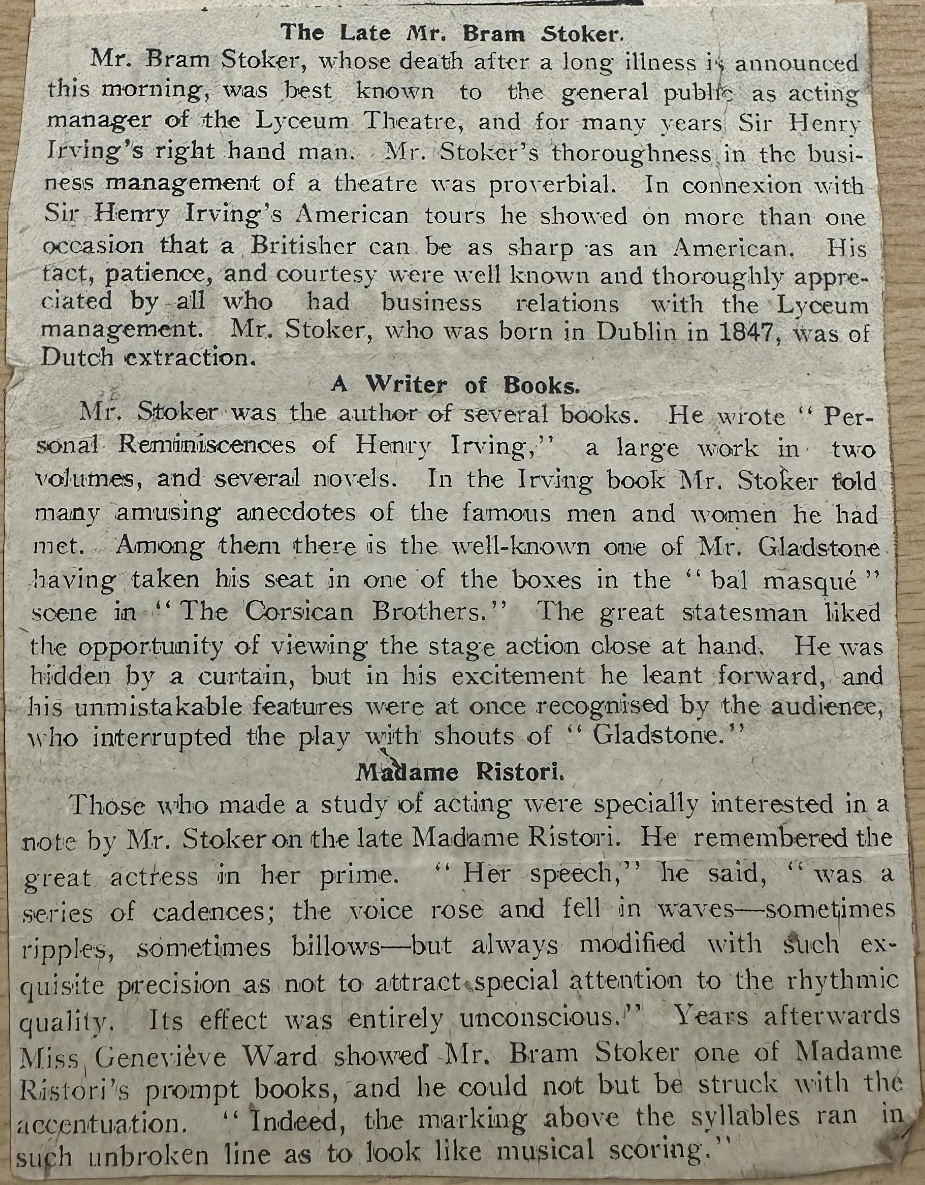
Read the contemporary obituaries and tributes, with the clippings, transcriptions and fuller source details. The notices contain some biographical errors and should be read as evidence of his contemporary reputation.
Florence Stoker and the afterlife of Dracula
After Bram’s death, Florence Stoker looked after his literary work. She published Dracula’s Guest and Other Weird Stories in 1914 and licensed Hamilton Deane’s stage adaptation. When a German studio adapted the novel without permission, Florence took legal action over Nosferatu.
Continue exploring
Sources
- ATG Entertainment and UCL Special Collections · The Lyceum after Irving: rebuilding and conversion to a music hall, 1904.
- Birrell, Eleanor · To Winston Churchill, 6 May 1911. Churchill Archives Centre, CHAR 2/52/21.
- Bram Stoker Estate · Dracula: the novel’s creation.
- Bram Stoker Estate · Florence Stoker and Nosferatu.
- Bram Stoker Estate · Places in Bram Stoker’s life.
- Bram Stoker Estate · What inspired Dracula: research, source books, Whitby and the working notes.
- Bram Stoker’s obituaries and biographical sources – William Hughes’s research guide
- British Library · Bram Stoker’s Royal Literary Fund case file, Loan 96 RLF 1/2841.
- Dictionary of Irish Biography · Augustine Birrell.
- Dobbs, Richard Noel · Remembering Noel Stoker, 1 May 2020. Family recollections of Noel’s childhood, schooling and Bram’s influence.
- Hughes, William · Bram Stoker research guide, introduction dated December 1996.
- Inner Temple · Bram Stoker’s membership and legal qualification.
- Killeen, Jarlath · Bram Stoker: life and writing, Trinity College Dublin.
- McElligott, Jason · The charming Mr. Stoker; Folger manuscript N.a.66. Folger Shakespeare Library. McElligott identifies material omitted from the published 1906 memoir.
- Murray, Paul · Bram Stoker, Dictionary of Irish Biography.
- Ritchie, Anne Thackeray · Letter from 109 St George’s Square, dated 1901–1912. Eton College, MS 973/B51692.
- Ritchie, Anne Thackeray · To Arthur Llewelyn Roberts, 20 February 1911. British Library, Royal Literary Fund case file.
- Rosenbach Museum & Library · Bram Stoker’s working notes and outline for Dracula, c. 1890–1896, EL3 .S874d MS.
- Royal Literary Fund · From the archive: Bram Stoker, 1911, with scans of his letter. Stoker, Bram. To the Royal Literary Fund, 25 February 1911. British Library, Loan 96 RLF 1/2841/5.. (British Library original record)
- Smith, Sally · Dracula and the Inner Temple. Inner Temple Yearbook 2012–2013, section V and concluding discussion.
- Stoker, Bram · A Glimpse of America (1886), printed lecture: reading text and edition details.
- Stoker, Bram · Arthur Conan Doyle interview and original newspaper editions, 1907–1908.
- Stoker, Bram · Dracula (1897): chapter III, the Count’s legal knowledge; chapter XIII, Van Helsing’s legal background; chapter XXII, Harker and the Incorporated Law Society.
- Stoker, Bram · Journalism: interviews with Arthur Conan Doyle and Winston Churchill, and reports on the Dublin exhibition and Belfast shipyard, 1907–1908. Original editions and scans on the individual reading pages.
- Stoker, Bram · Personal Reminiscences of Henry Irving, 1906 and revised 1907 editions. Passages cited: meeting Irving (I, chapter III); Inner Temple library research (I, chapter V, p. 47); Noel backstage during Faust (I, chapter XIII, pp. 90–91); chapter XX, volume I; the scenery-store fire (II, chapter LXXII).
- Stoker, Bram · Signed receipt for £100, 9 March 1911. British Library, Loan 96 RLF 1/2841/6. (British Library original record)
- Stoker, Bram · The Shoulder of Shasta (1895): reading text and edition details.
- Stoker, Bram · Under the Sunset (published 1881; title page dated 1882), dedication to his son. Edition and supporting reference.
- Stoker, Bram · Winston Churchill interview and newspaper editions, 1907–1908.
- Stoker, Bram, and other contributors · The Fate of Fenella (1892), collaborative novel: reading text and edition details.
- Stoker, Bram; Irving, Henry; and Wyndham, Charles · Actor-Managers, The Nineteenth Century, June 1890, pp. 1040–1058. Complete facsimile.
- Stoker, Florence · To Eleanor Birrell, 5 May [1911]. Churchill Archives Centre, CHAR 2/52/20.
- Stoker, Noel Thornley · Bram Stoker, by his Son, undated typescript. Trinity College Dublin, MS 11076/5/13.
- The Daily Telegraph, The Globe, Westminster Gazette and other newspapers · Obituaries and tributes, 1912.
- The Times inquest report, 18 September 1882 – reproduced in the Royal Humane Society’s 2012 report
- Trinity College Cambridge · Eleanor Bertha Mary Birrell: biographical and archival entry.
- Trinity College Dublin · Officers of the College Historical Society, 1872–73.
- University College Cork · Irish Literary Society collection guide. The society was founded in London in 1892. Bram’s exact joining date remains unconfirmed.