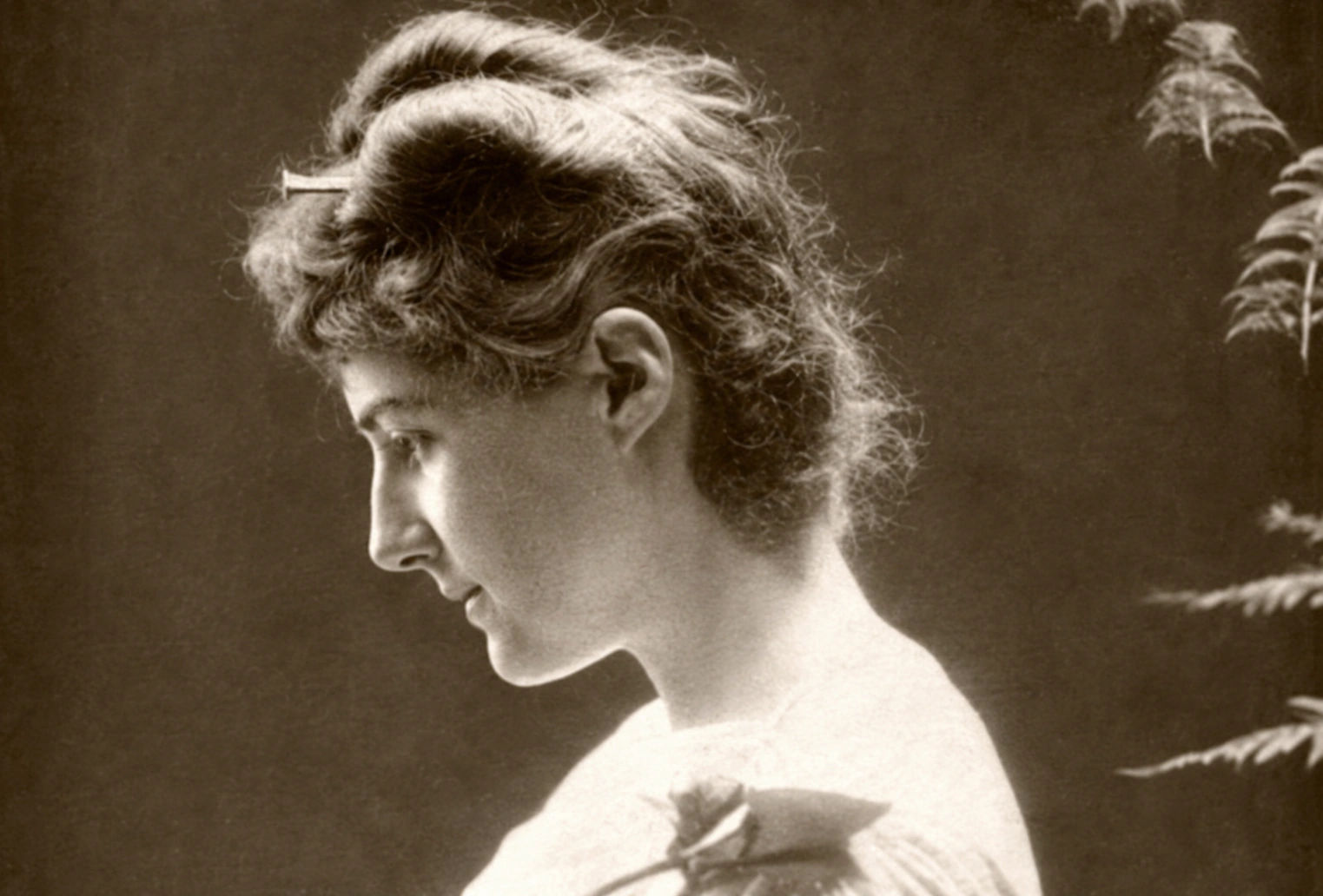
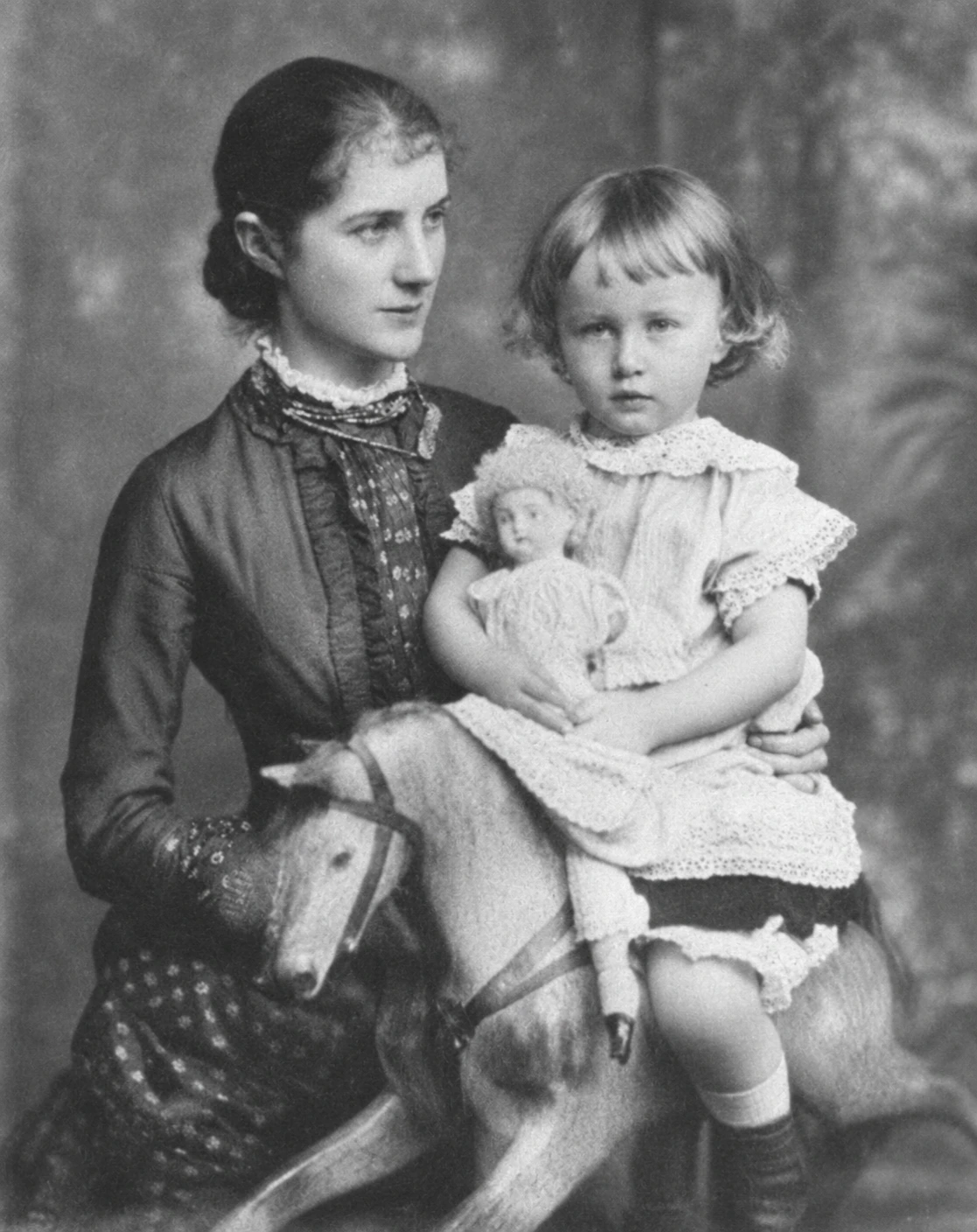
Before her marriage, Florence was courted by Oscar Wilde. The connection places both families within the overlapping cultural world of Dublin, and eventually London. Wilde met Florence at her family’s home in Marino Crescent and was taken with her at once. But Oscar was then studying at Magdalen College, Oxford, from 1874 to 1878, while Florence lived in Dublin, so they saw relatively little of each other during their courtship.
On 6 August 1876 Wilde wrote to his friend Reginald Harding: “I am just going out to bring an exquisitely pretty girl to afternoon service in the Cathedral. She is just seventeen with the most perfectly beautiful face I ever saw and not a sixpence of money.” He does not name her, but the girl is usually identified by biographers as Florence.
Florence had in fact just turned eighteen.
A landscape for Florrie
In September 1876, Florence received a watercolour landscape from Wilde. Known as View from Moytura House, it shows a view across Lough Corrib from the Wilde family’s summer home near Cong, County Mayo. Its dedication to “Florrie” preserves a personal trace of their courtship.
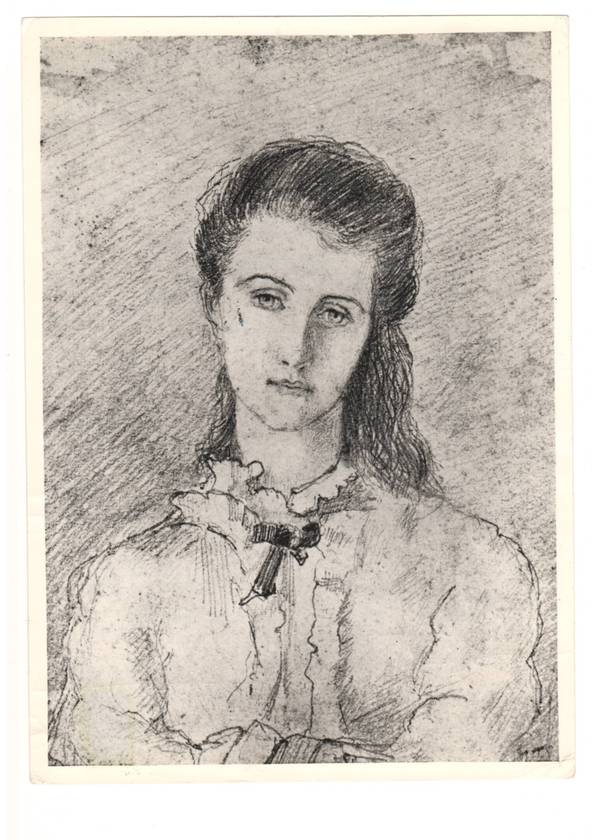
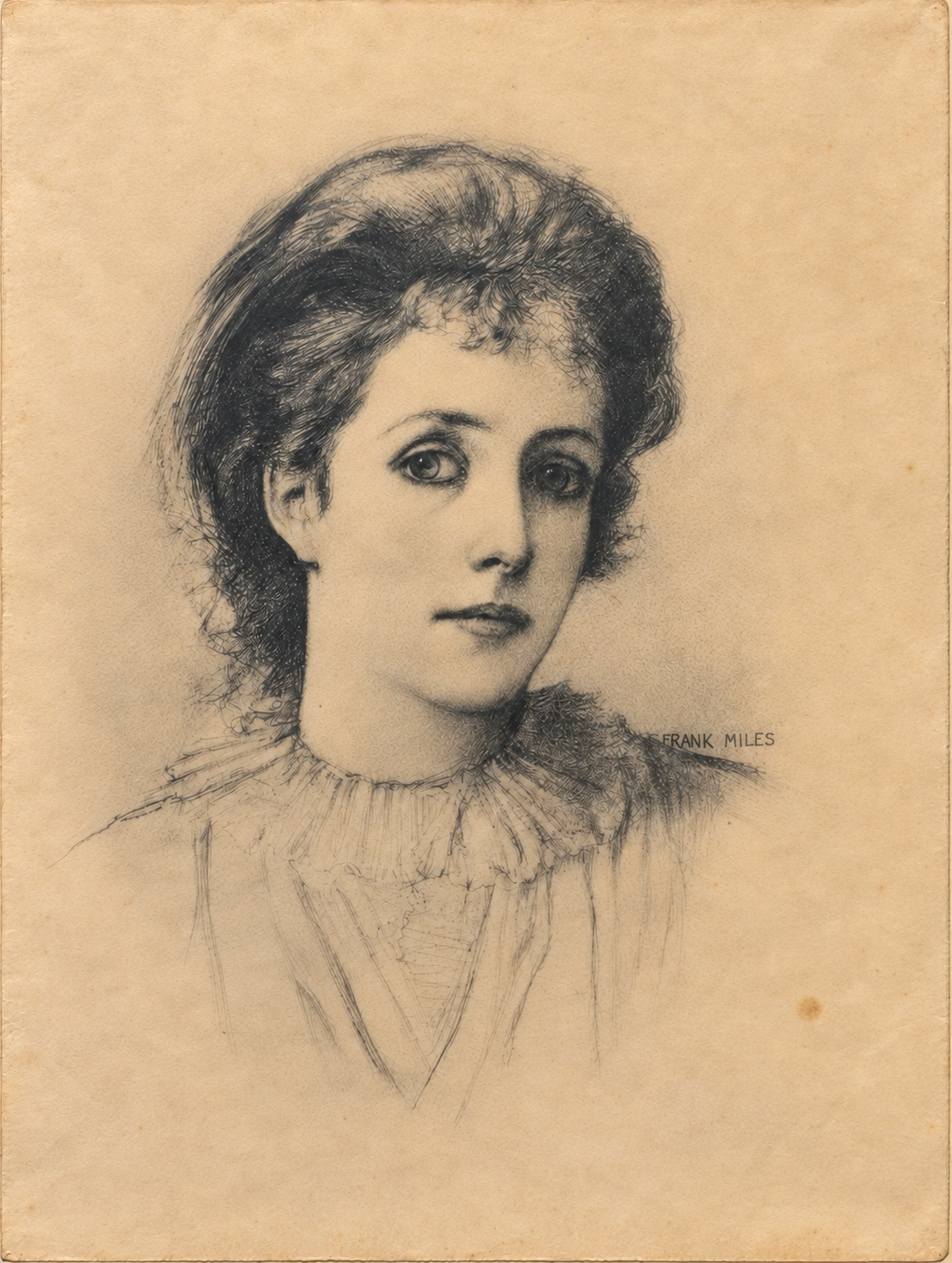
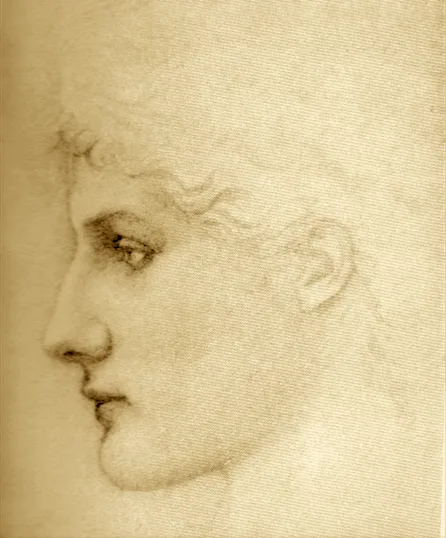
The painter Frank Miles (1852–1891) was one of Wilde’s closest friends, and the two travelled to the west of Ireland together in the summer of 1876. Miles, a Victorian society portraitist known for his portraits of women, also drew Florence. The drawing is signed “Frank Miles”; the Estate dates it to circa 1876.
“The man you are going to marry”
At Christmas 1876 Wilde had given Florence a small gold cross engraved with his name, a gift often seen as a prelude to an engagement.
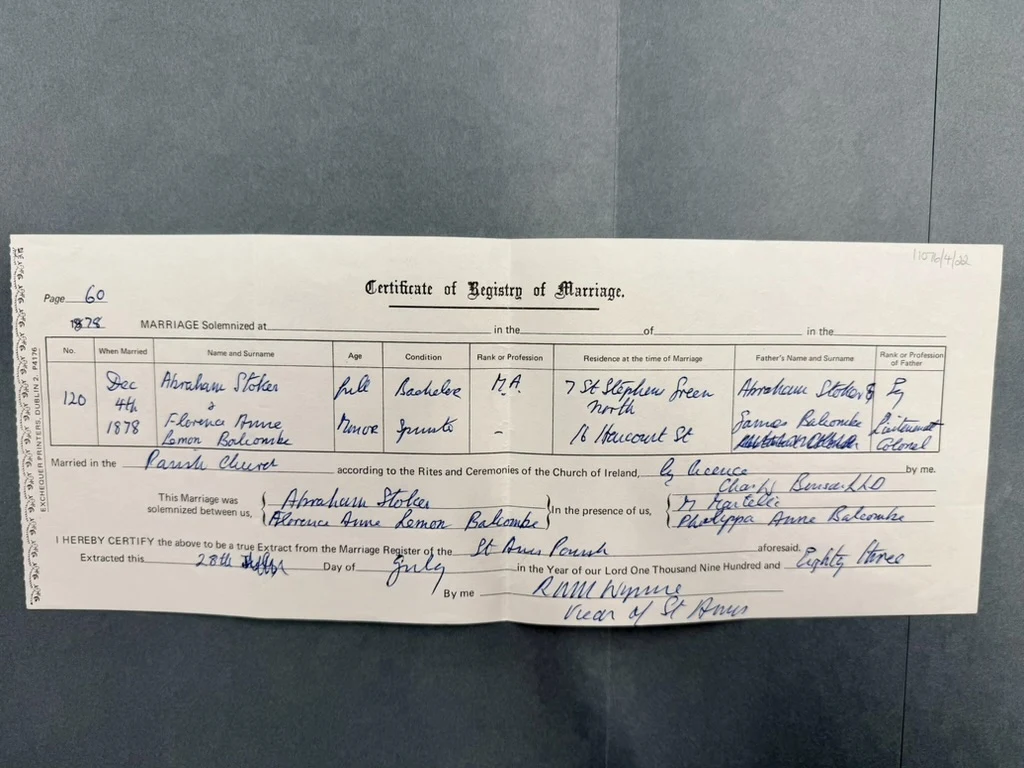
By the autumn of 1878 Florence, then 20, was engaged to Bram, who was 30. On 3 October 1878, two months before the wedding, Wilde, then 23, wrote from his family home at 1 Merrion Square. Florence had asked to see him, and he replied that the only proper place was her mother’s house:
Dear Florence,
As you expressed a wish to see me I thought that your mother’s house would be the only suitable place, and that we should part where we first met. As for my calling at Harcourt Street, you know, my dear Florence, that such a thing is quite out of the question; it would have been unfair to you, and me, and to the man you are going to marry, had we met anywhere else but under your mother’s roof, and with your mother’s sanction. I am sure that you will see this yourself on reflection; as a man of honour I could not have met you except with the full sanction of your parents and in their house.
As regards the cross, there is nothing ‘exceptional’ in the trinket except the fact of my name being on it, which of course would have prevented you from wearing it ever, and I am not foolish enough to imagine that you care now for any memento of me. It would have been impossible for you to keep it.
Florence’s reply had implied that Wilde wanted to meet her in secret. He was hurt, telling her she knew him very little.
Wilde asked for the cross back, saying he would keep it as a memento of “two sweet years – the sweetest of all the years of my youth”. Whether Florence returned it, and where it is today, is not known.
Wilde said the loss hurt him deeply, though he could also turn it into an epigram. To a young friend who came to him for advice about an affair, he said:
“It is much better to have loved and lost than to have loved and won.
There is one thing infinitely more pathetic than to have lost the woman one is in love with, and that is to have won her and found out how shallow she is.”
Silentium Amoris
In 1881 Wilde published his first collection, Poems. It includes “Silentium Amoris” (“The Silence of Love”), which has been read as a farewell to Florence. In it a lover, struck dumb by the strength of his feeling, lets his beloved go to “some lips of sweeter melody”:
As oftentimes the too resplendent sun
Hurries the pallid and reluctant moon
Back to her sombre cave, ere she hath won
A single ballad from the nightingale,
So doth thy Beauty make my lips to fail,
And all my sweetest singing out of tune.
And as at dawn across the level mead
On wings impetuous some wind will come,
And with its too harsh kisses break the reed
Which was its only instrument of song,
So my too stormy passions work me wrong,
And for excess of Love my Love is dumb.
But surely unto Thee mine eyes did show
Why I am silent, and my lute unstrung;
Else it were better we should part, and go,
Thou to some lips of sweeter melody,
And I to nurse the barren memory
Of unkissed kisses, and songs never sung.
Oscar Wilde, “Silentium Amoris”, Poems (London: David Bogue, 1881).