
resources
Studying Dracula
For students and teachers: resources for studying Bram Stoker’s novel, built on evidence from the Stoker archives: his working notes, his own account of writing the book, his mother’s first letter about it, the first edition and the real landscape behind the fictional castle. The pages serve A-level and AS courses across the UK, the Irish Leaving Certificate (where Dracula is prescribed for 2026, 2027 and 2028), university seminars and independent study. Reading for pleasure, or leading a reading group? Choose the Reading Dracula tab, with its six-session plan and the reading guide (PDF).
The Estate’s teaching text may be copied for classroom use. Images, modern editions and other third-party material have their own reproduction terms; see Using Bram’s work.
Start here
| If you are | Go to | You will find |
|---|---|---|
| A teacher planning a unit | Dracula in the classroom | Eleven activities built on evidence from the archives, discussion questions by stage, three six-lesson schemes, KS3 and GCSE extracts, printable sheets |
| A student revising | Quotations, key terms and critical readings and Essay questions and exam practice | 35 checked quotations, 16 terms, a dated context sheet, nine critical readings with passages to test them, practice questions and model plans |
| New to studying the novel | Before you begin and Dracula in the curriculum | Age guidance, the editions most used in class, and where Dracula sits on your course |
| Anyone who needs to find a passage | Dracula chapter by chapter | Documents, narrators, dates and events for all 27 chapters |
| Reading for pleasure or with a group | The Reading Dracula tab | A guide to the novel’s voices, a six-session plan with reading times, questions that keep the ending separate, and the reading guide PDF |
Before you begin
Age and content
For the complete novel we suggest older teenage readers, around 15 to 16 and above, with a teacher or parent choosing what suits the individual reader. This is editorial guidance, not a formal age rating. The novel includes frightening scenes, blood and violence, threats to children, death, sexual threat and coercion, and period language and attitudes concerning race, nationality, disability and gender. Selected passages suit younger readers; the classroom page lists six that work at Key Stage 3 and GCSE.
Editions, text and audio
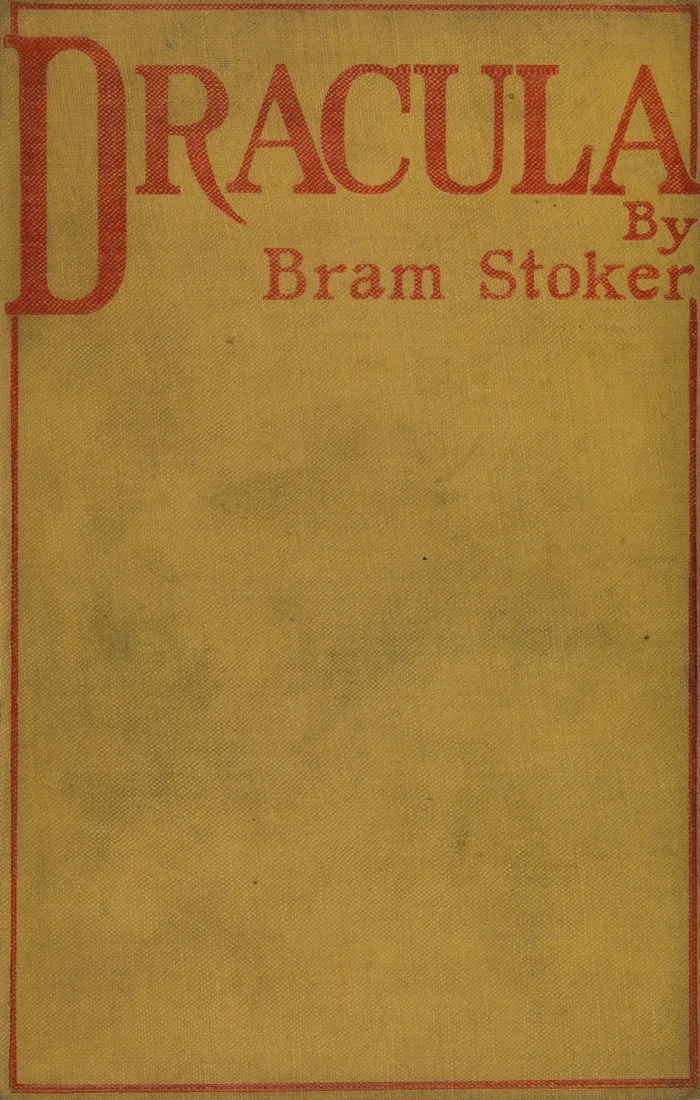
For a class set, choose an edition with stable page numbers, an introduction that can be read after the novel, and notes. The Estate does not endorse one edition; these are the ones most often used in schools and universities.
| Edition | Editor and date | Notes |
|---|---|---|
| Oxford World’s Classics | Roger Luckhurst, 2011 | Introduction covering the Irish background, the Gothic and the novel’s contexts; explanatory notes; a chronology; includes “Dracula’s Guest”. Widely used for A-level and undergraduate study. |
| Penguin Classics | Maurice Hindle, revised 2003, with a preface by Christopher Frayling | Introduction and notes; appendices include Bram’s 1908 essay on censorship and his interview with Winston Churchill. |
| Norton Critical Edition | David J. Skal and John Edgar Browning, 2nd edition 2022 (first edition Nina Auerbach and David J. Skal, 1997) | The 1897 Constable text with background documents, seven contemporary reviews, pieces on the adaptations and eleven critical essays. Useful where critical views are assessed. |
| Broadview | Glennis Byron, 1997 | Text with appendices: “Dracula’s Guest”, Bram’s 1908 essay “The Censorship of Fiction”, and documents on Transylvania, London, degeneration, gender and the first reviews. The best single context reader for teachers. |
| The New Annotated Dracula | Leslie S. Klinger, 2008 | Extensive annotation and illustration; for the teacher’s desk rather than the class set. |
| Dracula Annotated for the 125th Anniversary | Dacre Stoker and Robert Eighteen-Bisang, 2022 | Annotation drawing on the working notes; from within the family’s research. |
| Free text | Project Gutenberg, ebook 345 | The 1897 text, with chapter anchors for linking. Check availability in your country. |
| Audio | LibriVox (free, volunteer, unabridged); Naxos AudioBooks (2015, a reader for each narrator, 17 hours); Audible’s full-cast reading (2012, with Alan Cumming and Tim Curry); Penguin’s Studying Dracula (2020, the unabridged text with A-level commentary) | Check that a recording is unabridged, not a dramatisation: the BBC radio versions are dramatisations. Listening while following the text helps with the shifts of voice. |
Further annotated editions are in the Bibliography; check the current printing before ordering.
Evidence from the Stoker archives
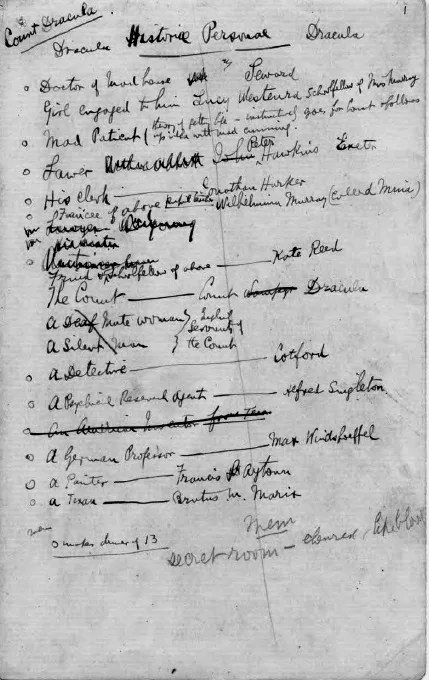
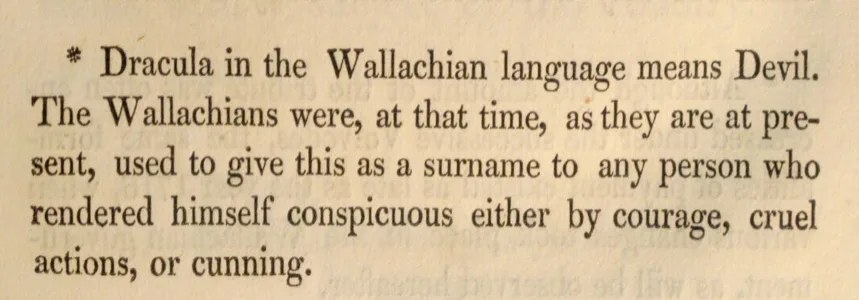
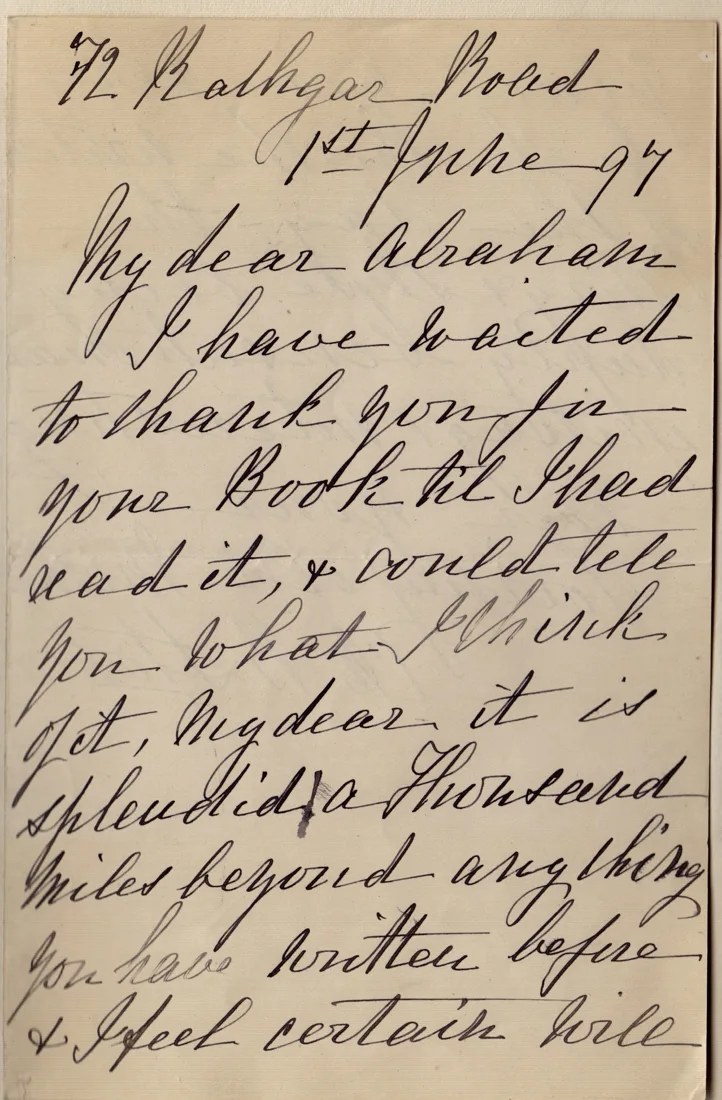
Most study guides describe the novel. The Stoker archives can show how it was made and how it was first received. Bram’s papers are spread across several collections: the working notes are at the Rosenbach in Philadelphia, letters and manuscripts at Leeds, Trinity College Dublin and elsewhere, and family papers, photographs and books in the Estate’s own collection (see Archives). Each item below links to a page with images or transcriptions; the classroom page turns each into an activity.
| Item | What it is | Use it to |
|---|---|---|
| Bram’s working notes | Plans, cast lists, chronologies, reading extracts and medical observations from 1890 onwards. The originals are at the Rosenbach in Philadelphia; reproductions and a description are on What inspired Dracula. | Compare plan with page: the early Styrian setting, the cast list, the sketch behind Renfield’s injury. See the author choosing. |
| The books behind the book | Wilkinson’s footnote that supplied the name (“Dracula in the Wallachian language means Devil”), Emily Gerard’s The Land Beyond the Forest, Charles Boner’s 1865 map of Transylvania. | Trace a traveller’s observation into a novelist’s sentence. Bram never visited Transylvania. |
| Bram in his own words | Jane Stoddard’s interview in the British Weekly, 1 July 1897, on Bram on Dracula: about three years’ writing, “a great deal of miscellaneous reading”, Gerard and Baring-Gould named, and no stated moral: “I prefer that readers should find it out for themselves.” | Separate what the author said from what critics infer. |
| Charlotte Stoker’s letter | Bram’s mother writes on 1 June 1897, six days after publication: “a thousand miles beyond anything you have written before”. Transcribed on Letters and journal pages. | Study reception before fame: a close reader’s response in the week of publication. |
| The first edition and the lost title | Constable, 26 May 1897: 3,000 copies in yellow cloth lettered in red, six shillings. The typescript carried Bram’s title The Un-Dead. On the Dracula page. | Discuss the book as an object and the effect of a title on a reader who has never heard the name. |
| The Lost Journal | Bram’s early notebook, with the entry “I once knew a boy who put so many flies into a bottle that they had not room to die.” On The Lost Journal. | Ask how an observation becomes a character (Renfield), without claiming more than the evidence allows. |
| Where is Castle Dracula? | An interactive terrain map of Harker’s journey and the final pursuit, with the competing readings of the castle’s location and the Bran Castle tourist claim. Where is Castle Dracula? | Contrast the novel’s precise routes with its deliberately missing castle. |
| A rediscovered story | Gibbet Hill (1890), found in the National Library of Ireland’s newspaper collections and announced in 2024, and “The Judge’s House” (1891): short Stoker texts for unseen practice. See below. | Practise unseen Gothic prose on texts by the same author. |
Dracula in the curriculum
Dracula is a set text on four A-level specifications in England, on CCEA’s AS in Northern Ireland and on the Irish Leaving Certificate. This table was checked against the boards’ specifications in October 2026 and will be reviewed on 1 September 2027. Specifications change by examination year: always use the linked specification for text lists, open or closed-book rules and assessment objectives.
| Board and qualification | Where Dracula appears | How it is assessed | Specification |
|---|---|---|---|
| OCR H472 A-level English Literature (England) | Component 02 Comparative and contextual study, topic The Gothic. One of only two core texts, with Carter’s The Bloody Chamber. | Closed text, 2 hours 30. Section 1: an unseen Gothic passage. Section 2: a comparative essay testing a critical statement against at least two texts from the Gothic list, at least one of them a core text. Context (AO3) carries half the marks for the essay. | OCR H472 specification |
| AQA 7707 A-level English Language and Literature (England) | Paper 1 Telling Stories, Section B Imagined Worlds: one of four set novels, with Frankenstein, The Handmaid’s Tale and The Lovely Bones. | Open book, clean copy. One question from two: a printed extract and the significance of a character, place or idea across the novel, including how fantasy elements build a fictional world. No comparison. AO3 here is largely about genre. | AQA 7707 specification |
| Pearson Edexcel 9ET0 A-level English Literature (England); also AS 8ET0 | Component 2 Prose, theme The Supernatural. Pre-1900: Dracula, The Picture of Dorian Gray. Post-1900: Beloved, The Little Stranger. | Open book, clean copies, 1 hour 15. One comparative essay on two texts from the theme, at least one pre-1900, related to context. Critical views (AO5) are not assessed on this paper. | Edexcel 9ET0 specification |
| Pearson Edexcel 9EL0 A-level English Language and Literature (England); also AS 8EL0 | Component 2, Section B, theme Crossing Boundaries. Dracula and Wide Sargasso Sea are the two anchor texts. | Open book, clean copies. A comparative essay on the anchor text and one other text from the theme, weighing linguistic and literary methods and context. The AS paper sets an extract-based question on the anchor text. | Edexcel 9EL0 specification |
| CCEA GCE English Literature (Northern Ireland) | AS 2 The Study of Prose Pre 1900: one of six set novels. | Closed book, 1 hour. One essay responding to a critical statement; argument and interpretation (AO5) drive the unit. CCEA publishes a Dracula teaching eGuide. | CCEA English Literature |
| Leaving Certificate English (Ireland), examinations 2026, 2027 and 2028 | Prescribed as a single text at Higher and Ordinary Level, and on the list for the comparative study. | Paper 2. As a single text, answered on its own; in the comparative study, set beside two other texts under the year’s modes. Oide publishes a Dracula “Read and Respond” resource. | 2028 prescribed material |
| WJEC Eduqas A-level English Language and Literature (England) | Component 4 non-exam assessment, Critical and Creative Genre Study: first on the prescribed Gothic list. | Coursework, 3,200 to 3,500 words, with wider reading in the genre. | Eduqas specification |
Coursework. Because it is not an examined set text on their papers, Dracula can be chosen for the non-exam assessment on AQA English Literature A (7712) and B (7717), Eduqas English Literature and WJEC English Literature in Wales, subject to each board’s approval rules.
Ireland. Dracula returns to the Leaving Certificate for the examinations of 2026, 2027 and 2028, after an absence from the lists for 2021 to 2025: an Irish novel, by a Dublin-born author, set for Irish students. Each year sets different comparative modes: for 2026, Cultural Context, General Vision and Viewpoint, and Literary Genre at Higher Level; for 2027, Theme or Issue, Cultural Context, and General Vision and Viewpoint; for 2028, Literary Genre, Theme or Issue, and Cultural Context. At Ordinary Level the modes include Social Setting, Relationships, Theme, and Hero, Heroine, Villain. The Irish contexts on these pages (Bram’s Dublin years, Trinity, Marsh’s Library, Charlotte’s writing) are written with Irish students in mind. Oide’s resource is at oide.ie.
GCSE and younger students. Dracula is not a set text on any GCSE English Literature specification in England. A Dracula extract, the Count’s first meeting with Harker, was the unseen fiction text on Pearson Edexcel GCSE English Language Paper 1 in the November 2020 series, and extracts are widely used for Paper 1 practice and in Key Stage 3 Gothic units.
Scotland. Not a set text for Higher or Advanced Higher English, but free choice applies to the critical essay, and Bram Stoker is on SQA’s suggested authors for the Advanced Higher dissertation.
Elsewhere. The novel is a single-text option in Tasmania’s English Literature course from 2026. It is not on the IB prescribed reading list, but IB courses allow free-choice works. At university it is a staple of Victorian and Gothic courses, for example Trinity College Dublin’s Victorian Gothic module and Oxford’s first-year Victorian reading.
What may change. England’s Curriculum and Assessment Review (2025) proposed no major changes to A-level English, and reformed A-levels are not expected before first teaching in 2031–32, so the current specifications should run for several more years. Boards can still change texts within a specification. CCEA’s reformed A-levels begin in 2030. Ireland publishes each year’s list about two years ahead.
CCEA’s current published specification, section 3.2, lists Dracula for AS 2. Its March 2025 circular changes the answer booklet for online marking, while retaining the examination paper. Checked 26 October 2026. Next review due 1 September 2027.
Using evidence and interpretations
Context. Use context to explain a specific detail of the writing rather than adding a separate history lesson. OCR’s examiners’ report for summer 2025 noted that many candidates reached for “reverse colonisation” and “the New Woman” as stock context, so that the Gothic’s sense of impending disaster “lay outside the text rather than within it”. Every activity on these pages starts from a passage and works outwards. The dated context sheet on Quotations and terms pairs each date with the chapter it illuminates. The working notes, Bram’s own comments, Charlotte’s letter and the castle map are context that no secondary source replaces.
Form and structure. Follow who writes, who reads, and who knows what at each stage. The chapter map gives the documents and dates; the classroom page has a timeline activity.
Interpretations. Test the critical readings against particular passages. Assessment objectives differ between Literature and combined Language and Literature qualifications; use the wording and weightings for your own course. Quoting a critic’s name without a passage earns little.
Short texts by Stoker for unseen practice
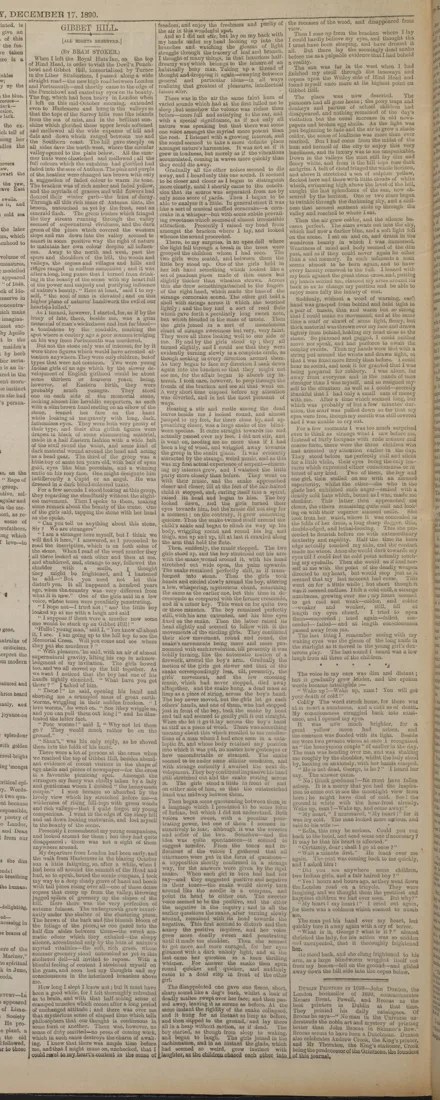
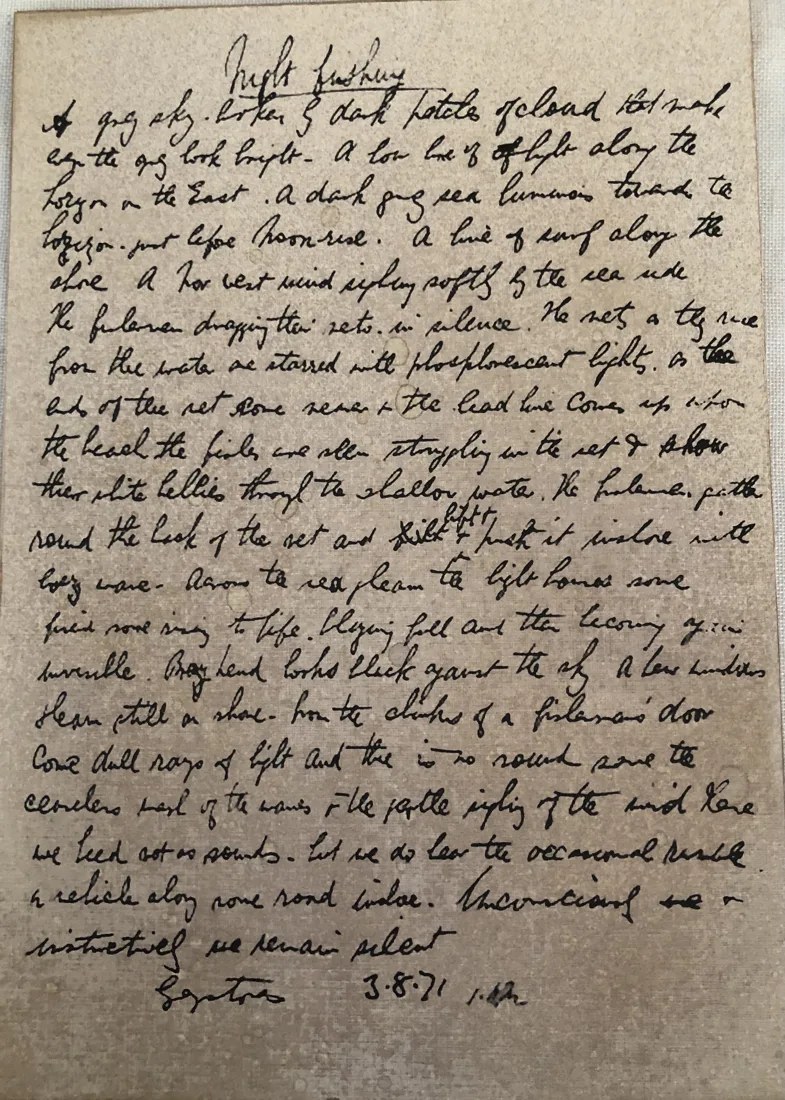
Several courses include an unseen Gothic passage. Practising on Stoker’s own shorter fiction lets students meet his habits of narration in a new setting.
- “The Judge’s House” (1891). A student seeks quiet lodgings in a house with a reputation. About 7,700 words; in Dracula’s Guest and Other Weird Stories (1914) and free at Project Gutenberg (ebook 10150). The opening 1,000 words make a complete unseen exercise on setting, rational narrator and rising dread.
- Gibbet Hill (1890). A story rediscovered in the National Library of Ireland and announced in October 2024, first published in the Daily Express (Dublin) Christmas supplement of 17 December 1890. A walker on a Surrey hilltop, the memorial to a murdered sailor, three strange children and a blindworm: short enough to read in one lesson and absent from every study guide. The original newspaper pages are linked from Gibbet Hill; a book edition with a foreword by Roddy Doyle followed in 2024.
- “Dracula’s Guest” (1914). Published after Bram’s death; about 4,900 words; an Englishman caught in a snowstorm near Munich on Walpurgis Night. Discuss its relation to the novel with care. Florence Stoker’s 1914 preface calls it an episode “originally excised owing to the length of the book”; the familiar claim that it was the novel’s deleted first chapter goes further than that evidence.
- The Demeter log (Chapter 7). Within the novel, the log reads as a free-standing found document and makes an unseen-style exercise for students who have not yet read the whole book.
Questions teachers ask
Is the Count based on Vlad the Impaler? Bram took the name from William Wilkinson’s 1820 book, which he read in Whitby in 1890, and his notes record limited historical information. The surviving evidence does not show him building the Count around Vlad’s reputation. McNally and Florescu’s In Search of Dracula (1972) popularised the close connection; Elizabeth Miller’s Dracula: Sense & Nonsense challenged it. See What inspired Dracula.
Is Bran Castle Dracula’s castle? Not according to the novel. Bran, a fourteenth-century fortress near Brașov, lies about 200 km south of the Borgo Pass and is never named; the novel’s castle is a ruin on a precipice in the far north-east, and its exact location is deliberately withheld. Yet Bram could have seen a picture of Bran, in Charles Boner’s Transylvania (1865), one of the books he used. The castle still belongs to Queen Marie’s heirs; in May 2026 Ad Populum was reported to have acquired an 80% stake in its operating company, CADB; Joel Weinshanker is also involved in managing Graceland. That makes a strong classroom question:
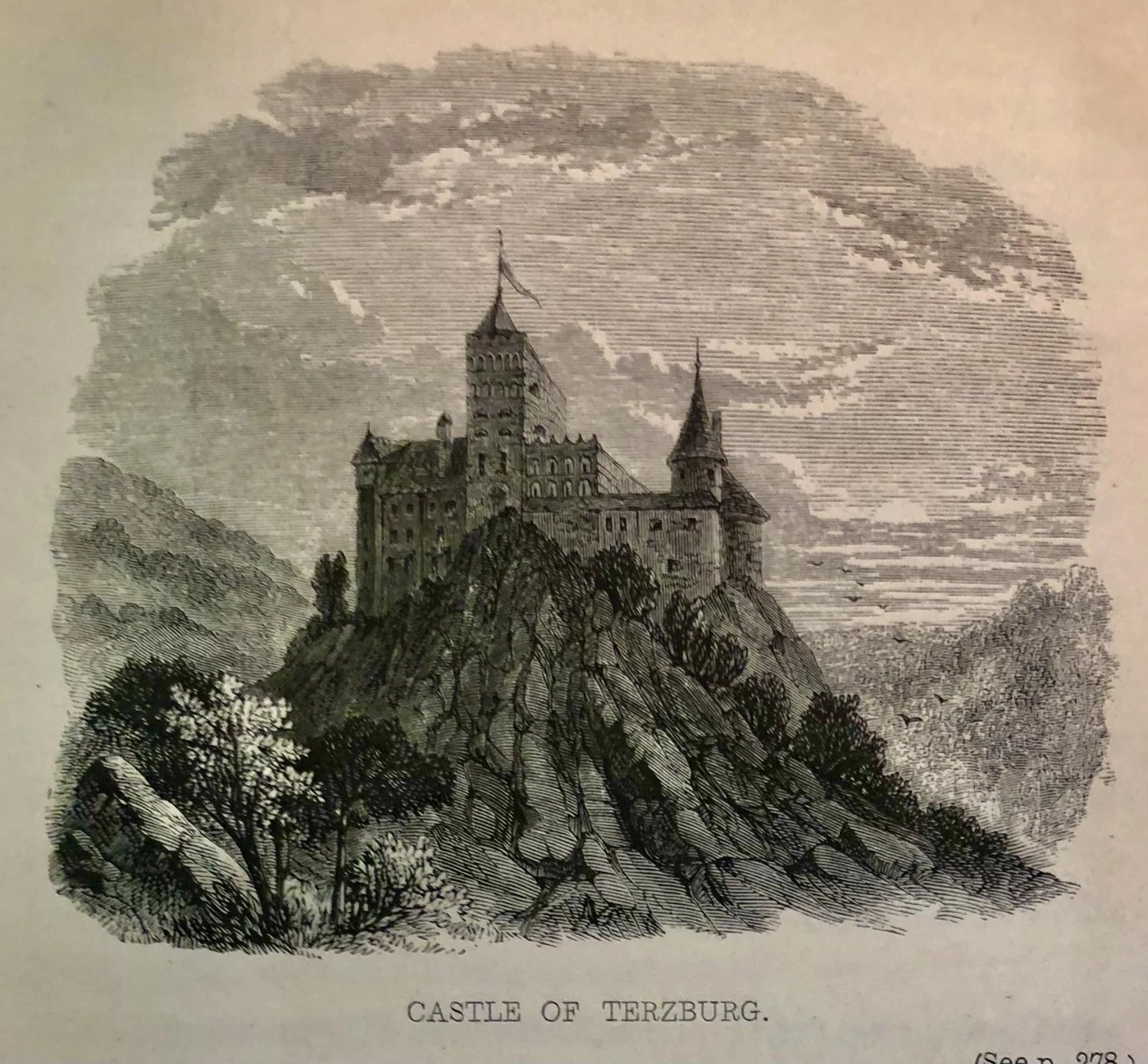
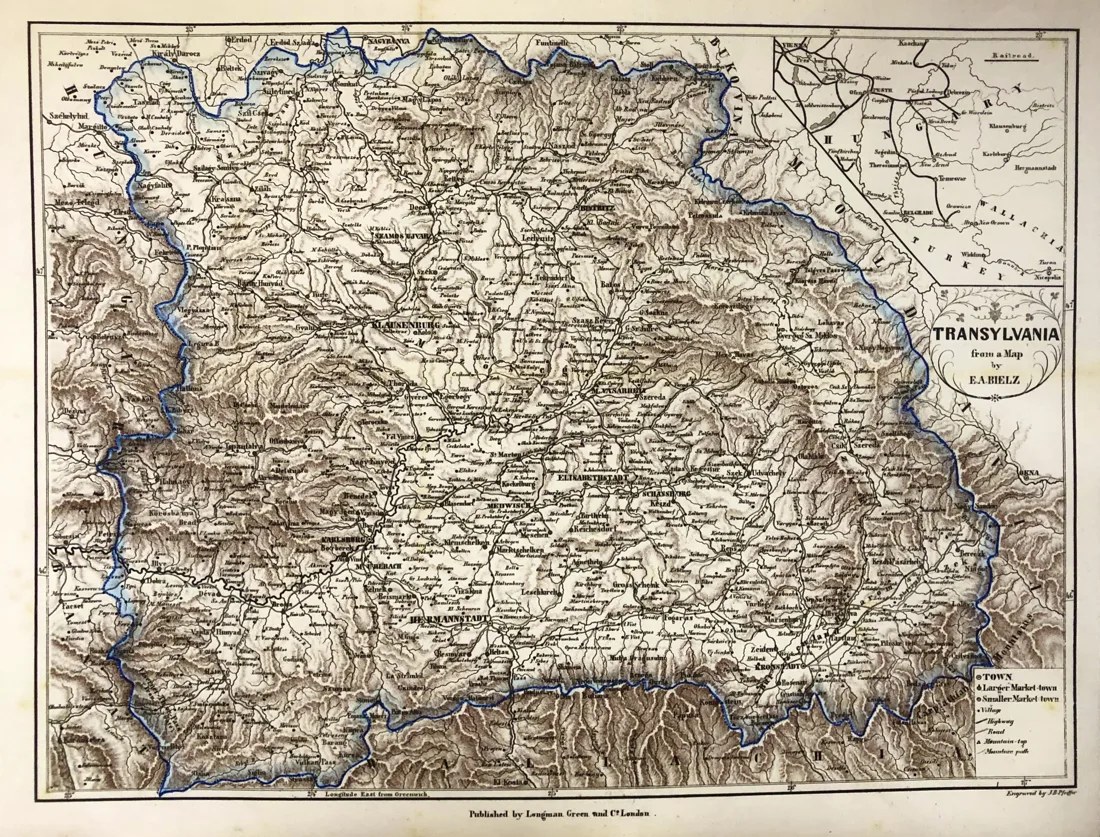
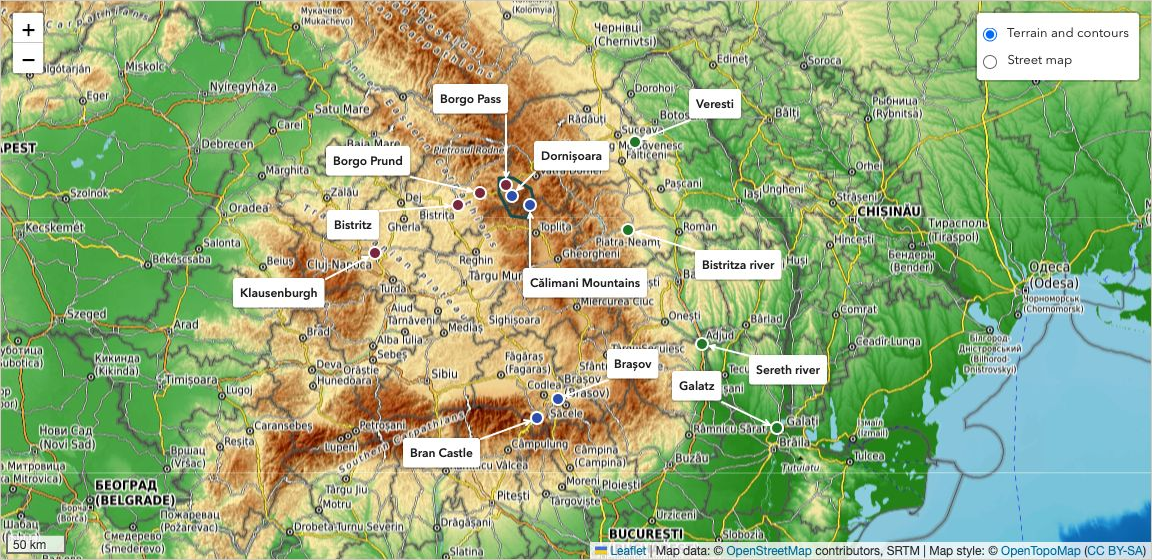
The question for students: “Bran Castle, near Brașov in Romania, markets itself to the world as ”Dracula’s Castle”. How far does Bram Stoker’s novel support that claim? And what do you think Bram himself would have made of it?” Activity 11 on Dracula in the classroom and the printable sheet Dracula’s castle? (PDF) set out the evidence, with one possible answer for teachers. See also Where is Castle Dracula?.
Did Bram visit Transylvania? No. He built it from travel books, maps and folklore, and from places he knew: Whitby, Cruden Bay, Dublin and London.
Was the book a success in his lifetime? The first reviews were predominantly positive, according to John Edgar Browning’s research, although individual critics expressed reservations, and the novel has never gone out of print, but Bram was better known as Henry Irving’s manager, and in 1911 he applied to the Royal Literary Fund for help. The Count’s fame came with the stage and screen adaptations after his death. See How Dracula came to be studied and Archives. See John Edgar Browning, Bram Stoker’s Dracula: The Critical Feast, introduction.
Can I photocopy, perform or adapt the text? The original 1897 text is in the public domain in the UK and most countries. Introductions, notes, translations, illustrations and adaptations have their own rights. See Using Bram’s work.
Which film or adaptation should I use? Choose by what you want to discuss. For 2026–27 classes, Audible’s new full-cast adaptation (released 1 October 2026; Jonathan Bailey as the Count, Ella Purnell as Mina, Maggie Gyllenhaal as Van Helsing) makes an excellent comparison: it rebuilds the story around Mina reconstructing the documents, which goes straight to the novel’s form and to the debate about her role. Among films, choose Universal (1931) for the Lugosi image that replaced the novel’s Count; Hammer (1958) for colour, blood and the 1950s; the BBC’s Count Dracula (1977) for fidelity; Coppola (1992) for the invented love story that is not in the book; the BBC series (2020) for free adaptation. Always name the adaptation and compare one scene rather than the whole. See Dracula on Stage and Screen.
Why do the dates in the novel not quite add up? Bram kept a chronology in his notes but the published text has small inconsistencies, for example around Lucy’s funeral and the newspaper report of the “Bloofer Lady”. They make a good lesson on the difference between a document’s claimed authenticity and its actual construction.
Is Dracula on the GCSE syllabus? It is not a set text on the main GCSE English Literature specifications. Extracts are widely used for GCSE English Language fiction-reading practice and for Key Stage 3 Gothic units; the classroom page lists six that work.
What about the Icelandic and Swedish versions? Makt myrkranna (1901) and the Swedish Mörkrets makter (1899–1900) are reworkings with their own history, not straightforward translations. They suit an extension discussion on what a text is; see the Dracula page.
Further reading and resources
- The novel: Project Gutenberg ebook 345; print editions above.
- The Estate’s pages: Dracula, What inspired Dracula, Where is Castle Dracula?, Bram on Dracula, Dracula on Stage and Screen, Bibliography, Archives.
- Places to visit with a class: Whitby Abbey and St Mary’s churchyard; Marsh’s Library and Trinity College, Dublin; the Rosenbach, Philadelphia. See Museums and visits.
- Primary sources elsewhere: the London Library’s “Books that made Dracula”, on the research books Bram used and marked as a member from 1890 to 1897; Marsh’s Library’s online exhibition of the books the teenage Bram requested in 1866 and 1867, with his admission letter and register entries; the Rosenbach’s free “Sundays with Dracula” video discussions, a chapter a week from the library that holds the working notes.
- Context for A-level, free to read: the British Library’s essay “Imperial Gothic” by Suzanne Daly, now on the Library’s temporary Padlet boards; Jordan Kistler, “Rethinking the New Woman in Dracula” (Gothic Studies, 2018, open access); Alexander Lehner on the novel’s media and technology in Nordlit (2019, open access); Niall Carson, “Bram Stoker, Dracula and the Irish Gothic” (University of Liverpool); Nick Maxwell, “An Ascendancy and its vampires” (History Ireland, 2012); the Science Museum’s Katie Dabin on blood transfusion and the novel.
- Examiners’ reports: OCR H472/02, summer 2025 and Pearson Edexcel 9ET0/02, 2023 say plainly how the novel is being written about and what earns marks.
- Lectures and journals: Massolit’s eleven short lectures on the novel by Nick Groom and David Punter (school subscription); the Journal of Dracula Studies archive from 1999.
- Reading communities: Dracula Daily, which emails the novel’s entries on their own dates from 3 May to 7 November to more than 200,000 readers, and the audio drama Re: Dracula, released on the same calendar.
- For drama teachers: the Lyric Hammersmith’s education pack for Morgan Lloyd Malcolm’s 2025 adaptation. Treat its biographical context with the usual care; the Estate’s Biography distinguishes documented facts from speculation.
- Younger pupils: English Heritage’s Whitby Abbey Teachers’ Kit (Key Stages 2 and 3) includes a Dracula trail and a Chapter 6 extract.
Links were checked in October 2026. The British Library’s full “Discovering Literature” site has been offline since the 2023 cyber-attack; its Dracula articles have not yet returned.
Downloads
- Chapter map and timeline (PDF): all 27 chapters, a blank timeline and the knowledge grid; 5 pages
- Quotation bank (PDF): 35 quotations by theme, 16 key terms and space for your own; 5 pages
- Plan against page (PDF): Bram’s working notes and the finished novel; 3 pages
- The author said, the critic says (PDF): the 1897 interview set against modern criticism; 3 pages
- Two accounts, one event (PDF): the storm at Whitby, newspaper against log; 3 pages
- Dracula’s castle? (PDF): Bran Castle and the evidence; 6 pages
The sheets are free to download for classroom study. Check the credits and reproduction terms before copying third-party images into other materials.
Further sources: audio, libraries and Transylvania
Audible: Bram Stoker’s Dracula – a full-cast audio adaptation. See BroadwayWorld and Lampoon’s coverage.
Bran Castle: Count Dracula – the castle’s own account of its association with the novel. Compare its tourism narrative with the evidence for the fictional castle’s location.
Duncan Light: Dracula Beats the Communists – historical context for Dracula tourism in Romania (History Today, 2019).
London Library: The Books that made Dracula – link currently broken (404 when checked on 26 October 2026). For reporting on the discovery, see The Bookseller’s account.
Charles Boner, Transylvania (1865) – a digitised historical travel book at the Internet Archive. Read critically as a nineteenth-century account, rather than a modern guide.