work
Other Works
Bram’s writing ranged across novels and short fiction, fairy tales, journalism, theatrical memoir and practical administration. He wrote romances as well as supernatural stories. The guide below offers routes into that wider work, followed by fuller lists.
Wider Bram Stoker reading
Know Dracula, but not sure what to read next? Bram Stoker wrote far beyond his best-known novel. Start with a short story, explore another mystery, or step behind the scenes of the Victorian theatre. Choose a route below.
- The classic – Dracula – Begin with the novel’s diaries, letters and other fragments of evidence. Meet the characters and find a spoiler-light introduction on the Dracula page.
- A shorter visit – The Judge’s House – Try a compact encounter with Bram’s unsettling fiction. Find it in Dracula’s Guest and Other Weird Stories.
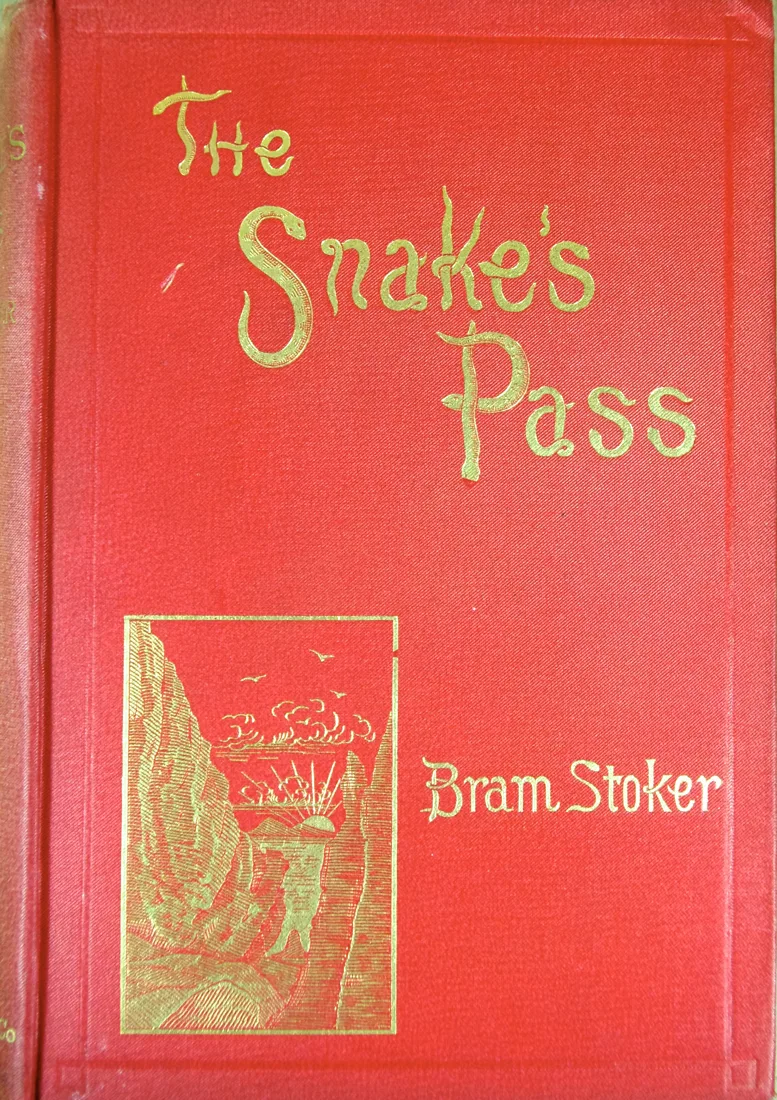
- Another landscape – The Snake’s Pass – Explore an Irish setting, adventure and a shifting landscape in another of Bram’s novels.
- Behind the curtain – Personal Reminiscences of Henry Irving – Step into Bram’s account of the theatre and the people who shaped his working life.
Novels
| Year | Title | First publisher | Notes |
|---|---|---|---|
| 1890 | The Snake’s Pass | Sampson Low, Marston, Searle & Rivington, London, 1890; Harper & Brothers, New York, 1890 | An Irish adventure novel published in book form in 1890. Bram’s earlier The Primrose Path was serialised in 1875. |
| 1895 | The Watter’s Mou’ | Constable, Westminster | A smuggling romance set at Cruden Bay, written there. |
| 1895 | The Shoulder of Shasta | Archibald Constable, Westminster, 1895; Macmillan, London and New York, 1895 | Set in California, drawing on the American tours. Dedicated to Bram’s brother Thornley. |
| 1897 | Dracula | Archibald Constable, Westminster, 1897; Doubleday & McClure, New York, 1899 | See the Dracula page. |
| 1898 | Miss Betty | C. Arthur Pearson, London | A historical romance set in Queen Anne’s London. |
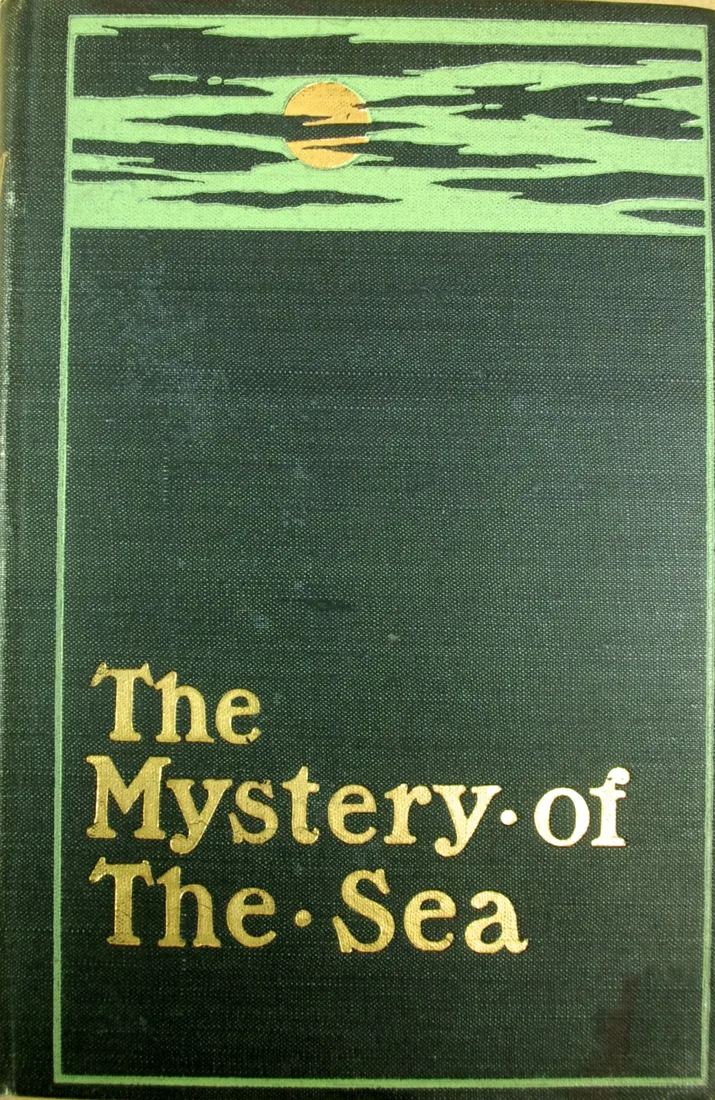
| 1902 | The Mystery of the Sea | William Heinemann, London, 1902; Doubleday, Page, New York, 1902 | Second sight, Armada treasure and kidnap at Cruden Bay, where it was written. |
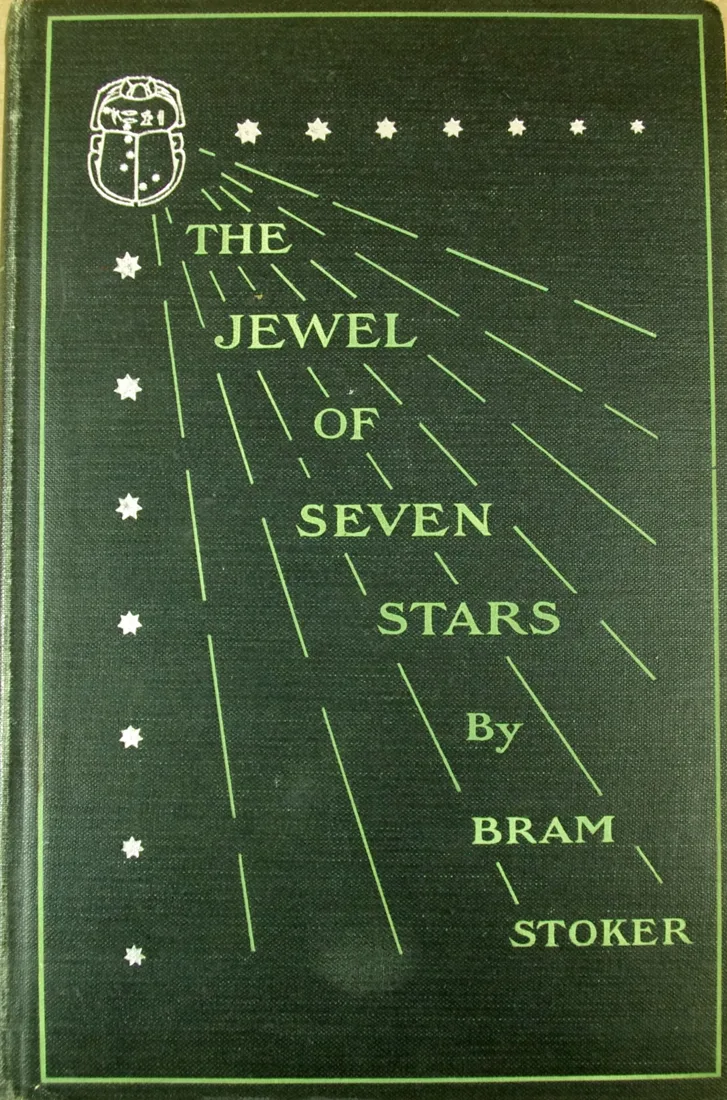
| 1903 | The Jewel of Seven Stars | William Heinemann, London, 1903; Harper & Brothers, New York and London, 1904 | An Egyptian mummy story. Filmed by Hammer as Blood from the Mummy’s Tomb (1971). |
| 1905 | The Man | Heinemann, London | Abridged in the US as The Gates of Life (1908). |
| 1908 | Lady Athlyne | Heinemann, London | A romance turning on Scottish marriage law, in progress by 1901. |
| 1909 | The Lady of the Shroud | Heinemann, London | A Balkan mystery with an apparent vampire. |
| 1911 | The Lair of the White Worm | William Rider, London | Bram’s last novel, written at Cruden Bay between March and June 1911 and illustrated by Pamela Colman Smith. Filmed by Ken Russell (1988). |
Bram also wrote The Primrose Path (1875), a short novel serialised in the Dublin weekly The Shamrock, and one chapter of The Fate of Fenella (1892), a novel written by 24 authors in turn.
Story collections
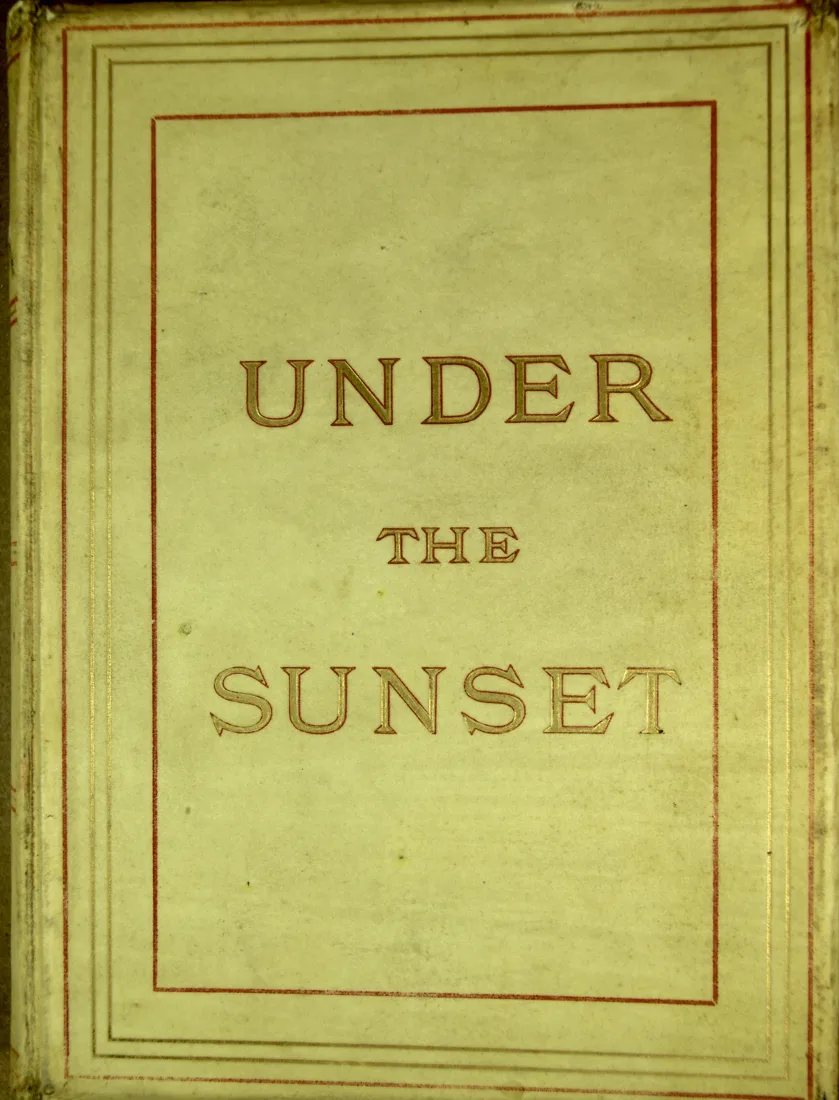
- Under the Sunset (1881, dated 1882), eight fairy tales for children, illustrated by W. Fitzgerald and W.V. Cockburn. It includes “The Invisible Giant”, often read as a memory of the cholera years, and “The Shadow Builder”.
- Snowbound: The Record of a Theatrical Touring Party (1908), linked stories of a touring company stranded in the snow.
- Dracula’s Guest and Other Weird Stories (1914), published by Florence after Bram’s death. It includes “The Judge’s House” and “The Squaw”.
The Judge’s House
For a short introduction to Bram’s supernatural fiction, try The Judge’s House, included in Dracula’s Guest and Other Weird Stories. It offers a different scale of reading from a full novel. Choose a complete text and save any commentary revealing the ending until afterwards.
Short stories
Bram published more than thirty stories in magazines and newspapers. Those not gathered in his collections include:
| Year | Story |
|---|---|
| 1872 | “The Crystal Cup” (London Society, September), his first published story |
| 1875 | “Buried Treasures” and “The Chain of Destiny” (The Shamrock) |
| 1885 | “Our New House” |
| 1886 | “The Dualists; or, The Death Doom of the Double Born” |
| 1890 | Gibbet Hill, published in the Christmas supplement of the Daily Express, Dublin edition; rediscovery announced in 2024. |
| 1891 | “The Judge’s House” (later in Dracula’s Guest) |
| 1892 | “The Secret of the Growing Gold”; “The Coming of Abel Behenna” |
| 1893 | “The Squaw” (December); “Old Hoggen: A Mystery” |
| 1894 | “The Man from Shorrox’” (Pall Mall Magazine, February); “When the Sky Rains Gold”; “The Red Stockade”; “A Dream of Red Hands” (The Sketch, July) |
| 1898 | “Bengal Roses” |
| 1899 | “A Young Widow”; “A Yellow Duster” |
| 1900 | “Lucky Escapes of Sir Henry Irving” |
| 1908 | “To the Rescue”; “The ‘Eroes of the Thames”; “In Fear of Death”; “What They Confessed: A Low Comedian’s Story” |
| 1909 | “The Way of Peace” |
| 1914 | “Greater Love” |
Some passages from the novels were also printed on their own as stories: “The Gombeen Man” and “The Night of the Shifting Bog” (1890, from The Snake’s Pass), “Lord Castleton Explains” (1892, from The Fate of Fenella), “At the Watter’s Mou’” (1895), “The Seer” (1902, from The Mystery of the Sea) and “The Bridal of Death” (1903, from The Jewel of Seven Stars). “In the Valley of the Shadow” (1907) is attributed to Bram.
Plays
Bram turned three of his novels into scripts for copyright readings at the Lyceum: Dracula, or The Un-Dead (1897, a prologue and five acts), Miss Betty (1898, four acts) and The Mystery of the Sea (1902, a prologue and five acts).
Poems
Bram wrote a small number of poems, most never published. Three appeared in print: “The One Thing Needful” (1885), “The Member for the Strand” (1890) and “The Wrongs of Grosvenor Square” (1892, in The Speaker).
Non-fiction books
- The Duties of Clerks of Petty Sessions in Ireland (1879) – his first book, the standard handbook for Irish court clerks.
- A Glimpse of America (1886) – a lecture at the London Institution praising the United States.
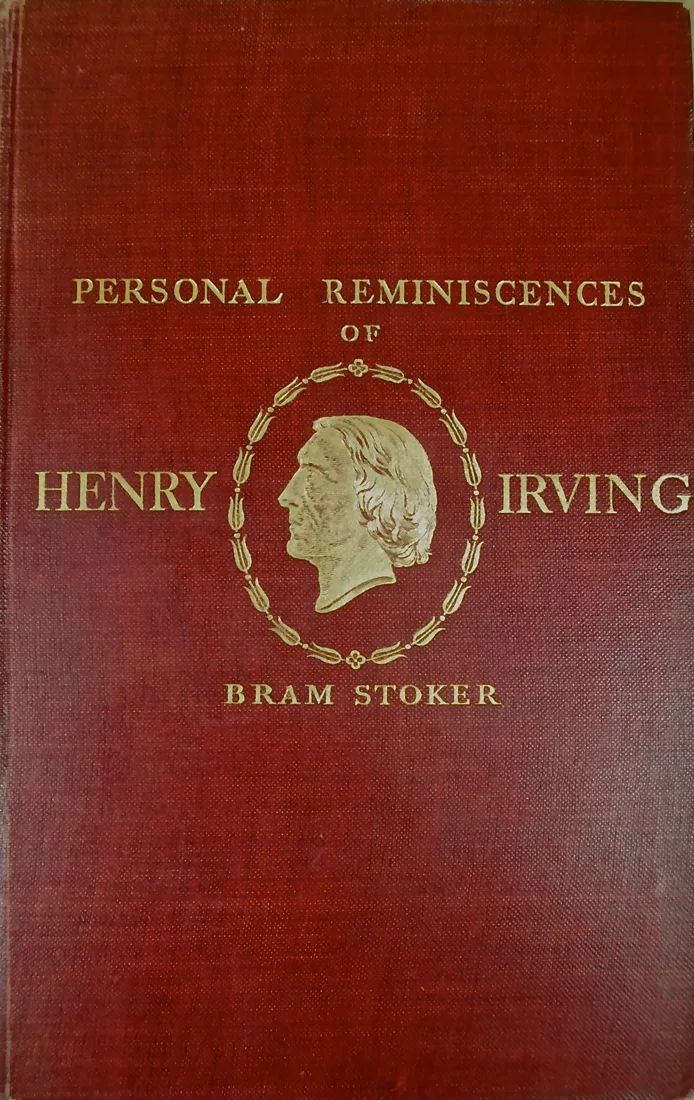
- Personal Reminiscences of Henry Irving (October 1906) – two volumes; widely reviewed, and still the key source on Irving. Read the contemporary reviews.
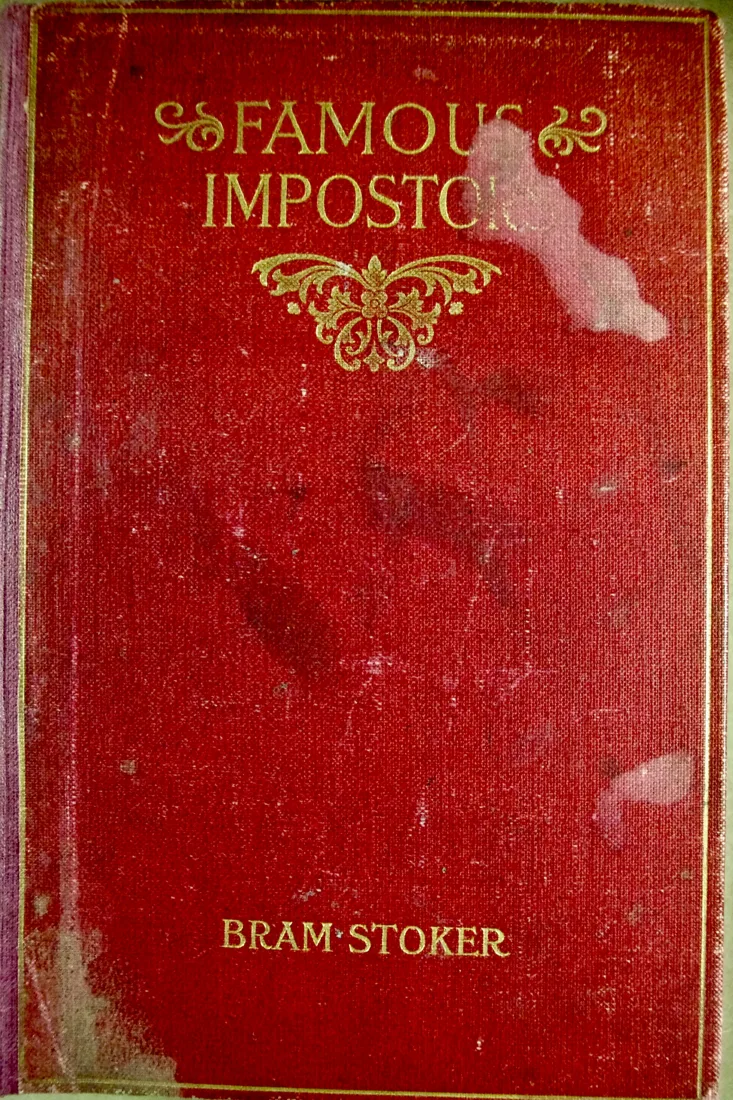
- Famous Impostors (December 1910) – a study of hoaxers and pretenders that helped popularise the ‘Bisley Boy’ legend: the unfounded claim that the young Elizabeth I had been replaced by a boy.
A publishing venture
Bram’s involvement in books extended beyond authorship. He invested in the publishing venture Heinemann and Balestier, which issued English-language books for readers on the European continent in competition with the established Tauchnitz editions. It was another expression of his interest in the business of literature.
Source: William Hughes, Victorian Fiction Research Guides, introduction dated December 1996, citing John St John’s William Heinemann: A Century of Publishing, 1890–1990 (1990), p. 20.
Essays and articles
| Year | Title | Where published |
|---|---|---|
| 1885 | “The American Audience” (under Irving’s name) | Fortnightly Review, 1 February (under Henry Irving’s name) |
| 1890 | “Actor-Managers” | Nineteenth Century |
| 1891 | “Recollections of the Late W.G. Wills” | Publication not identified |
| 1894 | “Dramatic Criticism” | North American Review |
| 1901 | “The Art of Ellen Terry” | The Playgoer, October |
| 1904 | “Sir Henry Irving: An Appreciation” | The Manchester Guardian, 28 October (date recorded in the Bram Stoker Estate records; original scan not yet confirmed) |
| 1905 | “Irving’s Last Hours” | Publication not identified |
| 1906 | “Henry Irving’s Fight for Fame”; “Fifty Years on the Stage” | Henry Irving’s Fight for Fame: Success Magazine, February; Fifty Years on the Stage: The Graphic, 28 April |
| 1907 | “The Great White Fair in Dublin”; “The World’s Greatest Ship-Building Yard” | The World’s Work, Special Irish Edition (May) |
| 1908 | “The Question of a National Theatre”; “The Censorship of Fiction”; “Where Hall Caine Dreams Out His Romances” | Nineteenth Century and After (the first two) |
| 1909 | “Americans as Actors”; “Dead-Heads”; “The Censorship of Stage Plays”; “The Ethics of Hall Caine”; “The American ‘Tramp’ Question” | Americans as Actors: Fortnightly Review, 1 February; Dead-Heads: Fortnightly Review, 1 October; The Censorship of Stage Plays: Nineteenth Century and After, December; The American Tramp Question: North American Review, 1909 |
| 1911 | “Irving and Stage Lighting” | Nineteenth Century and After |
Speeches and lectures
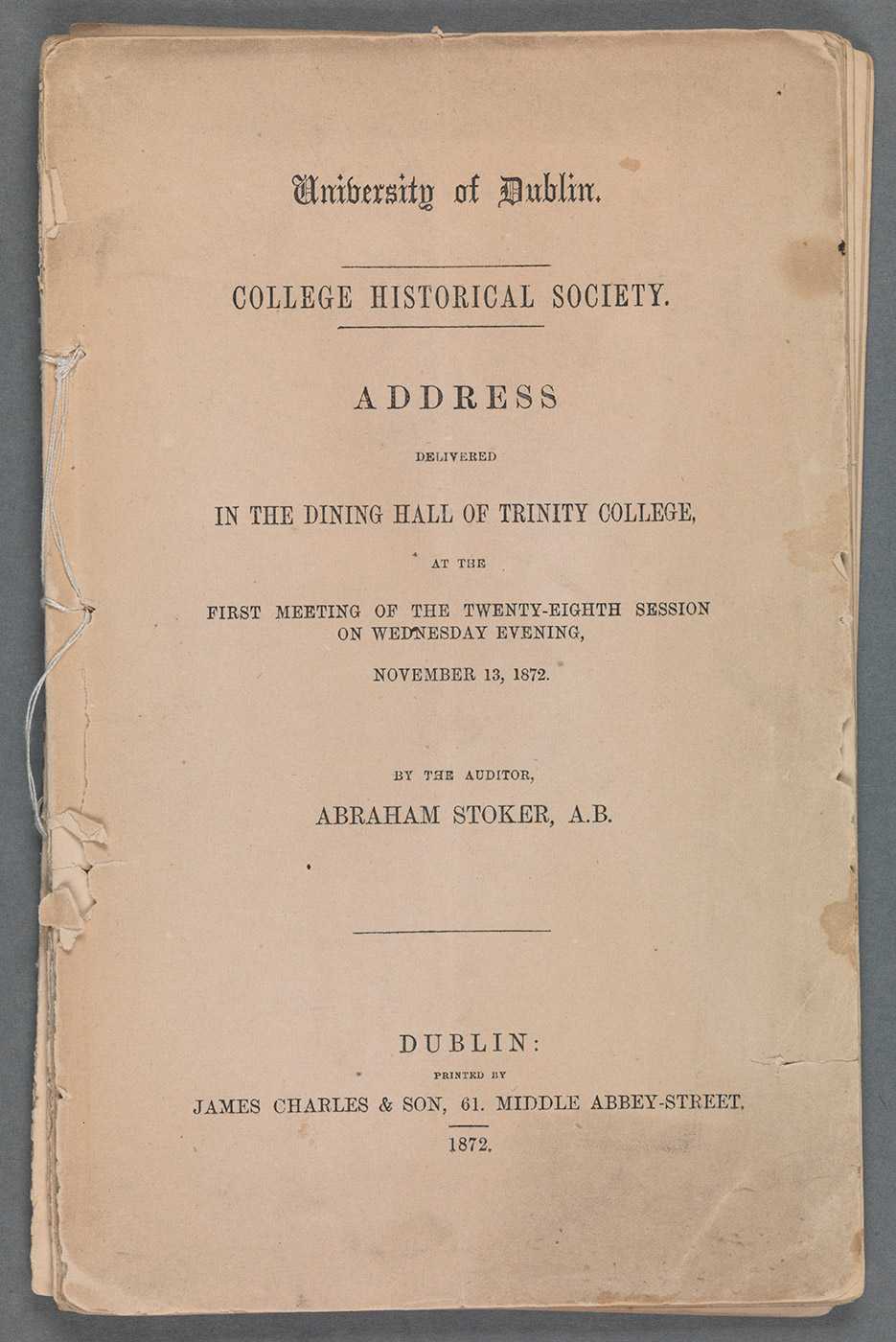
- “The Necessity for Political Honesty” (College Historical Society, Trinity College Dublin, 13 November 1872), published by James Charles & Son, Dublin. Reprinted in Richard Dalby, ed., A Glimpse of America and Other Lectures, Interviews and Essays (Desert Island Books, 2002), pp. 31–47. The linked Trinity Writers essay discusses the address and identifies the original as TCD MS 11076/4/6; it does not reproduce the complete speech.
- “Address to Henry Irving, Esq.” (Trinity, 1876).
- “Personal Impressions of America” (1885), later published as A Glimpse of America.
- “Abraham Lincoln” (1886), a lecture Bram gave several times.
- “The Organization of a Theatre” (1899).
- Lecture at Westbourne Park (1906).
- “Fiction and the Censor” (1907).
Interviews
By Bram, for the New York World and the Daily Chronicle: Sir Arthur Conan Doyle (1907), Winston Churchill (1907), “The Tendency of the Modern Stage” (1907), “How Mr Pinero Writes Plays” (1907) and “Mr De Morgan’s Habits of Work” (1908). He also interviewed W.S. Gilbert.
With Bram: “A Chat with Mr Stoker About Irving” (1886), “The Hudson Controversy” (1886), “Mr Bram Stoker: A Chat with the Author of Dracula” (1897, British Weekly), “The Gangway Seats at the Lyceum” (1890) and “Terriss’s Murderer” (1899).
Bram Stoker interviews Arthur Conan Doyle – an introduction to the 1907 interview and its newspaper versions, with the complete source text linked.
Introductions and lost works
Bram wrote introductions to Sir Henry Irving and Miss Ellen Terry (1899) and The Works of Hall Caine (1905). Henry Irving in England and America 1838–84 (1884) is attributed to him. Lord Tennyson Among His Familiars (1886) is known to have existed but is lost.
Bram’s articles to read in full
- “The American Audience” (Fortnightly Review, 1 February 1885). Published under Henry Irving’s name and included by the former Estate bibliography among writing attributed to Bram. Read the contemporary April 1885 reprint.
- “Henry Irving’s Fight for Fame” (Success Magazine, New York, February 1906). How persistence, discipline and preparation made Irving’s career, and why art mattered more to him than money.
- “The Great White Fair in Dublin” (The World’s Work, May 1907). A tour of the Irish International Exhibition in Herbert Park as a showcase of modern Irish industry and art.
- “The World’s Greatest Ship-Building Yard” (The World’s Work, May 1907). Bram’s visit to Harland and Wolff in Belfast, where the great liners were built.
- “Mr Winston Churchill Talks of His Hopes, His Work and His Ideals” (New York World, 5 October 1907; Daily Chronicle, 15 January 1908). Churchill, aged 32, on politics, writing history and social reform.
- “Americans as Actors” (Fortnightly Review, 1 February 1909). What years of touring taught Bram about American actors.
The Lost Journal
A notebook of Bram’s early observations and ideas emerged from family papers and was published in 2012 as The Lost Journal of Bram Stoker: The Dublin Years, edited by Dacre Stoker and Elizabeth Miller. The Bibliography gives publication details.
For another rediscovery, explore Gibbet Hill: an 1890 story found in the National Library of Ireland’s newspaper collections. The two discoveries connect family preservation with institutional research.