Press archive
Review of Dracula
August 1897 · Bookman
Estate summary
The Bookman praises a compelling narrative despite its grotesque incidents. Comparing its intricate mystery with Wilkie Collins, it admires the sustained excitement while warning against giving it to nervous children.
Read the complete historical review
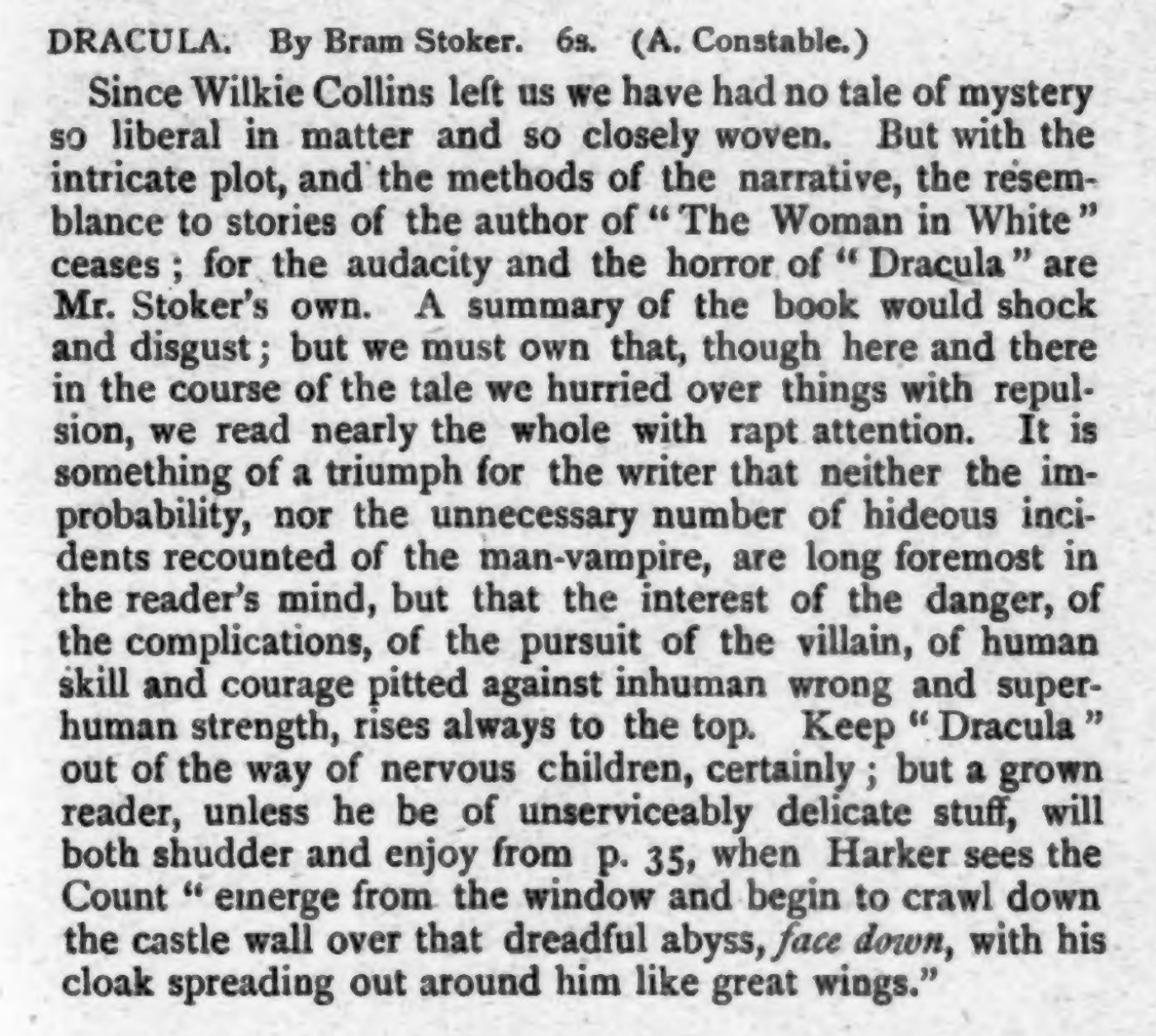
Since Wilkie Collins left us we have had no tale of mystery so liberal in matter and so closely woven. But with the intricate plot, and the methods of the narrative, the resemblance to stories of the author of “The Woman in White” ceases; for the audacity and the horror of “Dracula” are Mr. Stoker’s own. A summary of the book would shock and disgust; but we must own that, though here and there in the course of the tale we hurried over things with repulsion, we read nearly the whole with rapt attention. It is something of a triumph for the writer that neither the improbability, nor the unnecessary number of hideous incidents recounted of the man-vampire, are long foremost in the reader’s mind, but that the interest of the danger, of the complications, of the pursuit of the villain, of human skill and courage pitted against inhuman wrong and superhuman strength, rises always to the top. Keep “Dracula” out of the way of nervous children, certainly; but a grown reader, unless he be of unserviceably delicate stuff, will both shudder and enjoy from p. 35, when Harker sees the Count “emerge from the window and begin to crawl down the castle wall over that dreadful abyss, face down, with his cloak spreading out around him like great wings.”
Original periodical scan
Source notes and excerpts
Original source
Read the original historical reproduction. The source note identifies the provider and any remaining qualifications.
Read the original article ↗Link checked 30 October 2026. Publisher pages open in a new tab.
Saved archive record
The title, date, source details and any Estate summary above are saved on this website, so this record remains available if the publisher’s page changes.
The historical text is reproduced above. See the source note for the edition used and any limits on collation.