Press archive
The copyright battle that gave cinematic life to Dracula
26 May 2020 · CrimeReads
Estate summary
Olivia Rutigliano considers how the dispute over Nosferatu helped shape two enduring traditions of vampire cinema. Her essay begins with the unauthorised use of Dracula and Florence Stoker’s efforts to control the resulting film, then follows the survival of prints and the development of authorised stage and screen adaptations. It contrasts Murnau’s isolated, unsettling Orlok with the more urbane Dracula familiar from later performances. Rutigliano argues that the legal conflict is part of the explanation for these diverging screen identities, rather than simply a curious episode in film preservation. The essay is an interpretation based on later histories, including David J. Skal’s work; it does not reproduce the original case file. Its account of Florence’s intentions and some dates differs from other retrospectives, so those details should be read as the author’s account rather than established findings from newly recovered documents.
Source notes and excerpts
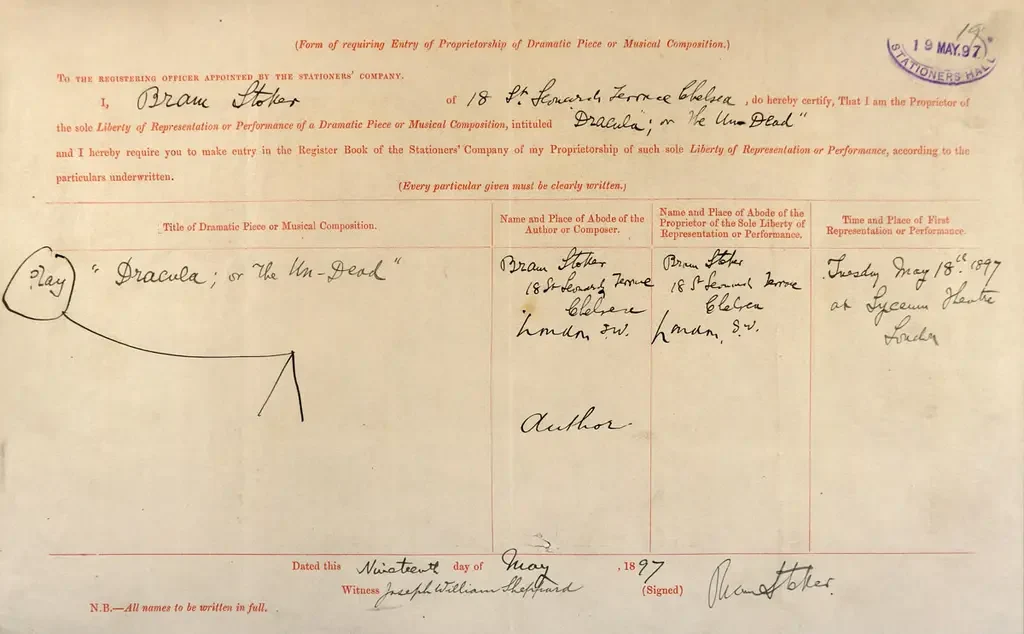
The related image is Bram’s dramatic copyright registration at The National Archives, COPY 1/1108. It predates the Nosferatu dispute and must not be mistaken for a judgment in Florence’s case.
Original source
Read the full article on the publisher’s website.
Read the original article in English ↗Link checked 7 November 2026. Publisher pages open in a new tab.
Saved archive record
The title, date, source details and any Estate summary above are saved on this website, so this record remains available if the publisher’s page changes.
A full copy of this article is not currently held here. Original scans and full texts will be added where available and permitted.