Press archive
Shadow of the Vampire
26 January 2001 · RogerEbert.com / Chicago Sun-Times archive
Estate summary
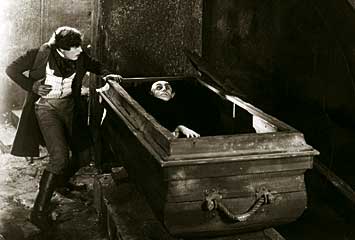
Roger Ebert enjoys Shadow of the Vampire as both a dark comedy about filmmaking and a vampire story of its own. E. Elias Merhige’s film imagines that Max Schreck, the star of Murnau’s Nosferatu, really was a vampire, and that the director accepted the danger in pursuit of his artistic vision. Ebert praises Willem Dafoe’s transformation into this fictional Schreck and John Malkovich’s portrayal of Murnau as a director whose ambition overrides concern for other people. Their relationship turns familiar conflicts between a demanding star and an obsessive filmmaker into macabre jokes. The review also admires the recreation of the silent film’s visual atmosphere and the mixture of absurdity and genuine unease. It is important to retain the distinction between that invented backstage story and the history of the 1922 production: the premise is a fiction, not evidence that Schreck or Murnau behaved as the film depicts.
Original source
Read the full article on the publisher’s website.
Read the original article ↗Link checked 7 November 2026. Publisher pages open in a new tab.
Saved archive record
The title, date, source details and any Estate summary above are saved on this website, so this record remains available if the publisher’s page changes.
A full copy of this article is not currently held here. Original scans and full texts will be added where available and permitted.