Work
The Snake’s Pass
An Irish adventure romance in which stories of buried treasure meet the struggle for land and the dangers of a shifting bog.
Publication: 1890; British title page dated 1891.
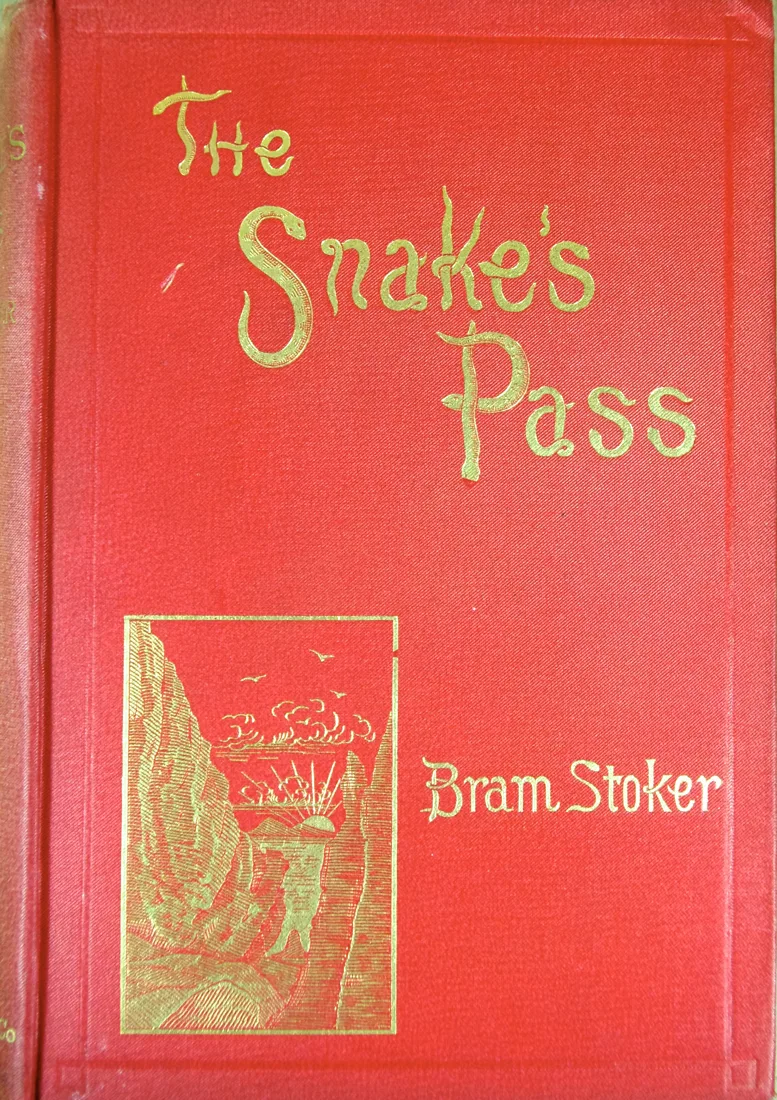
An Irish landscape, a dangerous inheritance
Arthur Severn arrives in the west of Ireland as a young English traveller newly in possession of a fortune. A storm brings him among people whose stories connect the landscape with Saint Patrick, a vanished crown and hidden wealth. His growing attachment to Norah Joyce draws him into a conflict involving her father, the moneylender Black Murdock and his own friend, Dick Sutherland.
This is an adventure romance rather than a vampire novel. The bog is both a physical danger and contested ground: land can be surveyed, bought and exploited, but it cannot be made entirely safe by ownership.
How the story is told
Arthur tells the story in the first person across eighteen chapters. His account moves between travel, local storytelling, romantic misunderstanding and the practical work of surveying. The opening chapters introduce competing explanations of the same place: legend, the priest’s scepticism and the surveyor’s observations.
What to look for
Follow the contrast between Arthur’s enjoyment of the scenery and the interests of people who live and work there. When does his money enable generosity, and when does it give him power over other people’s choices? Notice, too, who tells each local story and how the outsider retells it.
Land, national identity and the English visitor’s perspective are central subjects for modern readers. Lisabeth C. Buchelt’s critical edition places the novel within Irish and late Victorian writing, with historical documents and criticism alongside the text.
Reading the landscape
The opening storm does more than delay a journey. It brings Arthur into a shared room where the landscape is explained through several stories. Read those accounts beside the later surveying: the contrast asks what counts as knowledge, and whether practical expertise makes a person more trustworthy.
Arthur’s first-person voice also sets limits on our access to Norah. Compare what he believes her actions mean with what she actually says and does. Romantic uncertainty becomes one of the book’s ways of testing an observer who often feels confident about his own judgement.
Publication and an early reader
The British volume bears the date 1891, but Bram himself records publication on 18 November 1890. In Personal Reminiscences of Henry Irving he recalls sending an early copy to William Gladstone and receiving Gladstone’s response on publication day. He later discussed the novel with him at the Lyceum. An American edition was published by Harper & Brothers in 1890.
Read the book
The free Project Gutenberg transcription reproduces a volume with the 1891 British title page. Its transcribers record corrections to obvious printing errors and standardisation of hyphenation and accents. For a modern scholarly edition, see The Snake’s Pass: A Critical Edition, edited by Lisabeth C. Buchelt (Syracuse University Press, 2015).