resources
Dracula in the classroom
Lesson-ready activities built on the novel and on the Estate’s own evidence: Bram’s working notes, his 1897 interview, his mother’s letter, the first edition and the castle map. Each activity fits one lesson of 50 to 60 minutes unless stated, names what students produce, and says which assessment objective it serves. Printable sheets are listed at the end.
The novel is in the public domain in the UK and most countries, so passages may be photocopied, projected and adapted freely. Credit Bram Stoker and name the edition.
Eleven activities using the archives
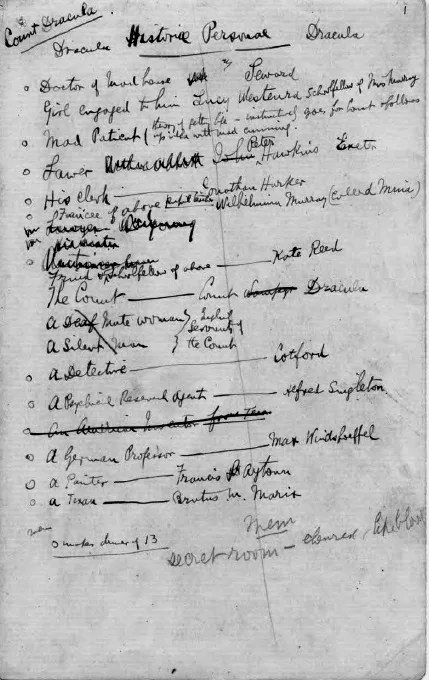
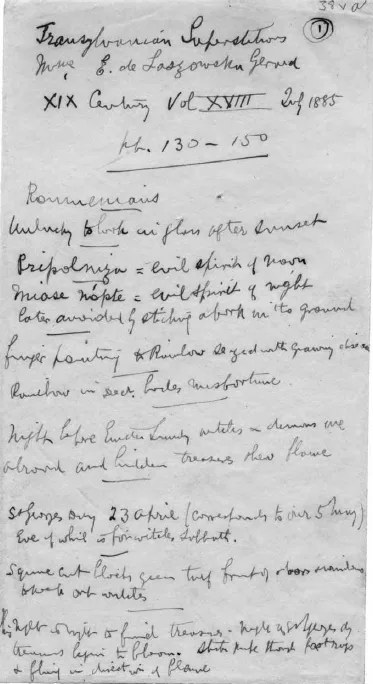
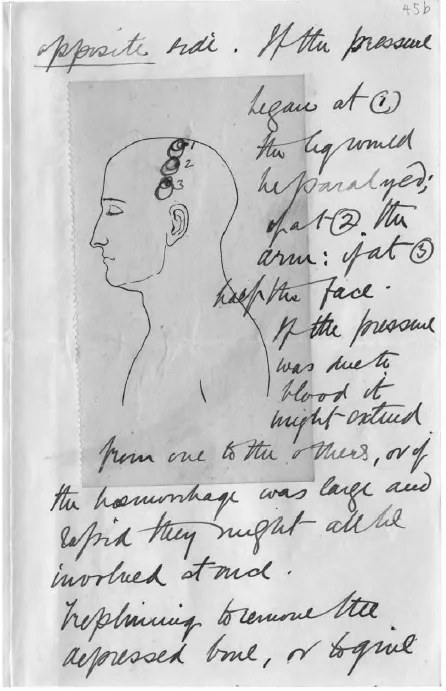
| Activity | What students do | They produce | Estate material | Serves |
|---|---|---|---|---|
| 1. Plan against page | Compare a page of Bram’s working notes (cast list, chronology or reading extract) with the matching passage of the finished novel. What was kept, cut or transformed? Why might he have moved the story from Styria to Transylvania? | A two-column “plan and page” sheet and a paragraph of inference | Working notes on What inspired Dracula; facsimile edition (2008) | AO3 context, AO2 method |
| 2. The author said / the critic says | Read Jane Stoddard’s interview of 1 July 1897. List what Bram actually claimed (three years’ writing; “miscellaneous reading”; Gerard and Baring-Gould; no stated moral). Set each claim against one modern critical reading. Where do they agree, and where is the critic going beyond the author? | A table of claim, source and status (stated, reported, inferred) | Bram on Dracula | AO5 interpretations |
| 3. Reception: 1897 and now | Three first readers: Charlotte Stoker’s letter (“a thousand miles beyond anything you have written before”), Stoddard’s review (“an entirely wholesome impression”) and one review of a recent adaptation. What did each value, and what did each not notice? | A short comparative paragraph | Archive transcriptions; Bram on Dracula | AO5, AO3 |
| 4. Naming the book | The typescript was titled The Un-Dead; the published book was Dracula. Debate the difference for a reader opening the book in May 1897 who has never heard the name. Then look at Wilkinson’s footnote, which gave Bram the name. | A 150-word case for each title | Dracula page; Wilkinson footnote image | AO3, AO2 |
| 5. Flies in a bottle | Bram’s early notebook contains the line “I once knew a boy who put so many flies into a bottle that they had not room to die.” Read it beside Seward’s account of Renfield’s flies and spiders in Chapter 6. Discuss the difference between an observation, an idea and a character; then write Renfield’s own account of one day. | A 300-word first-person piece and a note on sources | The Lost Journal | Creative; AO2 |
| 6. Finding the castle | Use the interactive terrain map to trace Harker’s route (Klausenburgh, Bistritz, Borgo Pass) and the final pursuit (Galatz, the rivers, Veresti). Why does the novel make the journey precise and the castle unlocatable? Compare the two scholarly readings and the Bran Castle tourist claim. | Annotated map notes and a judgement | Where is Castle Dracula? | AO3, AO2 setting |
| 7. Who knew what, when | Using the chapter map, build a wall timeline from 3 May to 6 November. Mark for each character the moment they learn (a) that Harker is alive, (b) what Lucy has become, (c) what the Count is. Where does the reader know first? | A dated timeline with “knowledge gaps” flagged | Chapter map | AO2 structure |
| 8. Two accounts, one event | Compare the Dailygraph cutting on the storm (Chapter 7, about 2,800 words) with the log of the Demeter that follows (about 2,000 words). What can a reporter know, and what can only a dying captain know? Which is more frightening, and why? | A two-column evidence table and a paragraph on form | Novel | AO2 form, AO1 |
| 9. Books behind the book | Look at Boner’s 1865 map of Transylvania, Gerard’s Land Beyond the Forest and the Wilkinson footnote. Bram never visited Transylvania. Choose one detail from Chapter 1 (food, dress, superstition, landscape) and trace how a traveller’s observation becomes a novelist’s atmosphere. | A short “source to sentence” commentary | What inspired Dracula | AO3 |
| 10. Book, screen and audio | Compare one scene with one named adaptation (the 1931 Universal film, Hammer’s 1958 Dracula, the 1977 BBC Count Dracula, Coppola’s 1992 film, the 2020 BBC series, or Audible’s 2026 full-cast adaptation). Name three things the adaptation adds, removes or changes, and say what each change does to the novel’s meaning. With the Audible version, ask what happens to a novel made of written documents when every document becomes a voice, and what is gained or lost by making Mina the investigator from the start. | A comparison grid | Dracula on Stage and Screen | AO5, AO3 |
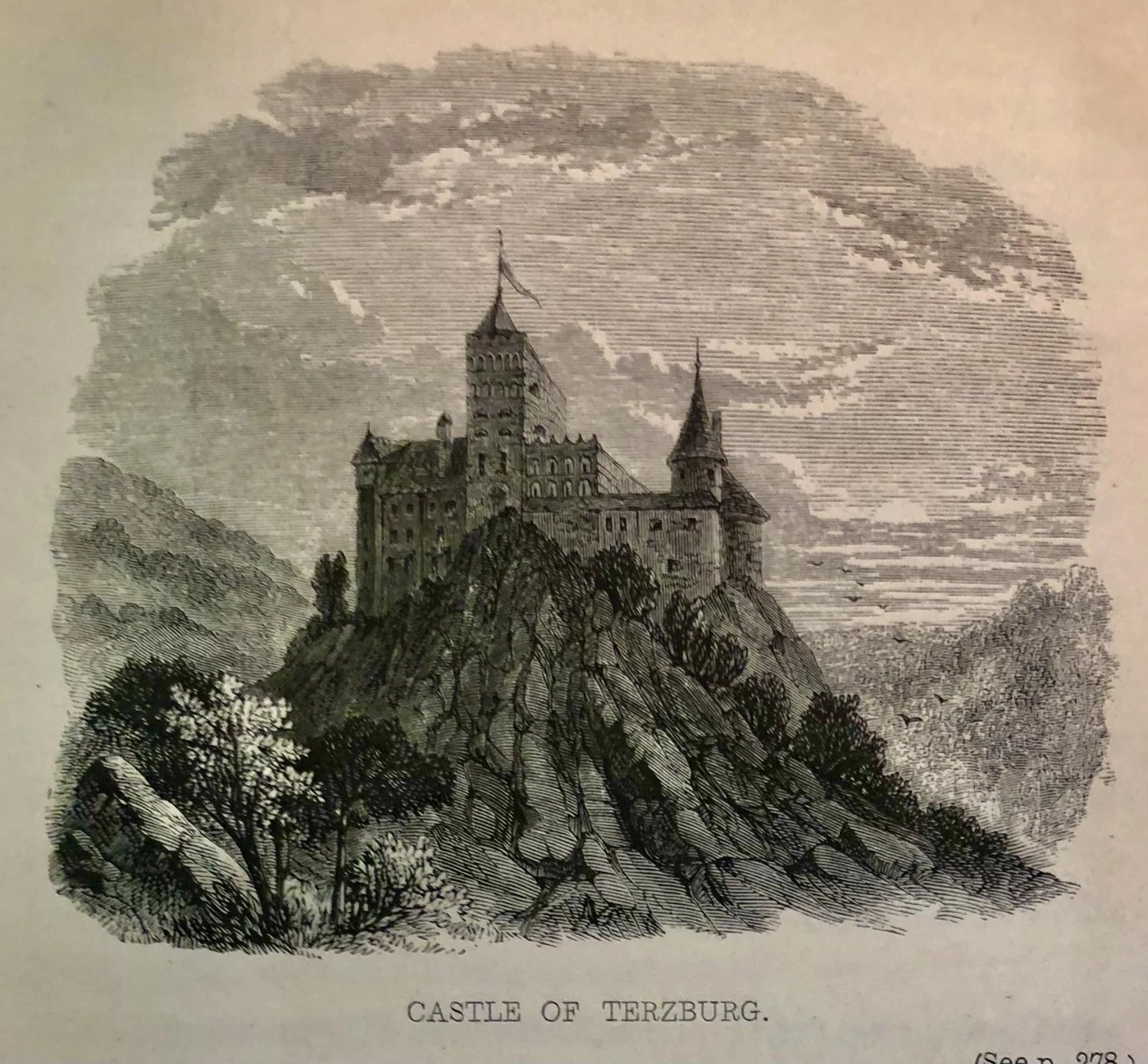
| 11. Dracula’s castle? | Bran Castle, near Brașov, markets itself worldwide as “Dracula’s Castle”. Weigh the claim against the novel’s own descriptions and geography, Bran’s real history, the picture of Bran in Boner’s Transylvania (1865), a book Bram used, and how the label arose through tourism. Then discuss what Bram himself might have made of it, using what he said and did: his 1897 interview, his copyright reading, Florence’s fight against Nosferatu. | A claim-and-evidence table and a reasoned verdict | Dracula’s castle? (PDF); castle map; Bran Castle engraving | AO3, AO5 |
Reproduction: the images on the linked pages carry their own credits. Teachers may display them in class from the website. For reproduction in printed or published school materials, check each credit and see Using Bram’s work.
Activity 11: one possible answer
For teachers: share after students have reached their own verdict. It is one reading of the evidence, and is also printed at the end of the sheet.
How far does the novel support the claim? Hardly at all, though Bran has one real card to play.
The geography rules it out as the location. Bram places the castle in “the extreme east of the country”, reached from Bistritz through the Borgo Pass. Bran stands about 200 km away in the far south, near Brașov, and the novel never names it.
The description does not fit either. Bram’s castle is a ruin: a “vast ruined castle” with “broken battlements” and a ruined chapel; the Count himself says “the walls of my castle are broken”. It hangs “on the very edge of a terrible precipice”, a thousand feet above the forest. Bran is an intact fortress that became a royal home, on a rock above a village and a main road rather than in a remote wilderness.
The Vlad link does not help. Historians doubt that Vlad III ever lived at Bran, and Vlad does not appear in Bram’s notes for the novel.
Bran’s real card is that Bram could have seen a picture of it, the “Castle of Terzburg” in Charles Boner’s Transylvania (1865), one of the books he used. A picture of Bran may have coloured his idea of a castle on a crag. But a picture is not a location, and nothing Bram wrote connects the two.
So Bran can fairly claim to look like what most people imagine Castle Dracula to be, an image that owes more to films, and to Bran’s own marketing since Western tour operators adopted it in the 1960s, than to the novel. It cannot claim to be the castle Bram described or placed. Its own website half admits as much when it asks visitors to separate its history from the fictional Count.
What would Bram have made of it? Nobody can know. The following is one possible interpretation, based on his theatrical career and interest in protecting his work; it is not a recorded opinion or the only defensible answer.
He spent 27 years working with Henry Irving at the Lyceum. His experience of audiences, publicity and theatre management offers a basis for imagining that he might have appreciated Bran’s showmanship.
Bram staged a copyright reading at the Lyceum on 18 May 1897, before the novel’s publication. Florence later pursued the unlicensed film Nosferatu. These actions also offer a basis for imagining reservations about commercial uses of the story, but do not establish what Bram would have thought about Bran.
Bran Castle remains owned by Queen Marie’s heirs. In May 2026, Joel Weinshanker’s Ad Populum group was reported to have acquired an 80% controlling stake in its operating company, CADB. Weinshanker is also involved in managing Graceland. One possible comparison is with a “modern Irving”: an impresario managing a celebrated cultural attraction. This is an analogy for discussion, not evidence that Bram would have approved, or that Weinshanker and Irving’s careers are equivalent.
Harker cannot find a map showing the castle’s exact location. A tourist attraction at a fixed address creates an interesting contrast with that uncertainty. Bram’s 1897 remark that readers should “find it out for themselves” concerned a possible moral lesson in the novel; it was not an invitation to identify the castle.
An alternative answer could place more weight on historical accuracy or on the commercial use of fiction. Whichever view students take, distinguish Bram’s documented words and actions from a modern inference.
Discussion questions by stage
Grouped so that a class can stop at any point without meeting later plot. The last group assumes the whole novel.
Harker at the castle (Chapters 1–4)
- What does Harker notice, and what does he explain away, on the journey east? How does his confidence as an English professional shape what he records?
- Find the exact moment when hospitality becomes imprisonment. What has the reader understood before Harker admits it?
- Harker is a reliable recorder and an unreliable interpreter. Where do the two come apart?
- The Count speaks at length about his ancestors and about London. What does he want, in his own words?
Whitby (Chapters 5–9)
- Compare Mina’s and Lucy’s letters. What do their voices suggest about what each expects from life?
- How does the newspaper report of the Demeter differ from a diary in what it can know and how it can say it?
- What does Seward’s record of Renfield add that no other narrator could supply?
- Mr Swales says the gravestones are “nothin’ but lies of one kind or another”. How does the Whitby section prepare us to doubt documents?
Lucy’s illness (Chapters 10–16)
- Why does Van Helsing withhold what he suspects? What does his silence cost, and who pays?
- How do medicine and belief compete, then combine, in Lucy’s treatment?
- Compare how Lucy is described before and after her death. What has changed in the language, and what does that suggest about attitudes to women?
- Chapter 16 is the novel’s most discussed scene. Who is it for: Lucy, Arthur, the men, the reader?
The alliance (Chapters 17–22)
- What changes once Mina types and arranges everyone’s records?
- The men decide Mina must be “kept out of this dreadful business”. Trace the consequences through Chapters 18–21.
- Whose voices are absent from the dossier? Whose experience is never written down?
- Why does Renfield matter? What would the novel lose without him?
The pursuit (Chapters 23–27)
- How do trains, telegrams, timetables and maps shape the final chase? Who is best at using them?
- How does Mina use her link with the Count? Is she victim, instrument or agent?
- Is the ending a restoration of order? Read Harker’s closing Note closely before you answer.
The whole novel
- Is the greatest danger the Count, or the failure to share what one knows?
- Which details does the novel make precise, and which does it leave uncertain? Why might that be a design rather than carelessness?
- Which of your expectations came from films rather than from the book? Name the film.
- Audible’s 2026 adaptation casts Maggie Gyllenhaal as Van Helsing and builds the story around Mina. What do such choices reveal about how each generation rereads the novel, and what in the 1897 text makes them possible?
- Bran Castle, near Brașov in Romania, markets itself to the world as “Dracula’s Castle”. How far does Bram Stoker’s novel support that claim? And what do you think Bram himself would have made of it?
Three short schemes of work
Teachers asked for sequences, not only single lessons. Each scheme assumes students have read the novel in advance, which for a 160,000-word book is the main practical problem. The reading-in-real-time approach below helps.
Six lessons on narrative method (AQA 7707 and any board)
- Who writes what: the document types and what each can know (chapter map; activity 8).
- Dramatic irony: the reader’s knowledge against Lucy’s friends’ (Chapters 5–13).
- The compiler: Mina’s typewriter and the making of the book (Chapter 17; Wicke).
- Exclusion and its cost (Chapters 18–21).
- The Note: authenticity and doubt (Chapter 27).
- Timed essay: an extract question on the significance of a narrator, place or idea, as AQA sets it.
Six lessons on the Gothic (OCR H472, with a partner text)
- Gothic conventions and their 1890s renewal: castle, crypt, asylum, city.
- Transgression: the three women, Lucy, Mina (activity on Chapter 3 and 16).
- The foreign and the modern: Arata and the Count’s London.
- Partner-text day: shared conventions, different ends (for example The Bloody Chamber or Frankenstein).
- Unseen Gothic practice with a Stoker short text: “The Judge’s House” or Gibbet Hill (see Studying Dracula).
- Comparative essay.
Six lessons on context and interpretation (CCEA AS 2, the Leaving Certificate, Edexcel)
- Context that explains a detail: the dated context sheet on Quotations and terms.
- Plan against page: the working notes (activity 1).
- The author said: the 1897 interview against the critics (activity 2).
- Degeneration, the New Woman and empire: three readings, three passages.
- Reception then and now (activity 3).
- Essay with critical views.
Reading the novel in real time
Dracula is dated from 3 May to 6 November. Reading the entries on their own dates turns a long novel into a daily habit and makes the structure visible: students notice when weeks pass in silence, when four documents land on one day, and how the gaps create suspense. Dracula Daily, a free email newsletter created by Matt Kirkland, sends each dated entry on its date from 3 May to 7 November, moving passages such as the Demeter log to the days on which they occur; it began in 2021 and has had more than 200,000 subscribers since 2022. The full-cast audio drama Re: Dracula (from 2023) releases the same material as a podcast on the same calendar, with some period slurs altered, so it is not strictly unabridged. The calendar spans the summer holiday, so a school version needs adapting: a class starting in September can read Chapters 1–8 together in the first fortnight, then follow the dates from 1 September (late in Chapter 9) to the end on 6 November, two days before the anniversary of Bram’s birth on 8 November. The chapter map gives the dates. Check the services’ current terms before recommending them to students.
Creative responses
- Write the missing document. Choose a voice the dossier never includes (Mrs Westenra, Mr Hawkins, the zoo-keeper’s wife, the captain of the Czarina Catherine, a Szgany driver) and write the letter or report that Mina never received. Then explain in 100 words what that person could plausibly know.
- Transcribe a cylinder. Seward’s diary was spoken, not written. Record a one-minute entry as audio, then type it as Mina would have, noting what is lost between voice and page.
- Report the wreck. Write the Dailygraph correspondent’s third report from Whitby, a week after the storm, using only what a reporter could have discovered by then.
- Design the first edition. The 1897 book was yellow cloth lettered in red, with no illustration. Propose a cover for a reader who has never heard of Dracula and defend each choice in a short note.
For Key Stage 3 and GCSE: extracts that work
Dracula is not a GCSE set text, but short passages suit Gothic units, unseen fiction practice and narrative writing. Each extract below is complete in itself and avoids the novel’s most explicit material. Word counts are approximate.
| Extract | Chapter | Length | Why it works |
|---|---|---|---|
| The coach to the Borgo Pass: the passengers’ gifts, the driver, the wolves and the blue flames | 1 | 1,500 words | Building dread through a narrator who refuses to be frightened; sentence rhythm and detail |
| The Count climbs down the castle wall, “face down, with his cloak spreading out around him like great wings” | 3 | 500 words | A single image of horror; point of view and the impossible |
| The log of the Demeter | 7 | 2,000 words | A found document; a crew disappearing one entry at a time; unreliable and desperate narration |
| Mina finds Lucy in the churchyard at night | 8 | 1,500 words | Setting (Whitby, which students can visit); suspense built from a real place |
| Renfield and the flies | 6 | 1,500 words | Character through a doctor’s notes; voice and clinical language |
| “The Bloofer Lady”: the Westminster Gazette report | 13 | 1,000 words | Newspaper register; how a public document can be frightening by what it leaves out |
For narrative writing, the Chapter 1 journey makes a model: a confident narrator, a sequence of warnings, one unexplained image per paragraph.
Printable sheets to download
Six printable sheets accompany these pages, in the same format as the reading guide and free for classroom use:
- Chapter map and timeline (PDF): all 27 chapters, a blank timeline and the knowledge grid; 5 pages
- Quotation bank (PDF): 35 quotations by theme, 16 key terms and space for your own; 5 pages
- Plan against page (PDF): Bram’s working notes and the finished novel; 3 pages
- The author said, the critic says (PDF): the 1897 interview set against modern criticism; 3 pages
- Two accounts, one event (PDF): the storm at Whitby, newspaper against log; 3 pages
- Dracula’s castle? (PDF): Bran Castle and the evidence; 6 pages