resources
New to studying Dracula
Choose a text you can work with, establish what your course asks of you, then begin reading. For a first reading without detailed plot discussion, use Reading Dracula.
Age and content
For the complete novel we suggest older teenage readers, around 15 to 16 and above, with a teacher or parent choosing what suits the individual reader. This is editorial guidance, not a formal age rating. The novel includes frightening scenes, blood and violence, threats to children, death, sexual threat and coercion, and period language and attitudes concerning race, nationality, disability and gender. Selected passages suit younger readers; the classroom page lists six that work at Key Stage 3 and GCSE.
Editions, text and audio
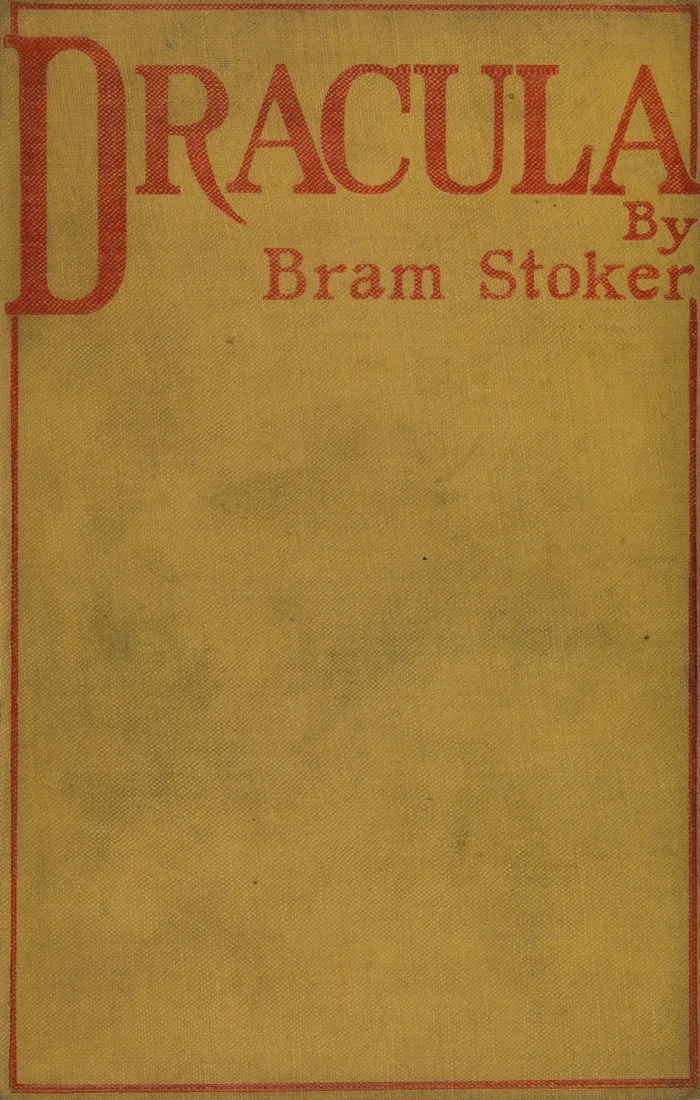
For a class set, choose an edition with stable page numbers, an introduction that can be read after the novel, and notes. The Estate does not endorse one edition; these are the ones most often used in schools and universities.
| Edition | Editor and date | Notes |
|---|---|---|
| Oxford World’s Classics | Roger Luckhurst, 2011 | Introduction covering the Irish background, the Gothic and the novel’s contexts; explanatory notes; a chronology; includes “Dracula’s Guest”. Widely used for A-level and undergraduate study. |
| Penguin Classics | Maurice Hindle, revised 2003, with a preface by Christopher Frayling | Introduction and notes; appendices include Bram’s 1908 essay on censorship and his interview with Winston Churchill. |
| Norton Critical Edition | David J. Skal and John Edgar Browning, 2nd edition 2022 (first edition Nina Auerbach and David J. Skal, 1997) | The 1897 Constable text with background documents, seven contemporary reviews, pieces on the adaptations and eleven critical essays. Useful where critical views are assessed. |
| Broadview | Glennis Byron, 1997 | Text with appendices: “Dracula’s Guest”, Bram’s 1908 essay “The Censorship of Fiction”, and documents on Transylvania, London, degeneration, gender and the first reviews. Useful for comparing the novel with contemporary documents. |
| The New Annotated Dracula | Leslie S. Klinger, 2008 | Extensive annotation and illustration; for the teacher’s desk rather than the class set. |
| Dracula Annotated for the 125th Anniversary | Dacre and Robert Eighteen-Bisang, 2022 | An annotated edition drawing on Stoker’s working notes, edited by Dacre Stoker and Robert Eighteen-Bisang. |
| Free text | Project Gutenberg, ebook 345 | The 1897 text, with chapter anchors for linking. Check availability in your country. |
| Audio | LibriVox (free, volunteer, unabridged); Naxos AudioBooks (2015, a reader for each narrator, 17 hours); Audible’s full-cast reading (2012, with Alan Cumming and Tim Curry); Penguin’s Studying Dracula (2020, the unabridged text with A-level commentary) | Check that a recording is unabridged, not a dramatisation: the BBC radio versions are dramatisations. Listening while following the text helps with the shifts of voice. |
Further annotated editions are in the Bibliography; check the current printing before ordering.
Dracula in the curriculum
Dracula appears on the English A-level specifications and coursework lists shown below, on CCEA’s AS in Northern Ireland and on the Irish Leaving Certificate. This table was checked against the boards’ specifications in October 2026 and will be reviewed on 1 September 2027. Specifications change by examination year: always use the linked specification for text lists, open or closed-book rules and assessment objectives.
| Board and qualification | Where Dracula appears | How it is assessed | Specification |
|---|---|---|---|
| OCR H472 A-level English Literature (England) | Component 02 Comparative and contextual study, topic The Gothic. One of only two core texts, with Carter’s The Bloody Chamber. | Closed text, 2 hours 30. Section 1: an unseen Gothic passage. Section 2: a comparative essay testing a critical statement against at least two texts from the Gothic list, at least one of them a core text. Context (AO3) carries half the marks for the essay. | OCR H472 specification |
| AQA 7707 A-level English Language and Literature (England) | Paper 1 Telling Stories, Section B Imagined Worlds: one of four set novels, with Frankenstein, The Handmaid’s Tale and The Lovely Bones. | Open book, clean copy. One question from two: a printed extract and the significance of a character, place or idea across the novel, including how fantasy elements build a fictional world. No comparison. AO3 here is largely about genre. | AQA 7707 specification |
| Pearson Edexcel 9ET0 A-level English Literature (England); also AS 8ET0 | Component 2 Prose, theme The Supernatural. Pre-1900: Dracula, The Picture of Dorian Gray. Post-1900: Beloved, The Little Stranger. | Open book, clean copies, 1 hour 15. One comparative essay on two texts from the theme, at least one pre-1900, related to context. Critical views (AO5) are not assessed on this paper. | Edexcel 9ET0 specification |
| Pearson Edexcel 9EL0 A-level English Language and Literature (England); also AS 8EL0 | Component 2, Section B, theme Crossing Boundaries. Dracula and Wide Sargasso Sea are the two anchor texts. | Open book, clean copies. A comparative essay on the anchor text and one other text from the theme, weighing linguistic and literary methods and context. The AS paper sets an extract-based question on the anchor text. | Edexcel 9EL0 specification |
| CCEA GCE English Literature (Northern Ireland) | AS 2 The Study of Prose Pre 1900: one of six set novels. | Closed book, 1 hour. One essay responding to a critical statement; argument and interpretation (AO5) drive the unit. CCEA publishes a Dracula teaching eGuide. | CCEA English Literature |
| Leaving Certificate English (Ireland), examinations 2026, 2027 and 2028 | Prescribed as a single text at Higher and Ordinary Level, and on the list for the comparative study. | Paper 2. As a single text, answered on its own; in the comparative study, set beside two other texts under the year’s modes. Oide publishes a Dracula “Read and Respond” resource. | 2028 prescribed material |
| WJEC Eduqas A-level English Language and Literature (England) | Component 4 non-exam assessment, Critical and Creative Genre Study: first on the prescribed Gothic list. | Coursework, 3,200 to 3,500 words, with wider reading in the genre. | Eduqas specification |
Coursework. Because it is not an examined set text on their papers, Dracula can be chosen for the non-exam assessment on AQA English Literature A (7712) and B (7717), Eduqas English Literature and WJEC English Literature in Wales, subject to each board’s approval rules.
Ireland. Dracula returns to the Leaving Certificate for the examinations of 2026, 2027 and 2028, after an absence from the lists for 2021 to 2025: an Irish novel, by a Dublin-born author, set for Irish students. Each year sets different comparative modes: for 2026, Cultural Context, General Vision and Viewpoint, and Literary Genre at Higher Level; for 2027, Theme or Issue, Cultural Context, and General Vision and Viewpoint; for 2028, Literary Genre, Theme or Issue, and Cultural Context. At Ordinary Level the modes include Social Setting, Relationships, Theme, and Hero, Heroine, Villain. The Irish contexts on these pages (Bram’s Dublin years, Trinity, Marsh’s Library, Charlotte’s writing) are written with Irish students in mind. Oide’s resource is at oide.ie.
GCSE and younger students. Dracula is not a set text on any GCSE English Literature specification in England. A Dracula extract, the Count’s first meeting with Harker, was the unseen fiction text on Pearson Edexcel GCSE English Language Paper 1 in the November 2020 series, and extracts are widely used for Paper 1 practice and in Key Stage 3 Gothic units.
Scotland. Not a set text for Higher or Advanced Higher English, but free choice applies to the critical essay, and Bram Stoker is on SQA’s suggested authors for the Advanced Higher dissertation.
Elsewhere. The novel is a single-text option in Tasmania’s English Literature course from 2026. It is not on the IB prescribed reading list, but IB courses allow free-choice works. At university it is a staple of Victorian and Gothic courses, for example Trinity College Dublin’s Victorian Gothic module and Oxford’s first-year Victorian reading.
What may change. England’s Curriculum and Assessment Review (2025) proposed no major changes to A-level English, and reformed A-levels are not expected before first teaching in 2031–32, so the current specifications should run for several more years. Boards can still change texts within a specification. CCEA’s reformed A-levels begin in 2030. Ireland publishes each year’s list about two years ahead.
CCEA’s current published specification, section 3.2, lists Dracula for AS 2. Its March 2025 circular changes the answer booklet for online marking, while retaining the examination paper. Checked 26 October 2026. Next review due 1 September 2027.
Teaching outside the UK and Ireland
For an AP Literature class or a college Gothic course, use the chapter map to track narrative voice, the quotation guide to build an evidence-based argument, and the archive sources to distinguish historical context from interpretation. For IB work, confirm the suitability of the text and proposed task with the teacher and current course requirements.
For younger readers
Meet Bram Stoker for Years 3–6: a short biography, source detective work and a story-writing activity. Test your knowledge with the quiz.
How to begin a study reading
Read enough of each episode to experience its pace before pausing to analyse it. Keep an initial response and an evidence record separately: surprise, discomfort or sympathy may be worth investigating even when you later revise your explanation.
- Keep a small chapter record. Note the place and date, the document’s writer, one change in knowledge and one passage you may want to return to. Use the chapter map after reading to check the sequence.
- Mark uncertainty. Distinguish an event from a character’s explanation of it. When Harker doubts his senses, write down what happened and what he thinks it means. Later chapters may change your judgement.
- Build connections gradually. Return to an early passage when a later one changes it: hospitality and captivity; Lucy’s proposal letter and her treatment; Mina’s typing and exclusion. This gives you evidence across the novel before you settle on an essay answer.
- Read criticism after making an observation. Use Context and themes and Source materials to test a question you already have. Check whether a source is a contemporary document, later scholarship or an adaptation.
For a lighter first encounter, use the six-session reading plan. For advanced work, continue to University study and research.
For university students and independent researchers
Open the university study and research guide for the 1890s, critical debates, a purposeful reading list and routes into original documents. Use the Research guide to locate reference material and dispersed holdings.