

A second Dublin outing
Bram’s birthplace at 15 Marino Crescent is outside this compact city-centre route. Combine it with Clontarf separately rather than adding a long out-and-back walk.
Read more → Official Estate
Self-guided walks
Begin at Trinity and finish beside St Patrick’s Cathedral. The route links Bram’s studies, a former home, his marriage and his work, with the friendship that drew him towards the theatre. The Oscar Wilde Memorial adds the wider literary world of the Wilde and Stoker families.
Lengths are approximate. Allow extra for crossings, detours and visits.
Tap a numbered pin for a short introduction and photo. Tap the photo to open the full details, then use “Return to map” to come back. Tap Show my location and choose Allow to see your blue dot as you walk. No app is needed. The pale blue circle shows your phone’s estimated accuracy.
Location is off. You can use the map and stop list without sharing it.
Numbered pins match the list. Burgundy lines follow mapped walking routes; dashed green lines are optional outings. Routes are a guide: follow local signs, crossings and current access conditions. Report a map issue. Route data: OpenStreetMap, prepared with FOSSGIS / OSRM.
Location is optional and stays in this page’s memory; the Estate does not receive or save your coordinates. Map tiles are requested from OpenStreetMap for the area you view. Opening Apple Maps or Google Maps uses that provider’s service. Location privacy.
Keep the page open and your screen awake for updates. Updates may pause when the phone locks or the browser is in the background. Accuracy and signal vary; this is not an offline guide.
The route includes private buildings and working institutions. View homes from public pavements; check opening and admission before planning an interior visit. Park access at Merrion Square depends on its gates being open.
Stop 1 of 7
Bram entered Trinity College Dublin in 1864 and graduated in 1870. College gave him a stage for athletics, friendship and debate: he became president of the Philosophical Society and auditor of the Historical Society. These interests ran alongside his civil-service work and his growing involvement in theatre, long before Dracula made his name.
Trinity’s account highlights his roles as president of the Philosophical Society and auditor of the Historical Society. His speaking and sporting life offer a starting point for understanding the man behind Dracula. The Graduates Memorial Building came later, in 1892; its present debating rooms were not the setting for his student speeches.
Campus and exhibition access are different; check Trinity’s current visitor arrangements.
Trinity Writers: Bram’s college life ↗
Next: Follow Nassau Street and Clare Street to Merrion Square North.
Walking directions to the next stop ↗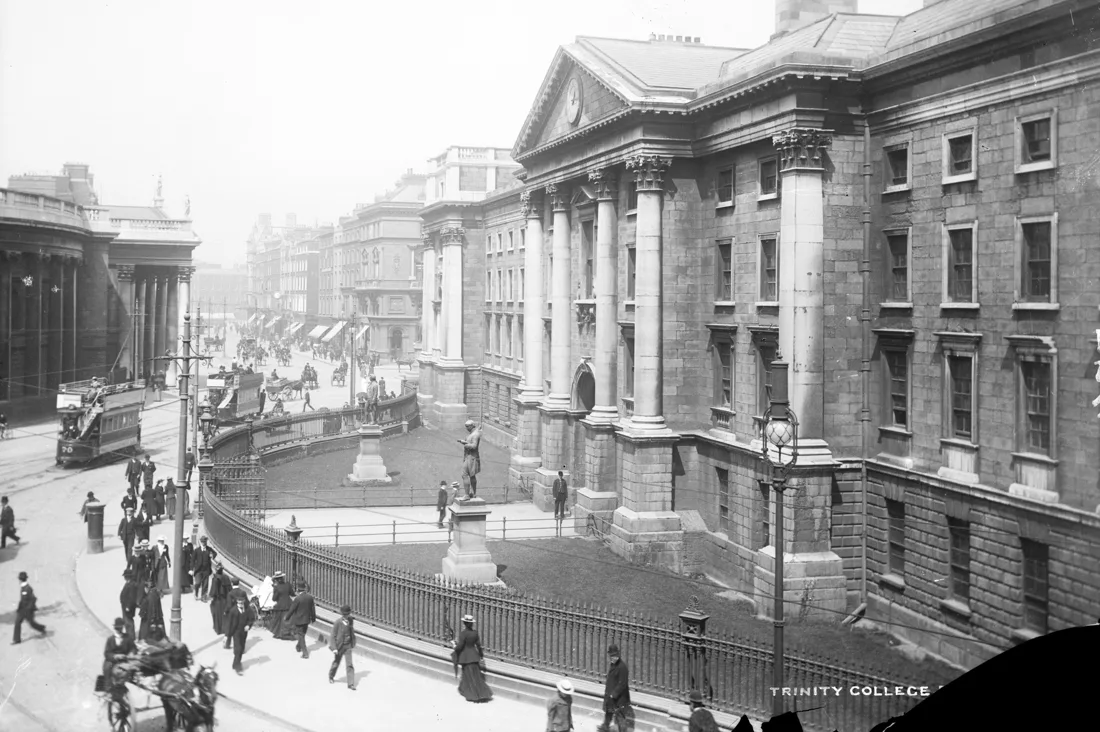
Stop 2 of 7
Bram knew the Wilde family within Dublin’s overlapping literary and social circles. Oscar Wilde also courted Florence Balcombe before she married Bram in 1878. The memorial therefore introduces a connection between the two writers’ lives and families, although the sculpture itself dates from 1997 and is not something Bram saw.
Look closely at the materials and expression. Osborne describes a jade jacket, a face that smiles on one side and appears sad on the other, and bronze figures of Constance Wilde and Dionysus opposite. The inscribed pillars bring Wilde’s words into the memorial. Richard’s photograph is a useful companion for spotting these details in person.
Enter the north-west corner of Merrion Square Park. The memorial is outdoors; check park opening.
Next: Return by Merrion Square West and Leinster Street South to Kildare Street.
Walking directions to the next stop ↗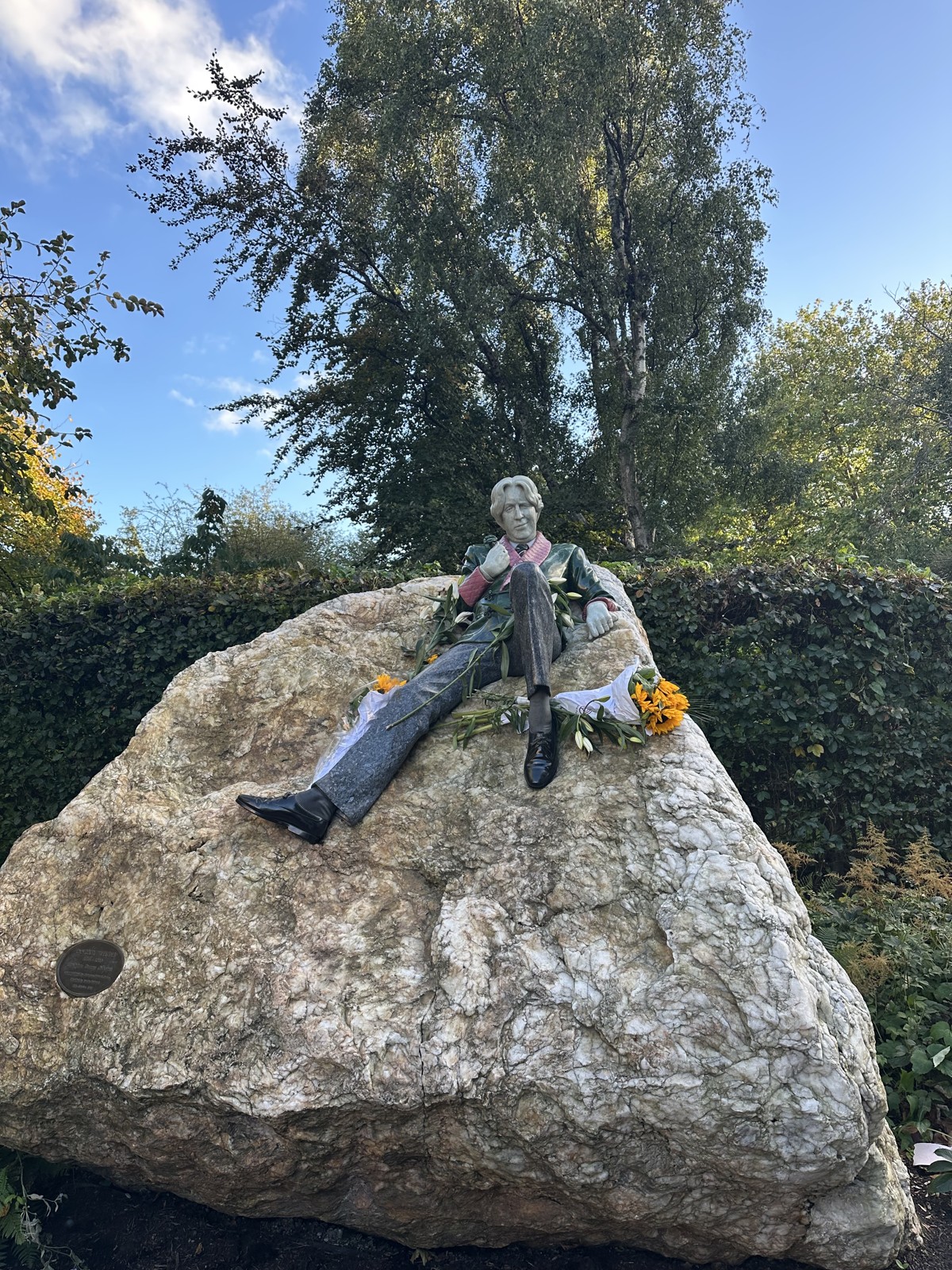
Stop 3 of 7
No. 30 Kildare Street is remembered as a former home of Bram, with a plaque naming him as theatre manager and author of Dracula. It places his domestic life close to Trinity and the offices and theatres of central Dublin. The national architectural inventory confirms the commemorative plaque; precise dates of residence are not established by that record, so the walk does not assign an unsupported period to the house.
Pause to read the plaque rather than simply photographing the doorway. Its two occupations lead into the next part of the walk: the Dublin theatre connection at the Shelbourne, followed by the church where Bram and Florence married. Compare the house with Richard’s photograph to identify the building, while leaving residents and entrances undisturbed.
View the exterior from the public pavement. It is not a Stoker house museum.
National Inventory of Architectural Heritage ↗
Next: Continue south along Kildare Street to St Stephen’s Green North.
Walking directions to the next stop ↗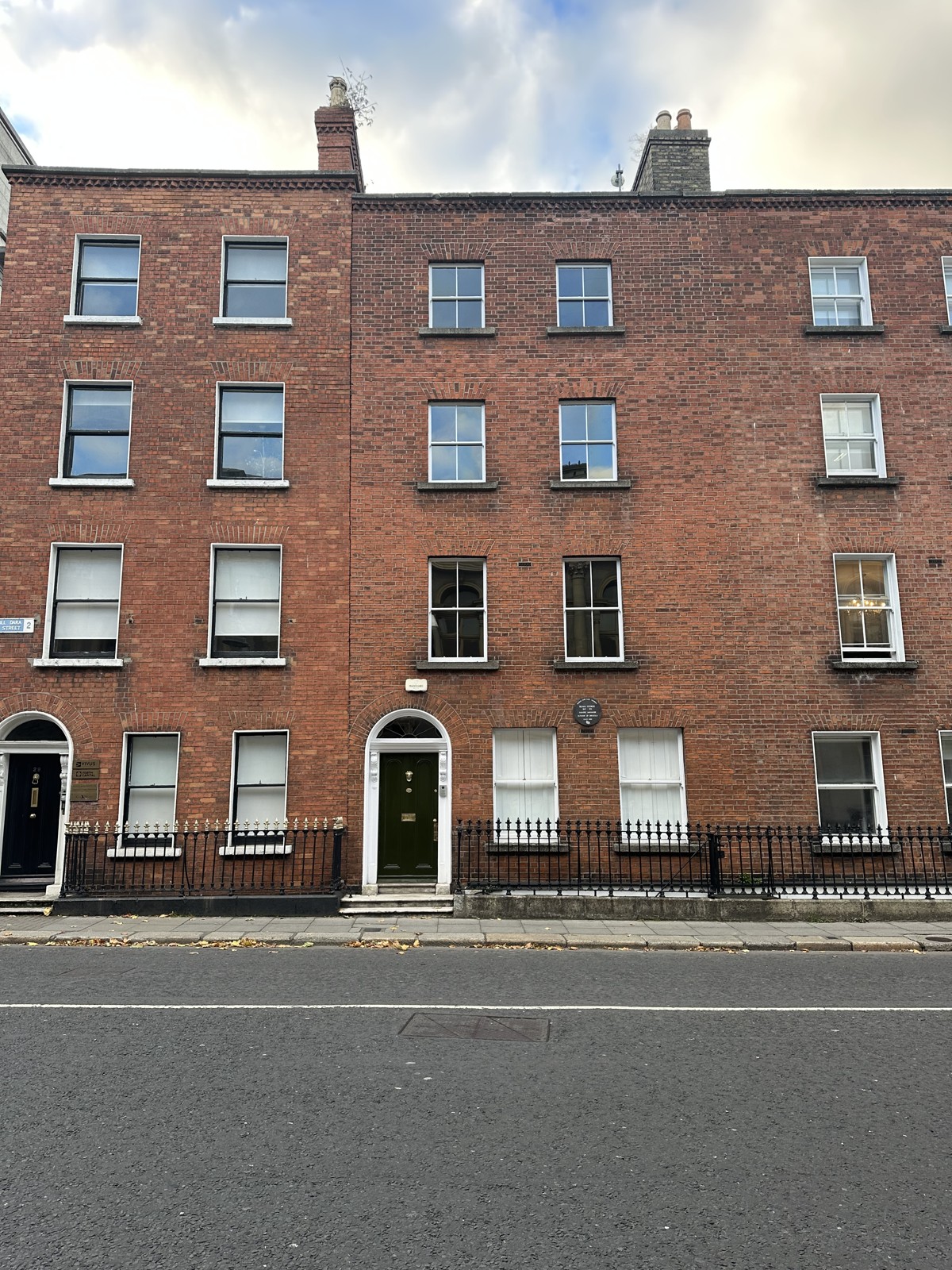
Stop 4 of 7
Bram’s relationship with Henry Irving developed from his Dublin theatre reviewing into a friendship that changed his career. In Personal Reminiscences of Henry Irving, he recalls an invitation to the Shelbourne and the powerful effect of Irving’s recitation. In 1878 he moved to London to work for Irving. His memoir distinguishes an initial supper from a later Sunday dinner; these were not simply one meeting with an assumed date.
This is a good place to bring Bram’s own voice into the walk. Read the memoir passage before setting off and picture the change from a newspaper reviewer observing a visiting actor to the professional partnership that followed. Continue outside along St Stephen’s Green North before turning into Dawson Street; a meal or visit inside the hotel is optional.
The exterior can be viewed from St Stephen’s Green North. The hotel is a working business; ask staff before visiting public rooms.
Bram’s Personal Reminiscences of Henry Irving (Volume I) ↗
Next: Walk west to Dawson Street, then north to St Ann’s.
Walking directions to the next stop ↗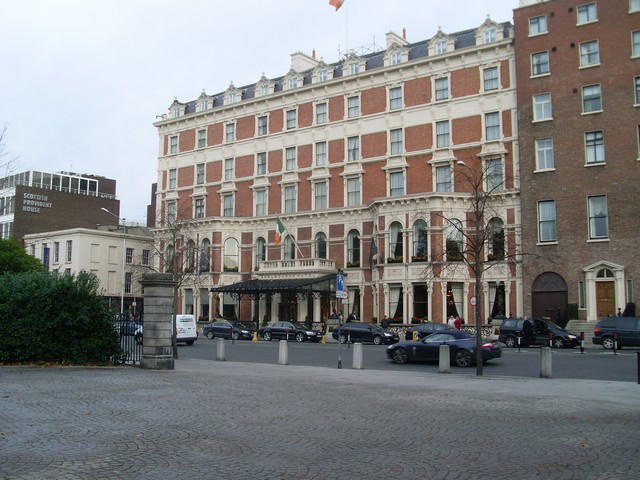
Stop 5 of 7
Bram and Florence Balcombe married at St Ann’s on 4 December 1878. Their marriage came at the transition from his Dublin civil-service and reviewing years to work with Henry Irving in London. The church marks that personal turning point: Florence would share his London life and their son Noel was born the following year.
If the church is open, ask about its bread shelf. The diocese traces this charitable tradition to shelves installed in 1723 to help feed poorer Dubliners. It places the building in the everyday life of the city, beyond its literary wedding connection. Ask whether it can be seen without interrupting worship.
Respect services and check church opening.
Visit Dublin: St Ann’s Church ↗
The diocese on St Ann’s bread shelves ↗
Next: Continue north to Nassau Street; use Suffolk Street, Church Lane and Dame Street to reach Dublin Castle.
Walking directions to the next stop ↗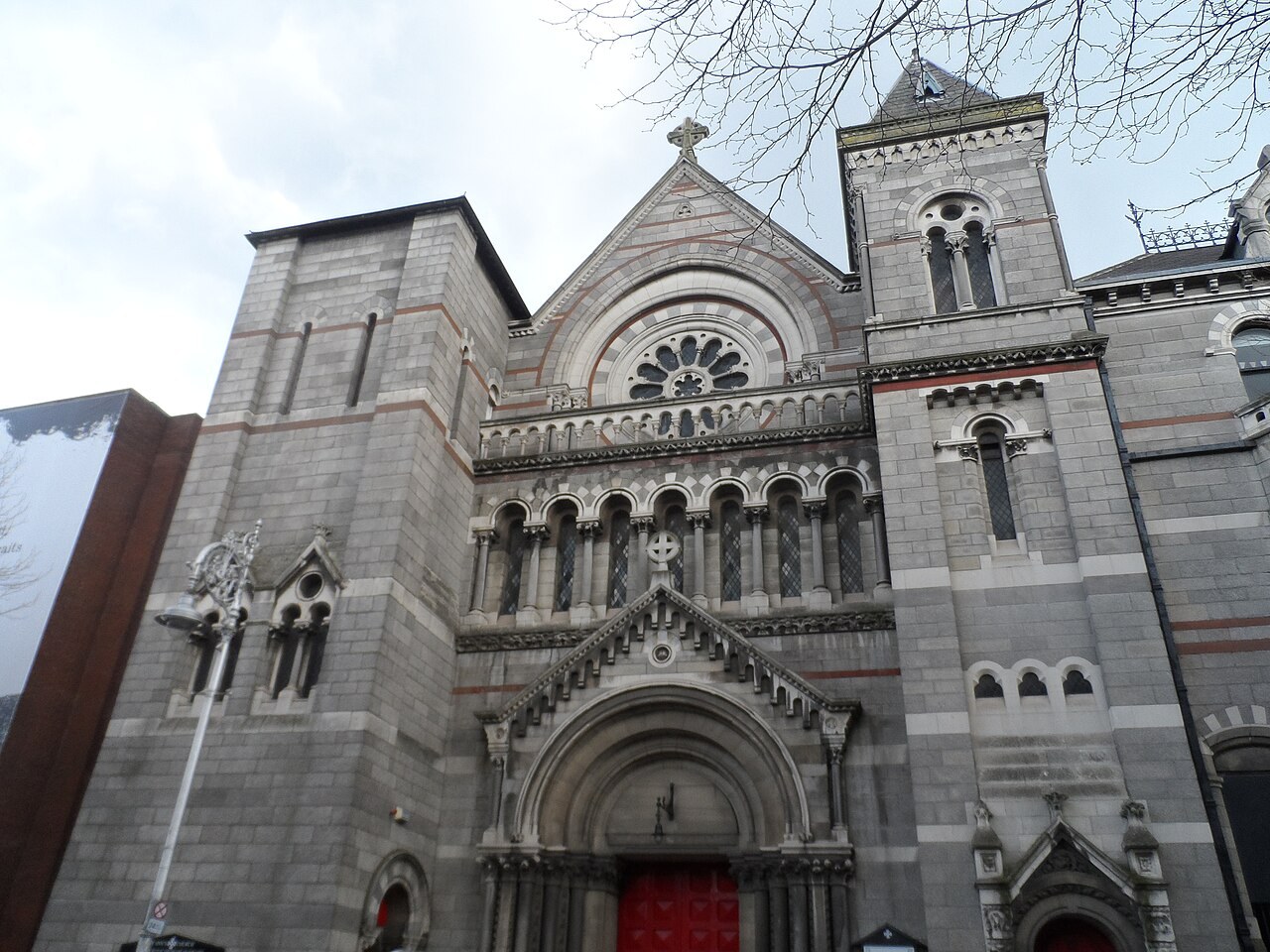
Stop 6 of 7
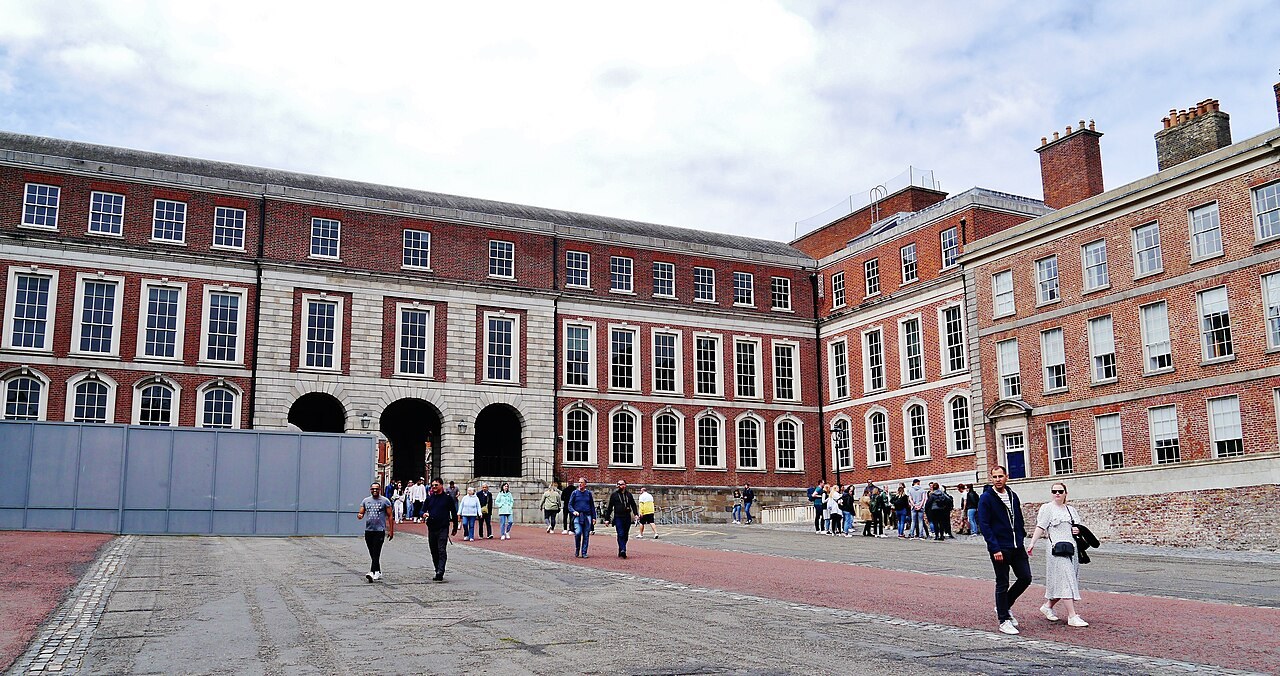
Bram worked in the Irish civil service from 1865 until 1878, alongside his studies and later theatre criticism. His duties developed into inspecting petty-sessions administration, and his practical experience informed The Duties of Clerks of Petty Sessions in Ireland. The Castle introduces the administrator behind the novelist: records, procedures and organised work were familiar parts of his life.
For an architectural addition, look towards the medieval Record Tower and Chapel Royal area. The Castle’s history explains that the tower was adapted in 1811 to hold state papers. Its different layers distinguish the older fortress from the administrative complex Bram knew. This is context for his working world, rather than a claim that he worked in the tower.
Public courtyard access and paid interior tours have different arrangements; check the Castle’s visitor information.
Dublin Castle: the Record Tower ↗
Next: Leave towards Castle Street, then use Werburgh Street, Bride Road and St Patrick’s Close.
Walking directions to the next stop ↗Stop 7 of 7
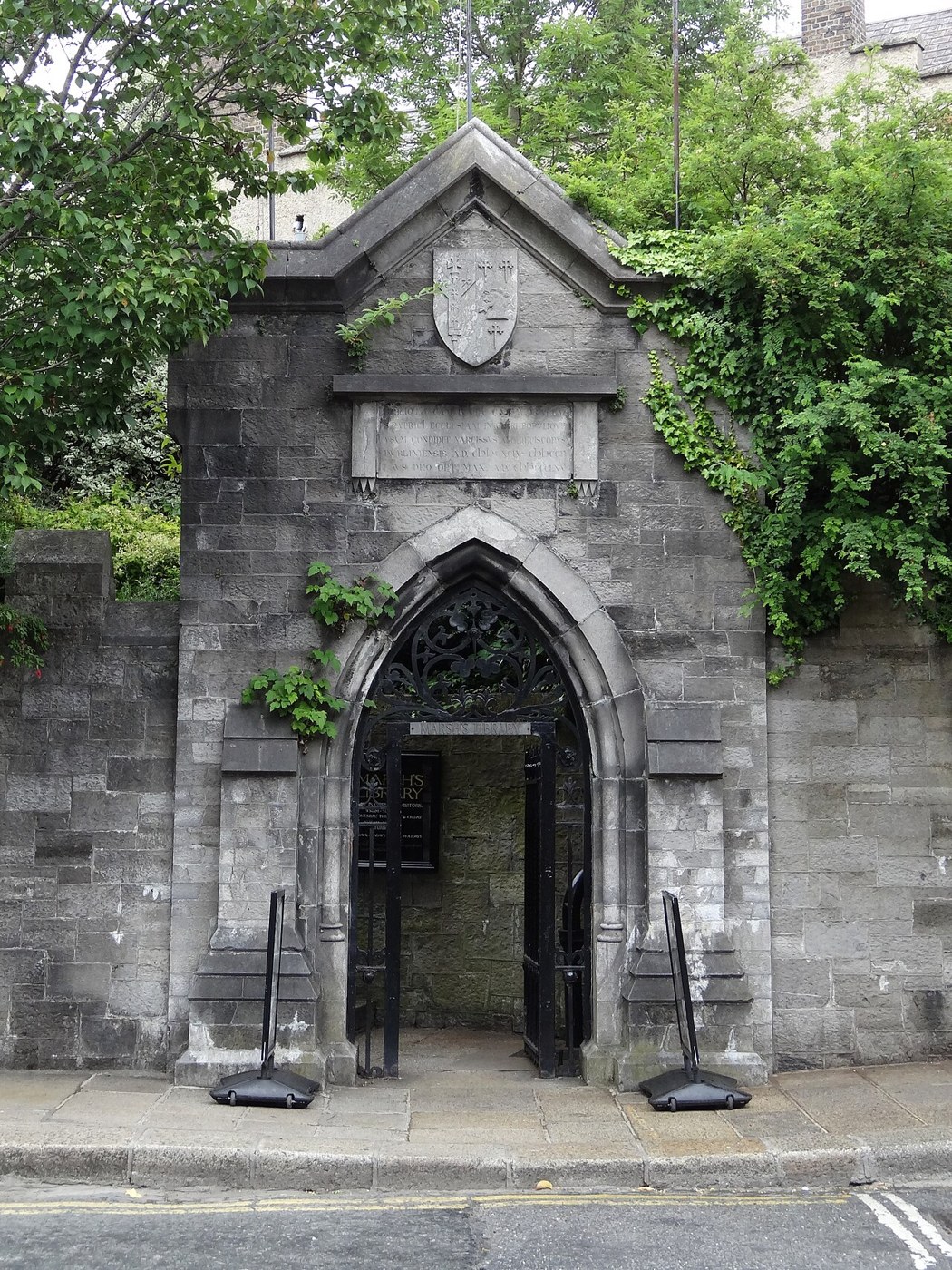
Marsh’s Library records Bram’s seven visits in 1866 and 1867, beginning with a recommendation from his Trinity tutor, Dr Shaw. Its register shows the actual books he requested, including geography, travel and poetry. This is unusually direct evidence of the young Bram’s reading. The Library cautions against treating visits made three decades before Dracula as a simple explanation of that novel.
The library’s online exhibition reproduces his recommendation from Dr Shaw, his signature and the register tracking seven visits. Among the books he requested were geography, travel and poetry. These documents let you follow a young reader’s curiosity, without turning every early book into a direct source for Dracula.
Check admission and access with the library; the historic galleries involve stairs.
Bram’s birthplace at 15 Marino Crescent is outside this compact city-centre route. Combine it with Clontarf separately rather than adding a long out-and-back walk.
Read more →MoLI’s Dublin Gothic exhibition places Stoker beside other Irish Gothic writers. It is a worthwhile separate visit near the end of this walk.
Read more →