

A second Dublin outing
Bram’s birthplace at 15 Marino Crescent is outside this compact city-centre route. Combine it with Clontarf separately rather than adding a long out-and-back walk.
 Official Estate
Self-guided walks
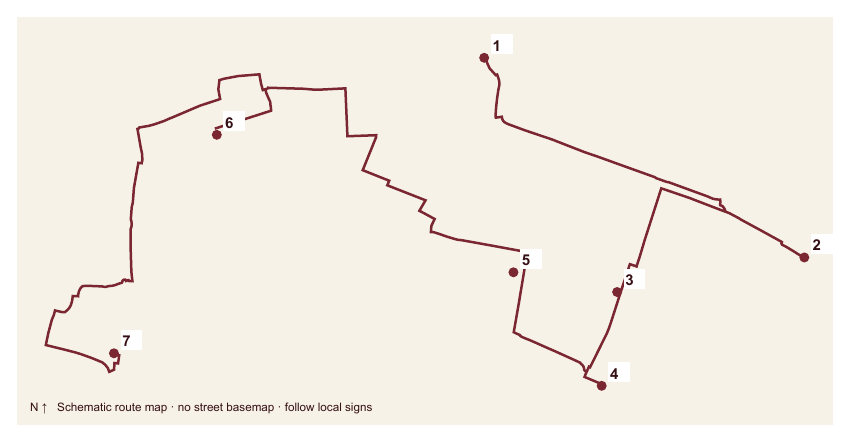
Begin at Trinity and finish beside St Patrick’s Cathedral. The route links Bram’s student years, a former home, his marriage and his civil-service work with the friendship that drew him to the theatre. At Merrion Square, the Oscar Wilde Memorial adds the wider literary world of the Wilde and Stoker families.
Lengths are approximate. Allow extra for crossings, detours and visits.
Dublin Castle is closed through 31 December 2026 for Ireland’s EU Presidency. There is no public access or through route across the campus. The map shows the normal route: skip the Castle grounds during the closure and follow local diversions to Marsh’s Library.
Numbered pins mark the stops. On your phone, you can tap a pin for a short introduction and photo, then tap the photo for full details. When you are done, click “Return to map”.
Showing your location is optional and needs no app. Tap Show my location and choose Allow for your blue dot. The pale circle shows estimated accuracy. Keep this page open and your screen awake. The Estate does not receive or save your coordinates. Map information and privacy.
Location is off.
Routes are a guide: follow local signs, crossings and current access conditions. Report a map issue.
1Main stopsAOptional stopsMain routeOptional detours
The route includes private buildings and working institutions. View homes from public pavements; check opening and admission before planning an interior visit. Park access at Merrion Square depends on its gates being open.
Stop 1 of 7
Student years · 1864–1870
Trinity remembers Bram for an unusual double distinction: he is the only person to have led both its Philosophical and Historical societies. That achievement belongs to a much wider, energetic student life.
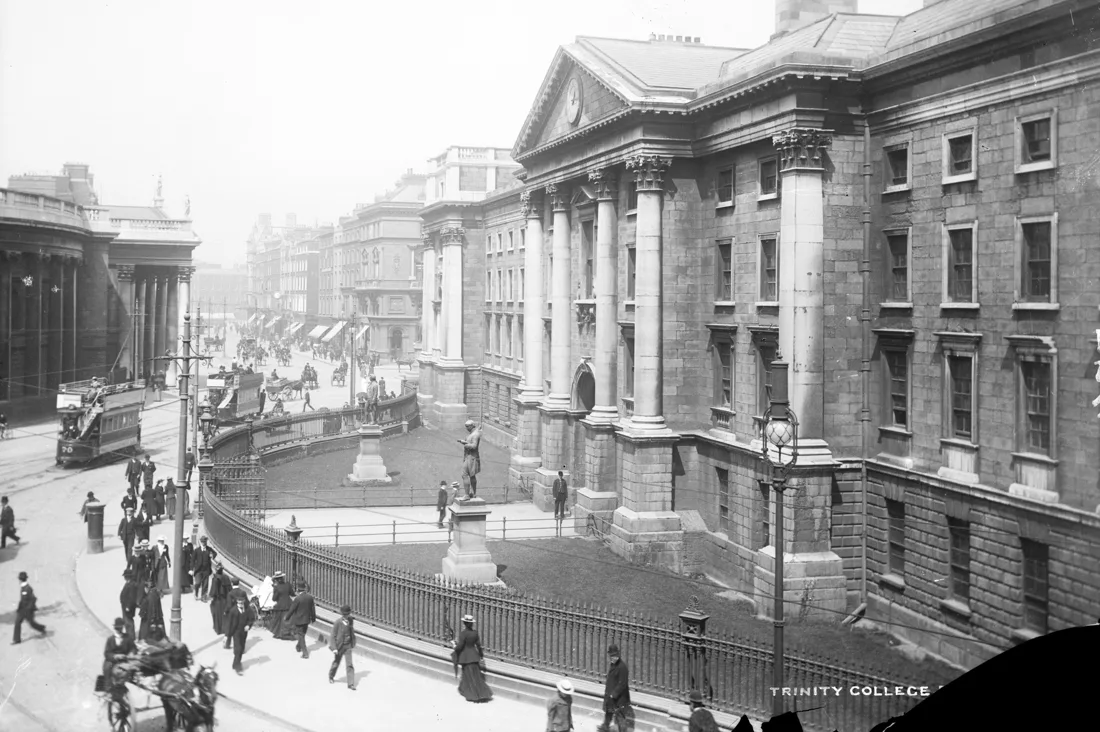
Look through the front gate of Trinity towards the squares beyond. Bram entered the college in 1864 and graduated in 1870, and it gave him a stage for athletics, friendship and debate.
He became president of the Philosophical Society and auditor of the Historical Society, and Trinity’s own account records his 1867 prizes for weightlifting and for five- and seven-mile walks. Years later he remembered himself as Athletic Champion of Dublin University.
College life ran alongside his civil-service work and a growing passion for the theatre, and it continued after graduation with his Historical Society inaugural address, “The Necessity for Political Honesty”, in November 1872. In December 1876, at Bram’s suggestion, Trinity honoured the actor Henry Irving with a formal address and a “University Night” at the theatre.
The front gate on College Green and the college squares beyond it: the setting for six years of Bram’s study, sport and debate.
“When I was in my twentieth year I was Athletic Champion of Dublin University.”
“In my College days I had been Auditor of the Historical Society – a post which corresponds to the Presidency of the Union in Oxford or Cambridge”
His dates, offices and 1867 prizes come from Trinity’s own account; the athletic title is Bram’s recollection. The Graduates Memorial Building dates from 1892, so its present debating rooms postdate his student speeches.
Campus and exhibition access differ; check visitor arrangements. The Old Library and Long Room are due to close for works from the end of 2027.
Trinity Writers: Bram’s college life ↗
Old Library redevelopment and visitor access ↗
Book Trinity visitor experiences ↗
Next: Follow Nassau Street and Clare Street to Merrion Square North.
↑ Return to map from stop 1: Trinity College – College Green entrance
Stop 2 of 7
Later memorial · Danny Osborne’s memorial · 1997
The green jade jacket catches the eye before the stories behind the memorial unfold. Those stories lead into the friendships, courtships and family connections of Dublin’s literary circles.
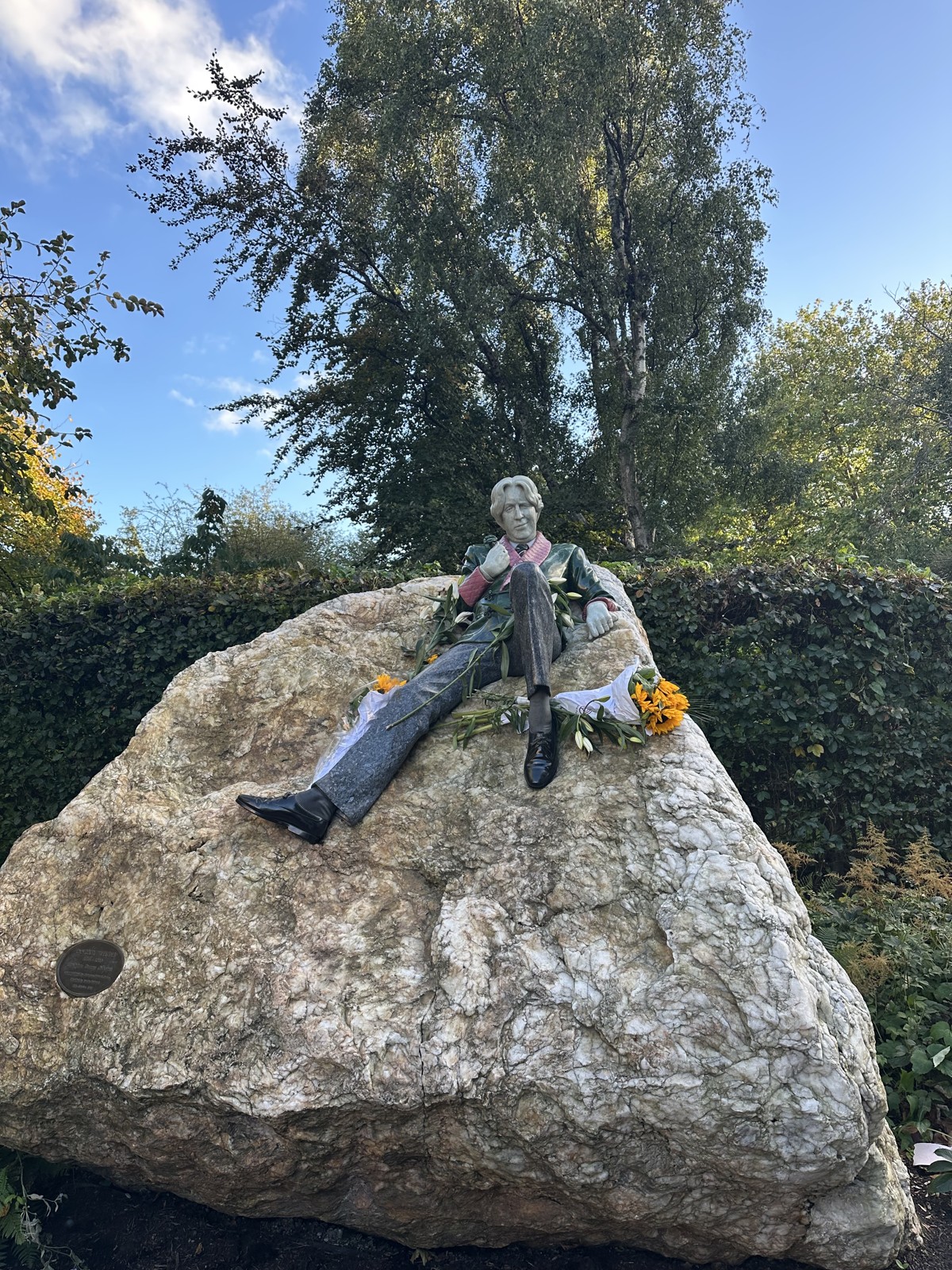
Find Oscar Wilde in the north-west corner of the park, facing his childhood home at No. 1 Merrion Square across the road. Danny Osborne made the memorial in 1997, long after both writers had died.
Bram knew the Wilde family within Dublin’s overlapping literary and social circles, and Oscar courted Florence Balcombe before she married Bram in 1878, so the stories of the two families touch here.
Look closely at the face, where one side smiles and the other is sorrowful, and walk slowly round the figure to watch the expression change. Opposite stand bronze figures of Constance Wilde and Dionysus, while the pillars carry quotations written out by people invited to contribute to the memorial.
The green jade jacket, the pink thulite collar and cuffs, and the smiling and sorrowful sides of the face. Then read the handwritten quotations on the pillars.
“Oh, friend John, it is a strange world, a sad world, a world full of miseries, and woes, and troubles; and yet when King Laugh come he make them all dance to the tune he play.”
The memorial dates from 1997. Bram’s link here is biographical: he knew the Wilde family, and Oscar courted Florence before her marriage to Bram.
Enter at the north-west corner of Merrion Square Park. The memorial is outdoors; access depends on the park gates being open.
Next: Return by Merrion Square West and Leinster Street South to Kildare Street.
↑ Return to map from stop 2: Oscar Wilde Memorial – Merrion Square
Stop 3 of 7
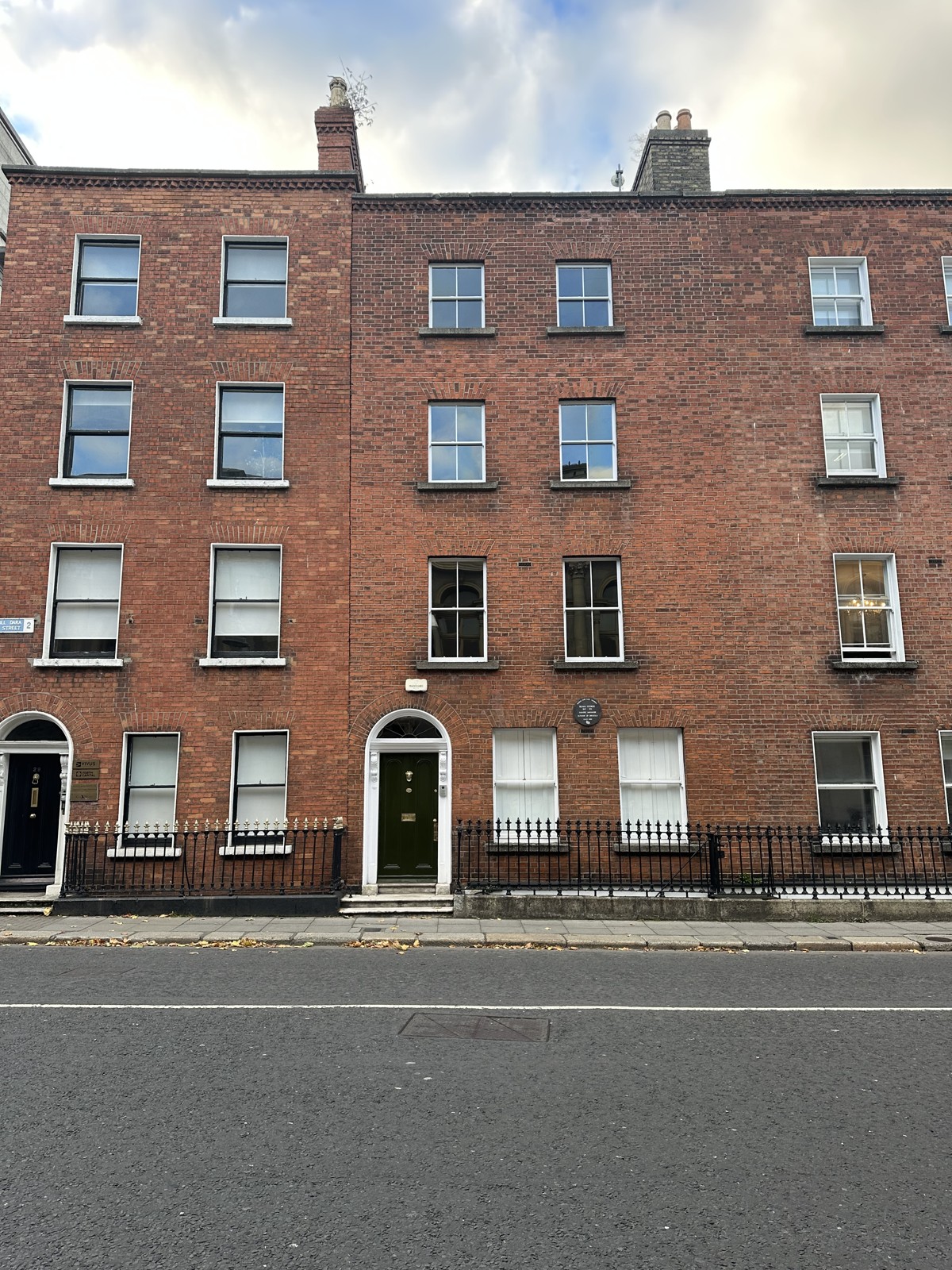
Former home · commemorative plaque
Bram’s Dublin life had room for more than one ambition. This address brings his official career close to the growing interest in performance that would eventually take him to London.
Look up at the plaque on No. 30: it remembers the man he became rather than the young civil servant who lodged here.
The house places his Dublin life close to Trinity and to the offices and theatres of the city centre. From November 1871 he had reviewed plays for the Dublin Mail, unpaid and at his own offer, fitting the work around his office hours.
He treated criticism as a matter of personal honour, and that habit of close, honest reviewing was about to change his life. A short walk south stands the Shelbourne, where his friendship with the actor Henry Irving took shape in 1876.
The commemorative plaque, then the batwing fanlight above the door and the decorative boot-scraper beside the entrance, details recorded in the national architectural inventory.
“I replied that I would gladly do it without fee or reward.”
“I have always held that in matters critical the critic’s personal honour is involved in every word he writes”
The National Inventory of Architectural Heritage confirms the plaque; the records do not give dates of residence. In March 1876 Bram lived at 119 Lower Baggot Street, so his time here was probably the later 1870s.
View the exterior from the public pavement; the house is private.
National Inventory of Architectural Heritage ↗
Next: Continue south along Kildare Street to St Stephen’s Green North.
↑ Return to map from stop 3: 30 Kildare Street – Bram’s former home
Stop 4 of 7
Friendship with Irving · 1876
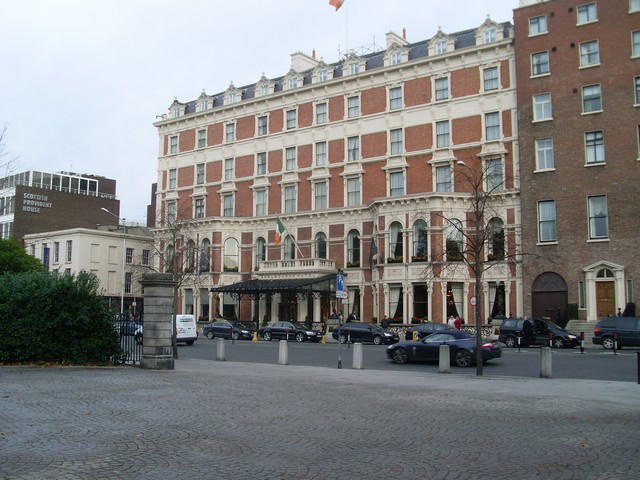
On a December night in 1876 more than a thousand students hauled Henry Irving’s carriage by rope up Grafton Street to this hotel – and Bram went with him.
Stand on St Stephen’s Green North and take in the Shelbourne’s long frontage. In 1876 this was Henry Irving’s Dublin hotel, and here the course of Bram’s life turned.
Irving read Bram’s review of his Hamlet and asked to meet him, and Bram supped with him at his hotel after the play before returning the next Sunday for dinner with a few friends. Afterwards Irving recited Thomas Hood’s The Dream of Eugene Aram, and Bram was overwhelmed.
On 11 December, after Trinity’s “University Night” at the theatre, students took the horses from Irving’s carriage and pulled it here by rope, with Bram beside his friend in the shouting crowd. In 1878 he left Dublin to work for Irving in London.
The hotel frontage and entrance on St Stephen’s Green North. Picture the students’ rope and the crowd sweeping up from Grafton Street.
“That experience I shall never – can never – forget.”
“a vast crowd of young men, nearly all students, waited outside the stage door to escort the actor to his hotel, the Shelbourne, in St. Stephen’s Green.”
Both scenes come from Bram’s memoir. It names the Shelbourne as Irving’s hotel during the 1876 visit and places the first supper at “his hotel”. No surviving room is identified, so the exterior is the stop.
The hotel is a working business; view from the pavement and ask staff before visiting public rooms.
Bram’s Personal Reminiscences of Henry Irving (Volume I) ↗
Next: Walk west to Dawson Street, then north to St Ann’s.
↑ Return to map from stop 4: The Shelbourne Hotel – St Stephen’s Green
Optional A · Lunch or tea
Bram and Henry Irving · 1876
Pause at the hotel where Bram’s friendship with Henry Irving began over supper in 1876.
For an optional break at this existing stop, the Shelbourne offers lunch in the Saddle Room and afternoon tea in the Lord Mayor’s Lounge. Choose the sitting that fits your walk and reserve directly with the hotel.
Bram’s Personal Reminiscences of Henry Irving identifies the Shelbourne as Irving’s Dublin hotel and describes their first supper at his hotel. The historic dining room has not been identified.
A meal or tea is entirely optional. Check the current menus, prices, dress guidance, accessibility and dietary arrangements with the hotel.
Bram’s account of the friendship ↗
Lunch, afternoon tea and reservations ↗
Next: Continue along the main route to St Ann’s Church on Dawson Street.
↑ Return to map from optional stop A: The Shelbourne – optional lunch or afternoon tea
Stop 5 of 7
Wedding · 4 December 1878
Two commitments came together at this doorway: marriage and a new working life. The pace of the days around them makes this one of the turning points of Bram’s Dublin story.
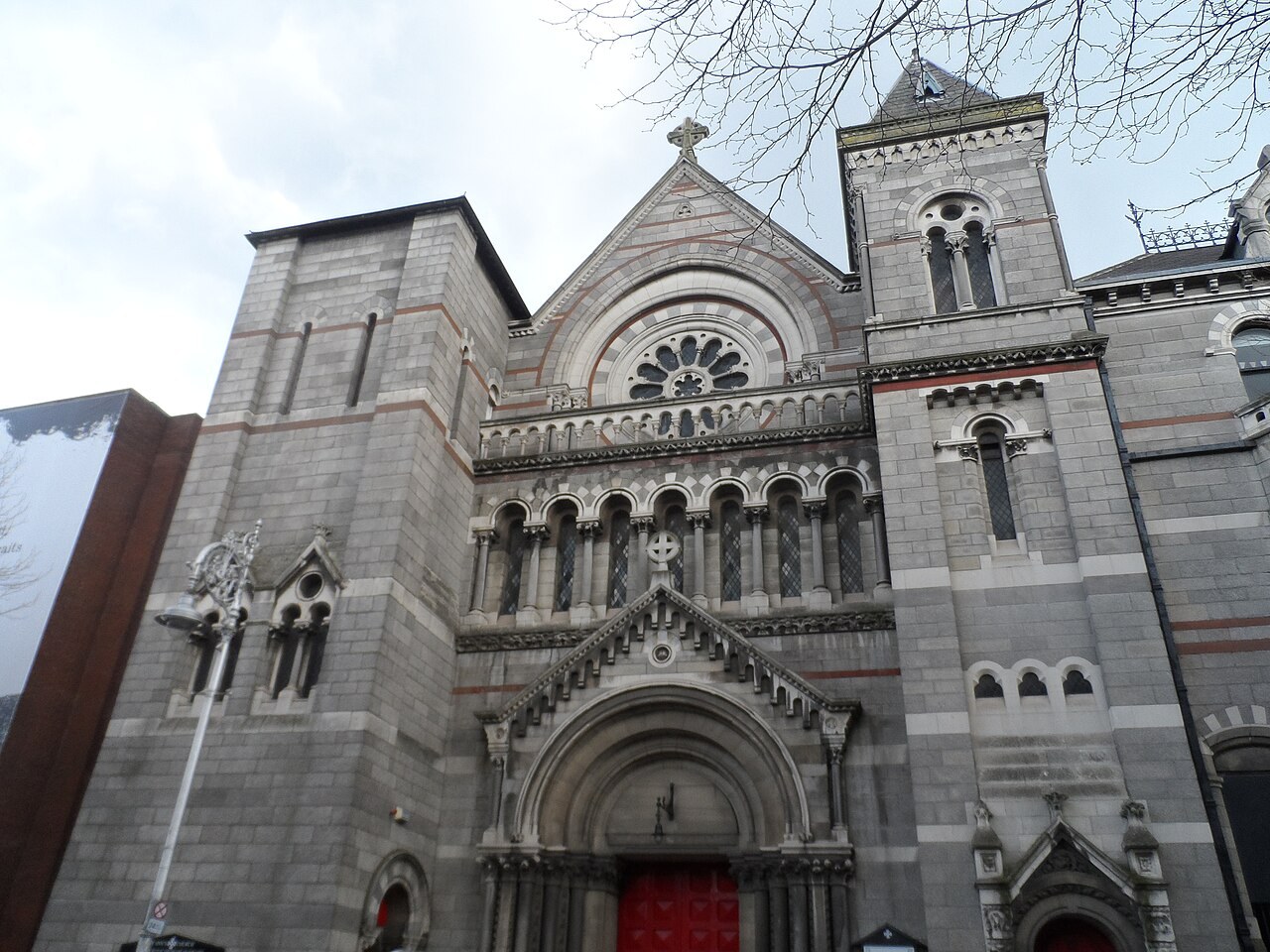
Step up to St Ann’s on Dawson Street. Bram’s and Florence’s wedding here marked his turn from Dublin civil servant and theatre reviewer to Henry Irving’s manager in London.
The timing was swift: when Irving asked him in Glasgow to take charge of his business at the Lyceum, Bram sent in his resignation the next morning. He left Glasgow on 25 November and, newly married, took up work with Irving at Birmingham on 9 December.
The wedding, he later wrote, had first been arranged for a year later, and the change of plan took even Irving by surprise. Florence shared Bram’s London life from then on, and their son Noel was born the following year.
If the church is open, the bread shelves: a charitable provision the diocese dates to 1723, linking the building with daily Dublin life as well as the Stoker marriage.
“having got married – an event which had already been arranged for a year later.”
“he was mightily surprised when he found that I had a wife – the wife – with me.”
The wedding date is documented. The timetable of resignation, travel and marriage comes from Bram’s own memoir, published in 1906.
Respect services and check church opening. Ask before photographing inside and avoid interrupting worship.
Visit Dublin: St Ann’s Church ↗
The diocese on St Ann’s bread shelves ↗
Next: During the Castle closure through 31 December 2026, skip its grounds and continue to Marsh’s Library using public streets and signed diversions. After reopening, the usual route to the Castle is via Nassau Street, Suffolk Street, Church Lane and Dame Street.
↑ Return to map from stop 5: St Ann’s Church – Dawson Street
Stop 6 of 7
Campus closure through 31 December 2026: do not enter the Castle grounds. Read this historical stop from a public street, follow local restrictions and continue to Marsh’s Library without crossing the campus.
Civil service · 1866–1878
The scale of the Castle puts Bram’s early working days in perspective: one official among a great machinery of government, with his theatrical interests growing beyond the office.
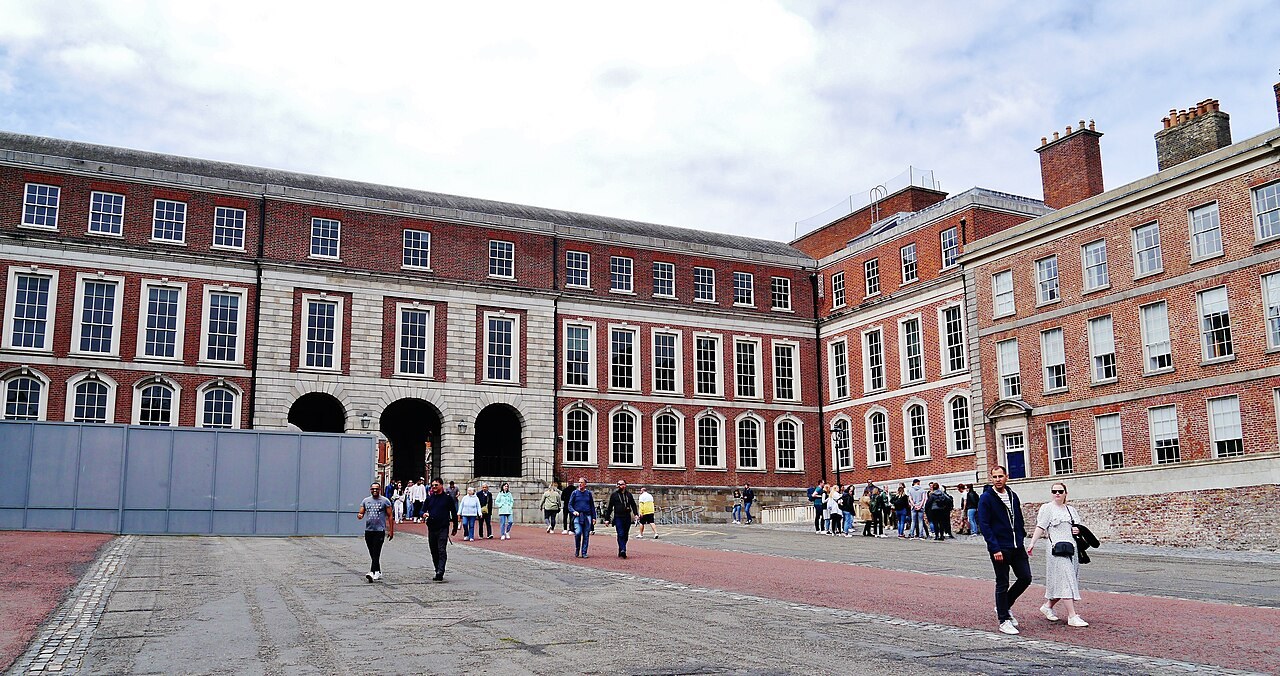
Once the campus reopens, stand in the Upper Yard and look across the administrative ranges towards the Record Tower and the Chapel Royal. This was the heart of the Irish administration, where Bram built his first career.
In 1866, while still a Trinity student, he joined the Petty Sessions office of the Chief Secretary’s department. He served about thirteen years, rising to be its first Inspector of Petty Sessions, and resigned in 1878 to join Irving.
Out of that work came his handbook, The Duties of Clerks of Petty Sessions in Ireland, published in 1879. Its world of registers, returns and careful procedure finds an echo in Dracula, a novel told entirely through diaries, letters and documents.
The medieval Record Tower, adapted in 1811 to hold state papers, and the Chapel Royal beside it, seen across the Upper Yard.
“I had been for ten years in the Civil Service, and was then engaged on a dry-as-dust book on The Duties of Clerks of Petty Sessions.”
“How these papers have been placed in sequence will be made manifest in the reading of them.”
The Courts Service of Ireland dates his joining to 1866; Bram’s 1911 letter to the Royal Literary Fund gives 1865. The Castle is the setting for this career; no surviving office of his is identified.
Courtyard access and paid interior tours have different arrangements. The entire Dublin Castle campus is closed to the public through 31 December 2026 for Ireland’s EU Presidency; reopening is expected in January 2027. Check the official notice before visiting.
Bram’s own account of his employment, 1911 ↗
Dublin Castle tour information ↗
Official campus-closure notice ↗
Official road and pedestrian restrictions ↗
Next: During the closure, continue to Marsh’s Library using public streets and signed diversions. Castle Street and Ship Street are also closed through 31 December 2026. After reopening, the usual route is via Castle Street, Werburgh Street, Bride Road and St Patrick’s Close.
Castle directions are paused while the campus is closed through 31 December 2026. Check the official notice before visiting.
Stop 7 of 7
First registered visit · 4 July 1866
Bram’s curiosity left a paper trail here. A library register and requests for particular books offer a rare close view of what a young reader wanted to know.
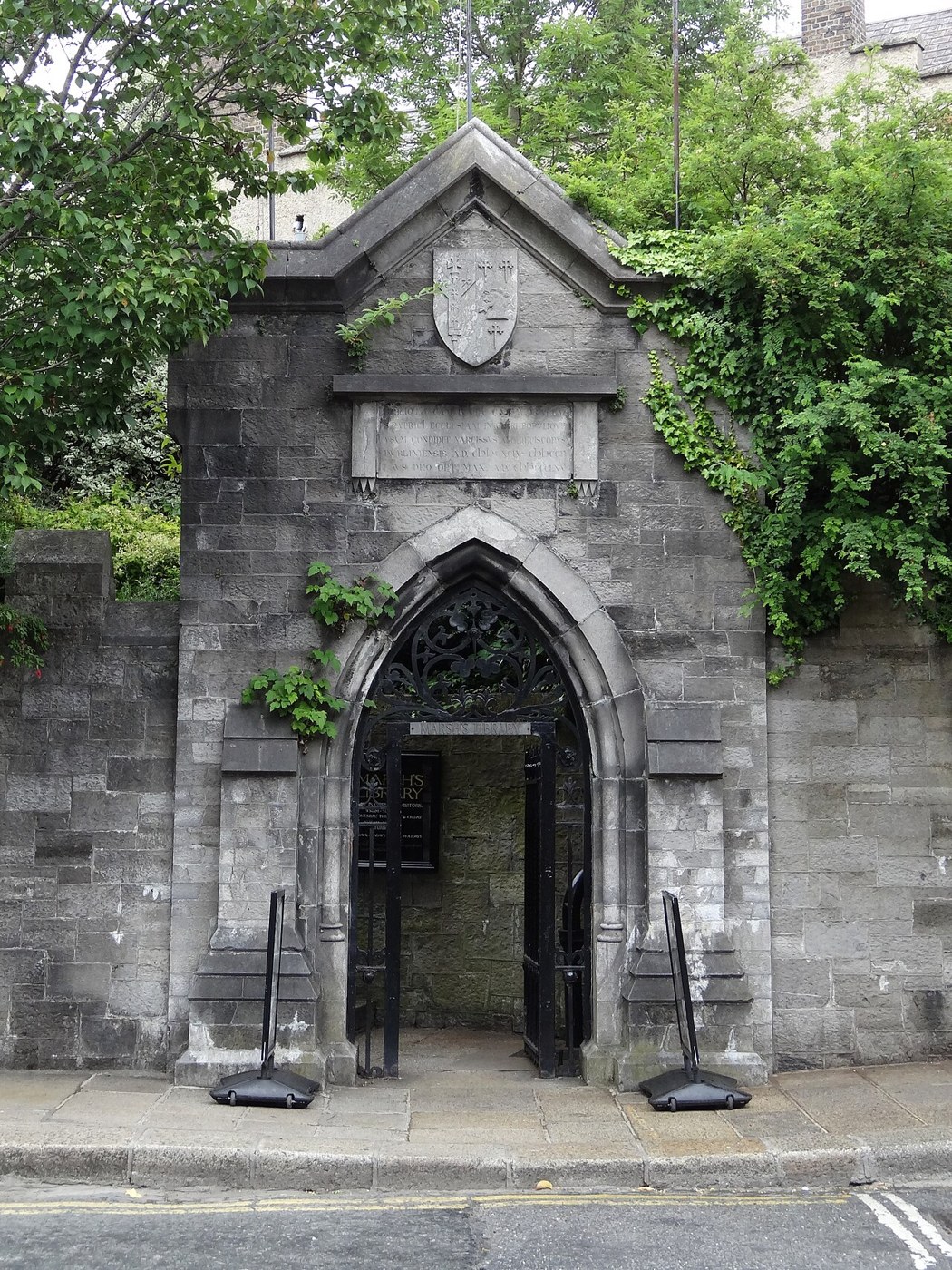
Climb to the old reading galleries beside St Patrick’s Cathedral, where Bram first signed the visitors’ book on 4 July 1866, giving his address as 4 Orwell Park, Rathgar.
A recommendation dated 2 July from his Trinity tutor, G. F. Shaw, admitted him as a reader, and the surviving register records seven visits across 1866 and 1867.
Its entries show what the young student asked to see: the Atlas Geographus, Purchas His Pilgrimes and works by Chaucer, Spenser and Dryden. Some thirty years later he sent Jonathan Harker into a castle library lined with English books, newspapers and works of reference, a scene written by a man who knew such rooms well.
The library’s Stoker exhibition, with Bram’s signature in the visitors’ book and the register of the books he requested.
“In the library I found, to my great delight, a vast number of English books, whole shelves full of them, and bound volumes of magazines and newspapers.”
The visitors’ book and reader register are original records. They show what the young Bram consulted; they cannot show which books later shaped Dracula.
Check admission and access with the library; the historic galleries involve stairs.
Marsh’s Library: Stoker exhibition ↗
Marsh’s librarian on the 1866 register and address ↗
Marsh’s Library – tickets and admission ↗
The walk ends at Marsh’s Library beside St Patrick’s Cathedral; MoLI’s Dublin Gothic exhibition and the Clontarf birthplace outing make good separate visits.
↑ Return to map from stop 7: Marsh’s Library – St Patrick’s Close
Bram’s birthplace at 15 Marino Crescent is outside this compact city-centre route. Combine it with Clontarf separately rather than adding a long out-and-back walk.
The northside addresses at Marino Crescent, Artane and Buckingham Street, and the Rathgar address at Orwell Park, need separate outings. Harcourt Street and St Stephen’s Green North offer a shorter south-city extension; the dates and limits of the evidence are set out above.
MoLI’s Dublin Gothic exhibition places Stoker beside other Irish Gothic writers. It is a worthwhile separate visit near the end of this walk.
The Big Scream festival publishes a separate self-guided route around Bram’s north-inner-city neighbourhood, including its commemorative plaque and mural at Buckingham Street and Killarney Street. Our main walk stays south of the river; this is an additional outing. Its stories about influences on Dracula should be distinguished from documentary evidence.