
Dublin walk · Stop 3 of 7
30 Kildare Street – Bram’s former home
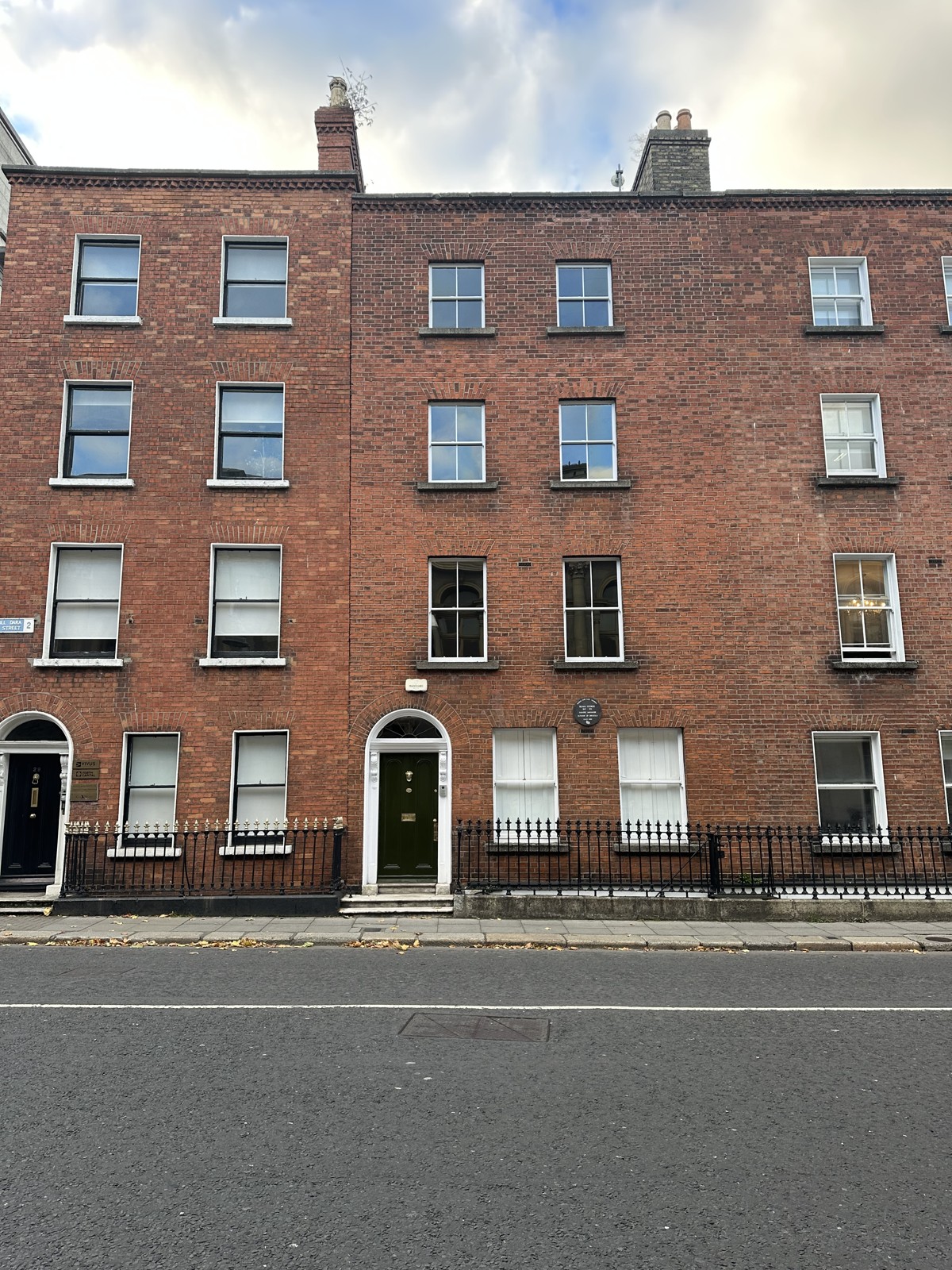
Former home · commemorative plaque
Bram’s Dublin life had room for more than one ambition. This address brings his official career close to the growing interest in performance that would eventually take him to London.
Look up at the plaque on No. 30: it remembers the man he became rather than the young civil servant who lodged here.
The house places his Dublin life close to Trinity and to the offices and theatres of the city centre. From November 1871 he had reviewed plays for the Dublin Evening Mail, unpaid and at his own offer, fitting the work around his office hours.
He treated criticism as a matter of personal honour, and that habit of close, honest reviewing was about to change his life. A short walk south stands the Shelbourne, where his friendship with the actor Henry Irving took shape in 1876.
Look for
The commemorative plaque, then the batwing fanlight above the door and the decorative boot-scraper beside the entrance, details recorded in the national architectural inventory.
Read
“I replied that I would gladly do it without fee or reward.”
“I have always held that in matters critical the critic’s personal honour is involved in every word he writes”
Evidence
The National Inventory of Architectural Heritage confirms the plaque; the records do not give dates of residence. In March 1876 Bram lived at 119 Lower Baggot Street, so his time here was probably the later 1870s.
Practical information
View the exterior from the public pavement; the house is private.
National Inventory of Architectural Heritage →
Walking to the next stop Continue south along Kildare Street to St Stephen’s Green North.
↑ Return to map from stop 3: 30 Kildare Street – Bram’s former home
Give feedback on the Dublin walk →