resources
Research and archives
Follow a question into the evidence: the books Bram read, the places he imagined, published scholarship and the press that recorded his life and work. Find research guides below, followed by archives and original papers.
Research guides and reference material
Explore the reading, working notes and ideas behind the novel.Read the story →Where is Castle Dracula?
Follow the evidence for the fictional castle and distinguish it from later tourist associations.Read the story →Bibliography
Find biographies, scholarship, editions and further reading.Read the story →Press articles on Bram Stoker and Dracula
Search contemporary reports, reviews, interviews and later coverage.Read the story →
Archives and original papers
Bram’s papers and books are held in several institutional and private collections. This directory helps readers find catalogues and research access. It distinguishes custody of an item from ownership of copyright or permission to reproduce an image. Consult the named institution for its current holdings and access conditions.
| Archive | What it holds | Link |
|---|---|---|
| Rosenbach Museum and Library, Philadelphia | Working notes and outlines for Dracula, with a collection of Bram’s books and manuscripts. Consult its current guide for extent, dates and provenance. | Bram Stoker collections guide (PDF) |
| Leeds University Library, Special Collections (Brotherton Collection) | A substantial collection of correspondence and literary manuscripts. The July 1897 “My Dear Williams” letter mentioning Dracula is also held at Leeds. Confirm references and current catalogue descriptions. | Bram Stoker in Special Collections |
| Trinity College Dublin, Manuscripts and Archives Research Library | The Stoker Family Papers (MS 11076), including writings by Bram’s mother Charlotte. Also the autograph manuscript of Famous Impostors (MS 6168), letters of Florence and Noel Stoker (MS 7117), and Hamilton Deane’s prompt script for Dracula. | Trinity Library collections and catalogues |
| Shakespeare Birthplace Trust, Stratford-upon-Avon | The RSC’s Bram Stoker collection, managed by Shakespeare Birthplace Trust: Lyceum material including programmes, menus, reviews and correspondence. Consult the Trust’s catalogue and reading room. | Bram Stoker collection introduction |
| Stuart A. Rose Library, Emory University, Atlanta | The John Moore Bram Stoker Collection, including manuscripts, correspondence, photographs, books, inscribed editions and translations. Use the current finding aid for precise scope. | Bram Stoker collection at Emory |
| Library of Congress / Walt Whitman Archive | Bram’s letters to Walt Whitman, including the long letter of 1872. | Stoker’s letter to Whitman, 18 February 1872 |
| The London Library | Research volumes identified as likely to have been used and marked by Bram. The Library explains the attribution and evidence. | The London Library story and heritage |
| Marsh’s Library, Dublin | Visitors’ and readers’ registers documenting Bram’s consultation of books in 1866 and 1867. | Bram Stoker and the Haunting of Marsh’s Library |
| Royal Literary Fund (archive at the British Library) | The 1911 application file (Loan 96 RLF 1/2841), including Bram’s letter of 25 February and his signed receipt of 9 March. | View all three pages on the Estate website; British Library letter record |
| National Library of Ireland, Dublin | The 1890 Daily Express Christmas supplement containing Gibbet Hill; a digital supplement is linked from the discovery announcement. | Gibbet Hill discovery and digital supplement |
| British Library, London | The manuscript of Bram’s theatrical adaptation, Count Dracula or the Undead. Consult the Library’s catalogue for current access arrangements. | Archives and Manuscripts Catalogue |
How the papers became dispersed
After Bram’s death, Florence sold books, manuscripts and pictures through Sotheby’s in 1913, 1915 and 1916. These sales help explain why his papers are now spread across several collections. The Dracula working notes were sold on 7 July 1913 and passed through booksellers before the Rosenbach acquired them in 1970.
The later sales included manuscripts of other works. Some subsequently reached the Brotherton Collection at Leeds and Trinity College Dublin. For individual items, the holding institution’s current catalogue is the best guide to provenance and location. Some of the family’s other papers were transferred to Trinity College Dublin.
Sources: Rosenbach’s Bram Stoker collection guide and William Hughes’s introduction (December 1996). Its statements about untraced manuscripts describe the position at that date.
The Estate’s own collection
The Estate has gathered a collection of information about Bram’s life and family. It shares this over time, as material is organised and with the permission of individual researchers. The Estate gratefully acknowledges the help of Paul Murray, Dr Elizabeth Miller, Douglas Appleyard, John Moore and Brian J. Showers.
Explore Family objects for selected items connected with Bram’s siblings and descendants, and Discoveries and stories for research that has brought unfamiliar work to light. Individual object records identify the holding collection where publication is agreed.
Research is ongoing and corrections are welcome – see Contact.
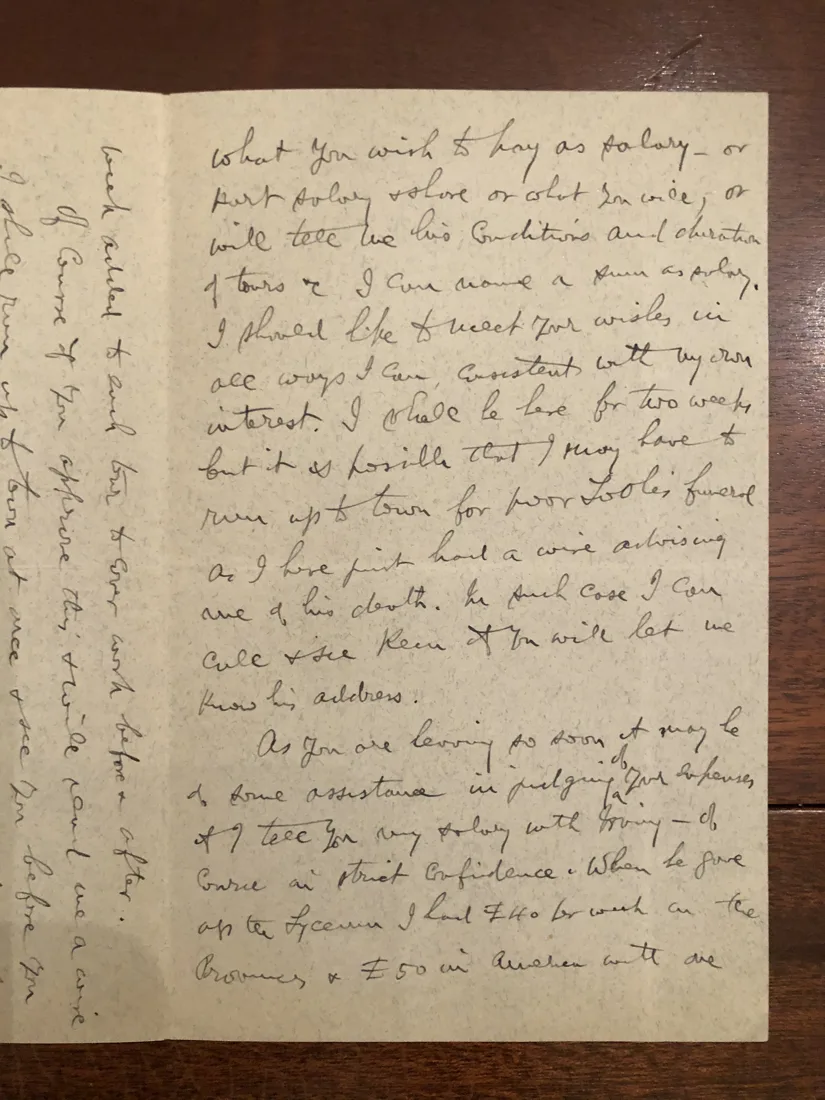
Read the archive images
Explore the letters and journal pages with reading transcriptions. Each transcription is tied to the supplied image and marks uncertain readings.
Historic press links
Explore the press archive on Bram Stoker and Dracula, including historical reports and more recent coverage.
The Un-Dead typescript
The surviving typescript, bearing the working title The Un-Dead, is distinct from the Rosenbach’s research notes and the British Library’s theatrical material. It has passed through private ownership and is not a publicly accessible institutional collection.
Accounts of its rediscovery in Pennsylvania in 1980 and its later association with Paul Allen are provenance reports, rather than a present reading-room address. No current owner or access arrangement is asserted here. Researchers should distinguish the numbering of surviving leaves from a claim that a complete opening sequence survives.
Compare the different manuscript sources. A fuller leaf-by-leaf and ownership history requires a catalogue or provenance record that can be checked.
Further collections and finding aids
| Collection | What to look for | Catalogue or guide |
|---|---|---|
| Dublin City Library and Archive | The Leslie Shepard Bram Stoker Collection: books, pamphlets and related research material. Ask the library about present location and consultation. | Collection list (PDF) |
| Dublin Writers Museum collection at MoLI | MoLI presents the former museum collection. Ask which Stoker objects and papers are available or on display. | MoLI collection guide |
| Smallhythe Place and British Library | Ellen Terry and Edith Craig papers. The database identifies individual locations as SMA or BL; papers are not held at Essex. | Search the catalogue |
Access, digitisation and permission to reproduce are separate enquiries. For theatre research, the Harry Ransom Center, Folger Shakespeare Library, V&A Theatre and Performance, Garrick Club and Morgan Library are further catalogue leads; specific Stoker holdings should be confirmed before arranging a visit.
Primary sources you can open online
| Source | Read or view |
|---|---|
| Gibbet Hill in the 1890 Daily Express Christmas supplement | National Library of Ireland digitised supplement |
| Stoker Family Papers: Census Office application, Charlotte’s cholera account, letters and death notice | Trinity Writers illustrated source guide |
| Marsh’s Library visitors’ book and 1866–67 reading register | Online exhibition and register images |
| The Lady of the Shroud manuscript | Emory Digital Collections search |
| Leeds digital material | Leeds Digital Library record |
| Rosenbach manuscripts and editions | Dracula and vampire holdings guide (PDF) |
| Bram’s letter to Walt Whitman of 18 February 1872 | Walt Whitman Archive transcription and source details |
These links open the holding institution’s own material. Catalogue descriptions identify the original items; availability of a digital image does not grant permission to reproduce it elsewhere.