
London walk · Stop 14 of 15
Coutts – Bram’s bank and the Count’s letter
Bank · Bram’s bank · 59 Strand until 1904; 440 Strand from 1904
Even the undead need a bank. Bram banked with Coutts, and in the novel the Count writes to the same bank, so the name links Bram’s everyday affairs with the practical machinery of Dracula. The bank had two successive homes on opposite sides of the Strand.
Look for the Coutts name at 440 Strand, on the north side. Bram became a Coutts client in 1881, according to the bank’s archivist, Tracey Earl. He would have known its earlier premises at 59 Strand, farther east on the south side, as well as 440 Strand, where the bank moved in 1904. Tracey confirms that the former building can still be recognised at No. 59, although its façade was altered in 1924 and repaired after the Second World War.
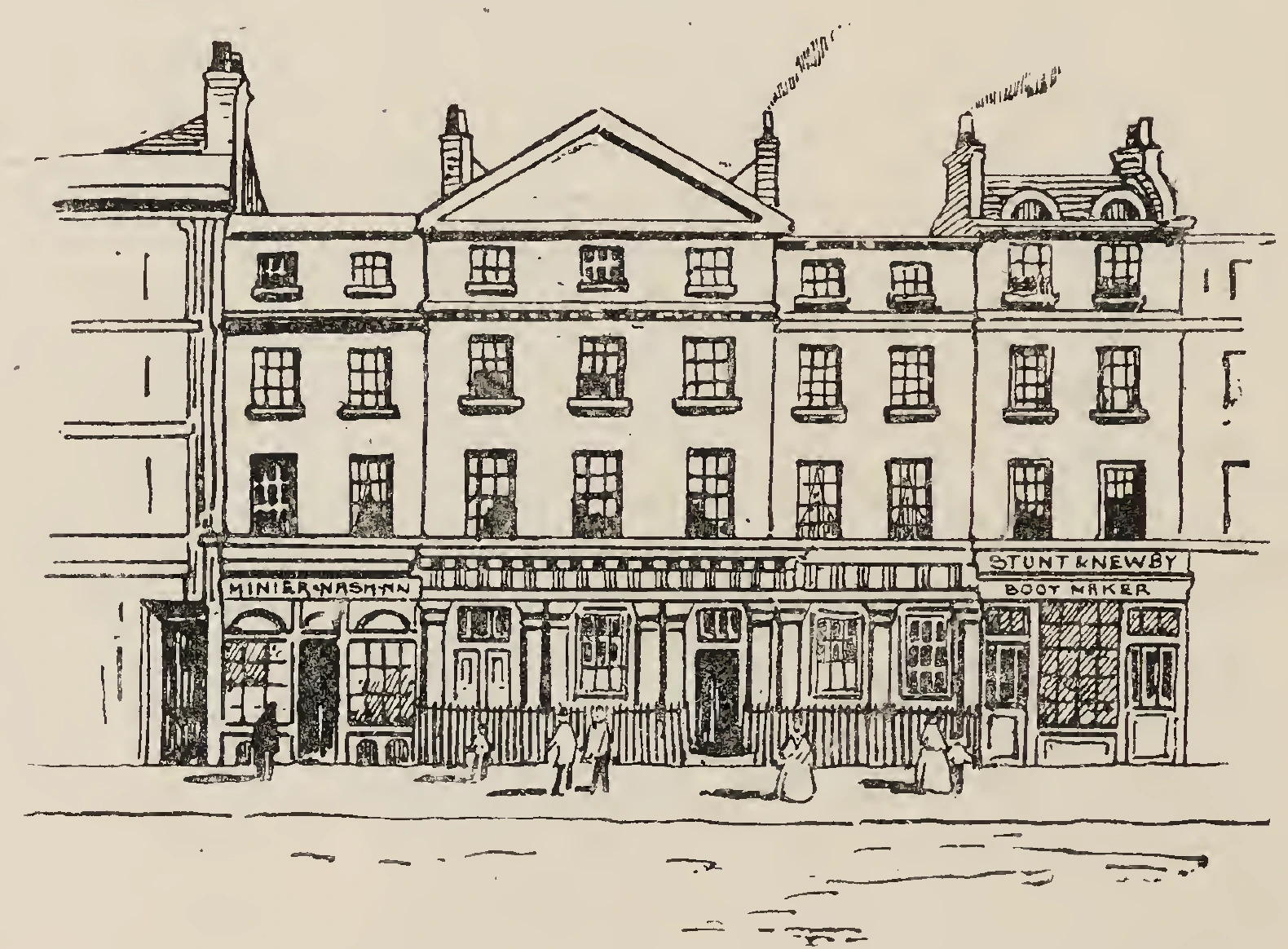
The illustration shows Coutts’ banking house in 1853, from a drawing by T. Hosmer Shepherd, reproduced on page 10 of The Strand Magazine in January 1891. It records the earlier frontage, rather than today’s appearance.
In Chapter 3 the Count leaves his newly written letters face down on a table at the castle, and Jonathan turns them over: one to Whitby, one to Varna, one to Coutts & Co., London, and one to bankers in Buda-Pesth. The Count’s London plans pass through a real bank on this street.
Coutts appears in Bram’s own memoir too. Describing Richard Burton’s Arabian Nights, he notes that subscribers paid in full and directly to Coutts and Co., so there were no fees or discounts.
Coutts holds four brief instructions from Bram: an order from the Columbia Theatre, Chicago, on 12 October 1893 for three monthly payments over five months; a slip from 18 St Leonard’s Terrace on 25 August 1896 arranging Florence’s Wimbledon Ladies’ Golf Club subscription from January 1897; a Lyceum instruction of 6 January 1897 about the end of an Arts Club subscription; and a Lyceum instruction of 28 December 1897 stopping London Library subscription payments because he was ceasing membership after that year.
Look for
The Coutts name at 440 Strand on the north side, then the former banking house at 59 Strand farther east on the south side. Compare Shepherd’s historical illustration with the altered frontage; the archivist dates alterations to 1924 and repairs after the Second World War.
Read
“One of the letters was directed to Samuel F. Billington, No. 7, The Crescent, Whitby, another to Herr Leutner, Varna; the third was to Coutts & Co., London, and the fourth to Herren Klopstock & Billreuth, bankers, Buda-Pesth.”
“The entire edition was subscribed, the amounts being paid in full and direct to Coutts and Co., so that there were no fees or discounts.”
Evidence
Coutts has confirmed the details. The novel names the bank but does not establish whether the fictional Count had an account there.
Practical information
Exterior stop only. Please keep the bank entrance clear.
Coutts history – NatWest Heritage →
Historic England – the 1904 banking hall →
London Archives – the former 59 Strand building →
The Strand Magazine, January 1891: Coutts illustration, page 10 →
Walk to the next stop Continue east along the north side of the Strand, looking across towards the former No. 59 address area on the opposite side. Pass the Savoy on your right; optional stop B is reached by a marked crossing into Savoy Court. Turn left into Burleigh Street, then right into Exeter Street. Continue to the Lyceum’s portico at the Wellington Street corner.
Give feedback on the London walk →