


A separate final journey
Golders Green Crematorium, where Bram’s ashes rest, is outside this walk and is best approached as a separate visit.
Read more → Official Estate
Self-guided walks
Follow Bram’s London life from the Chelsea riverside to the theatre that shaped his working days. Begin on the north bank of the Thames, pass his later homes, pause at the London Library and finish at the Lyceum.
Lengths are approximate. Allow extra for crossings, detours and visits.
Tap a numbered pin for a short introduction and photo. Tap the photo to open the full details, then use “Return to map” to come back. Tap Show my location and choose Allow to see your blue dot as you walk. No app is needed. The pale blue circle shows your phone’s estimated accuracy.
Location is off. You can use the map and stop list without sharing it.
Numbered pins match the list. Burgundy lines follow mapped walking routes; dashed green lines are optional outings. Routes are a guide: follow local signs, crossings and current access conditions. Report a map issue. Route data: OpenStreetMap, prepared with FOSSGIS / OSRM.
Location is optional and stays in this page’s memory; the Estate does not receive or save your coordinates. Map tiles are requested from OpenStreetMap for the area you view. Opening Apple Maps or Google Maps uses that provider’s service. Location privacy.
Keep the page open and your screen awake for updates. Updates may pause when the phone locks or the browser is in the background. Accuracy and signal vary; this is not an offline guide.
The Cheyne Walk stop is on the Chelsea side of the Thames: there is no need to cross the river. Several homes are private. Map pins identify the walking stops; historical house numbering is qualified where evidence differs.
Stop 1 of 7
Cheyne Walk belongs to the family’s early London years after Bram joined Henry Irving’s company. Noel later recalled his father’s attempt to rescue a man from the Thames, an act recognised by the Royal Humane Society. The riverside setting links an episode of courage and its difficult aftermath with Bram’s family life; the Estate presents Noel’s account, newspaper reports and the medal together.
Begin on the north-bank pavement by the terrace near Oakley Street and Albert Bridge. Noel’s recollection gives 26 Cheyne Walk; another account gives 27. The photograph shows Nos. 25–26. The house number remains uncertain, but the riverside location is on the Chelsea side of the Thames.
Private houses: view from the public pavement. Stay on the Chelsea/north bank.
Noel’s account of his father and the rescue ↗
Next: Use Oakley Street and the public streets towards St Leonard’s Terrace.
Walking directions to the next stop ↗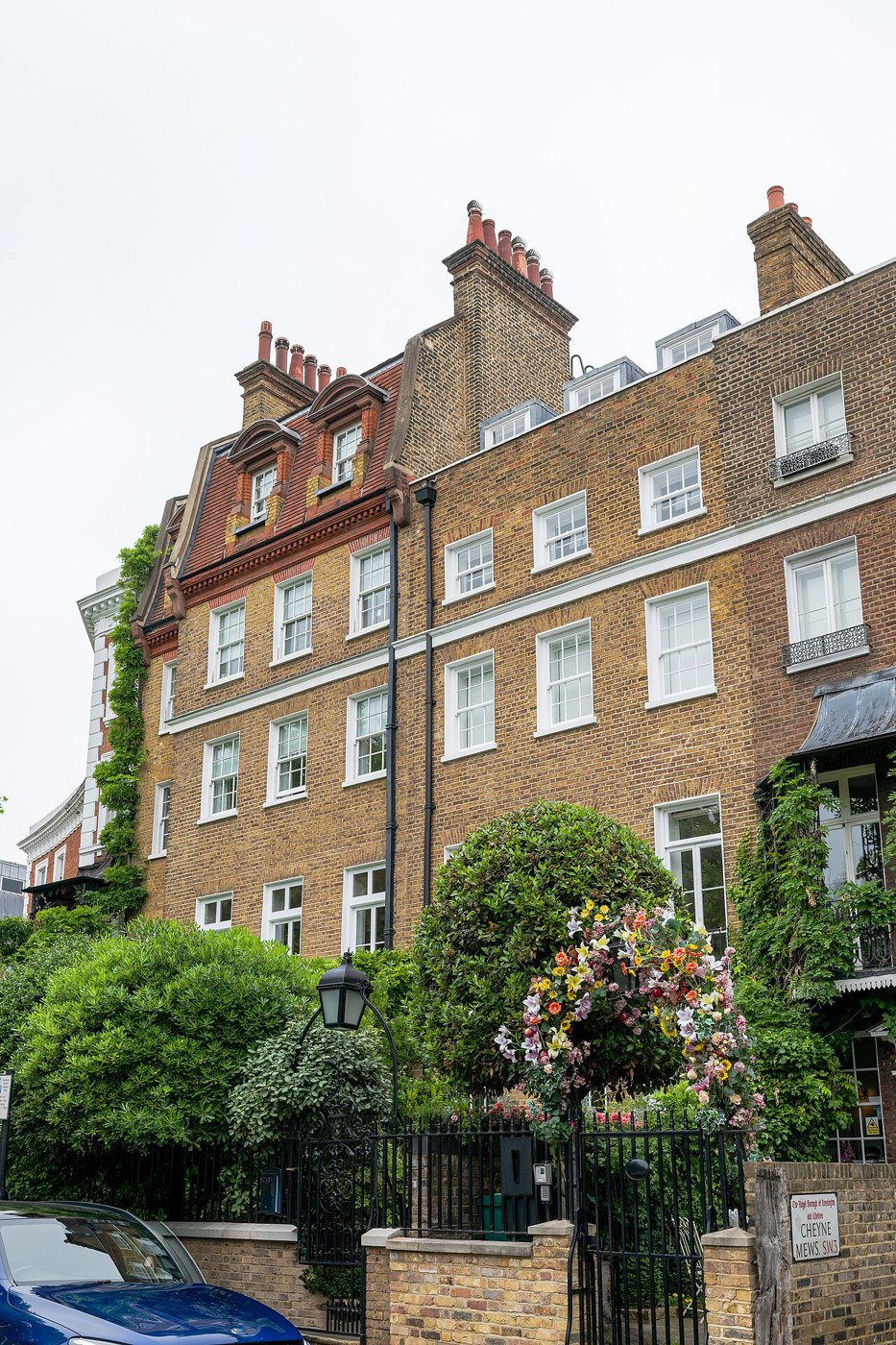
Stop 2 of 7
Bram lived in neighbouring houses at St Leonard’s Terrace during his Lyceum years, and much of his work on Dracula belongs to this part of his London life. The plaque at No. 18 commemorates his residence and authorship. This is a domestic counterpoint to the later stops at the London Library, where he researched, and the Lyceum, where he earned his living.
Look for the ceramic plaque and read its brief inscription: it identifies Bram as the author of Dracula and records that he lived here. The official entry dates the plaque to 1977, so it is a later act of commemoration rather than an original feature of his house. This is the clearest marked residential stop on the London route.
Private houses; view the plaque from the pavement.
English Heritage: Bram Stoker plaque ↗
Next: Continue east along St Leonard’s Terrace towards Durham Place.
Walking directions to the next stop ↗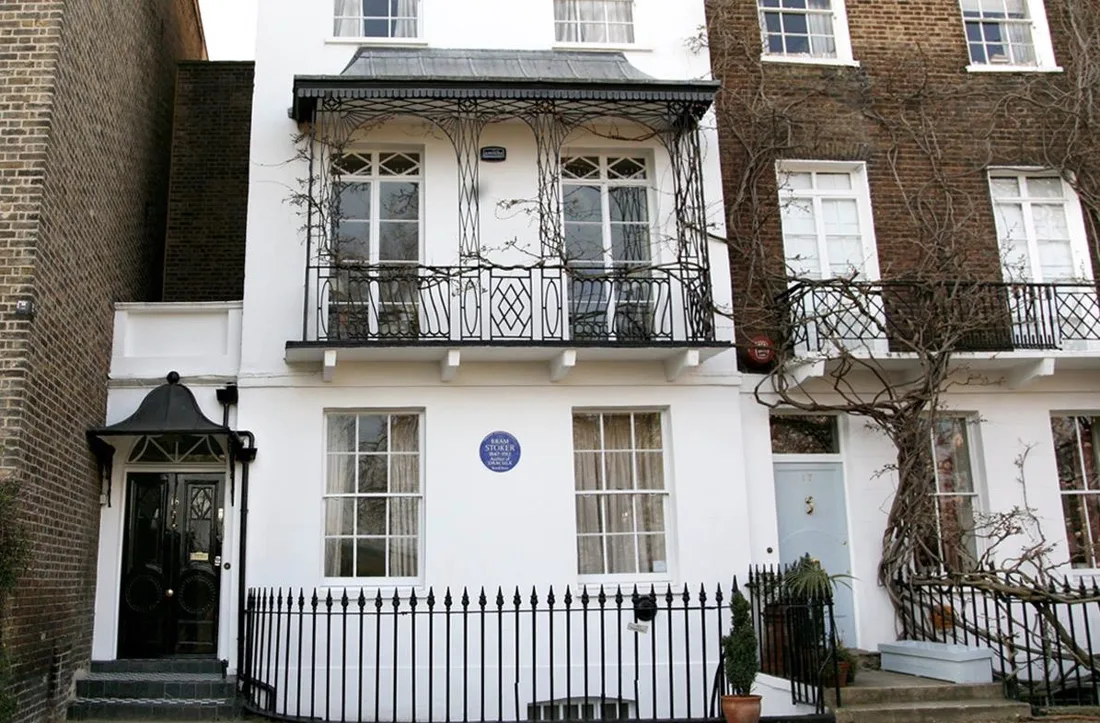
Stop 3 of 7
From 4 Durham Place on 25 February 1911, Bram wrote to the Royal Literary Fund asking for assistance. He described his years in the civil service and with Irving, his published books and the illness that had limited his ability to work. The Fund’s surviving letter is a direct link to this address and shows the financial uncertainty behind his final years.
The Royal Literary Fund publishes the letter itself, making this a useful document stop. Bram sets out his civil-service and theatre work, his books and the difficulties caused by illness. His appeal adds a human dimension to the later London years: lasting literary fame did not necessarily provide financial security during his lifetime.
Private residences. Modern alterations and current works may affect the view.
Royal Literary Fund: Bram’s letter ↗
Next: Continue towards Chelsea Bridge Road, then east along the north-bank public streets to Pimlico and St George’s Square. Do not cross Chelsea Bridge.
Walking directions to the next stop ↗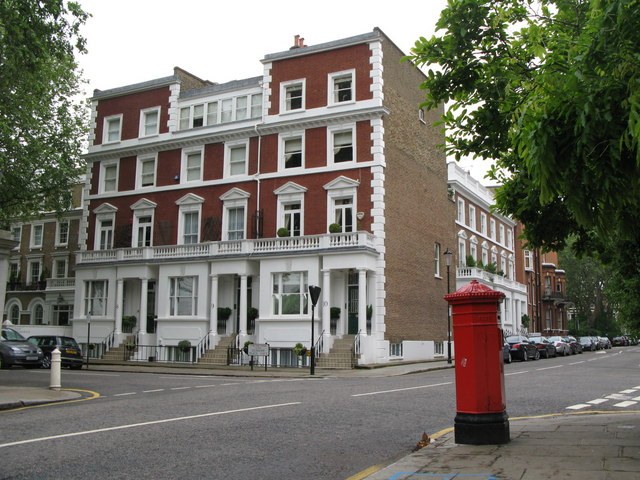
Stop 4 of 7
Bram died at 26 St George’s Square on 20 April 1912, aged 64. His death certificate describes him as an author and names his son Noel as informant and present at the death. Contemporary notices also remembered his long association with Irving. This is a historical-address stop: the photograph and pin show the square’s setting rather than a verified surviving doorway.
Use the Estate’s certificate photograph and source notes to connect this stop with the record of Bram’s final years. The wording belongs to a historical document; differing medical interpretations should not become an asserted retrospective diagnosis. The square also provides a pause before the longer walk towards St James’s.
Treat this as a historical-address stop in the square, rather than a visit to a verified surviving house. Use public space and respect residents.
Biography and death certificate ↗
Death certificate source notes ↗
Next: Head north through Pimlico towards Buckingham Palace Road; use public paths via St James’s Park and Pall Mall to St James’s Square.
Walking directions to the next stop ↗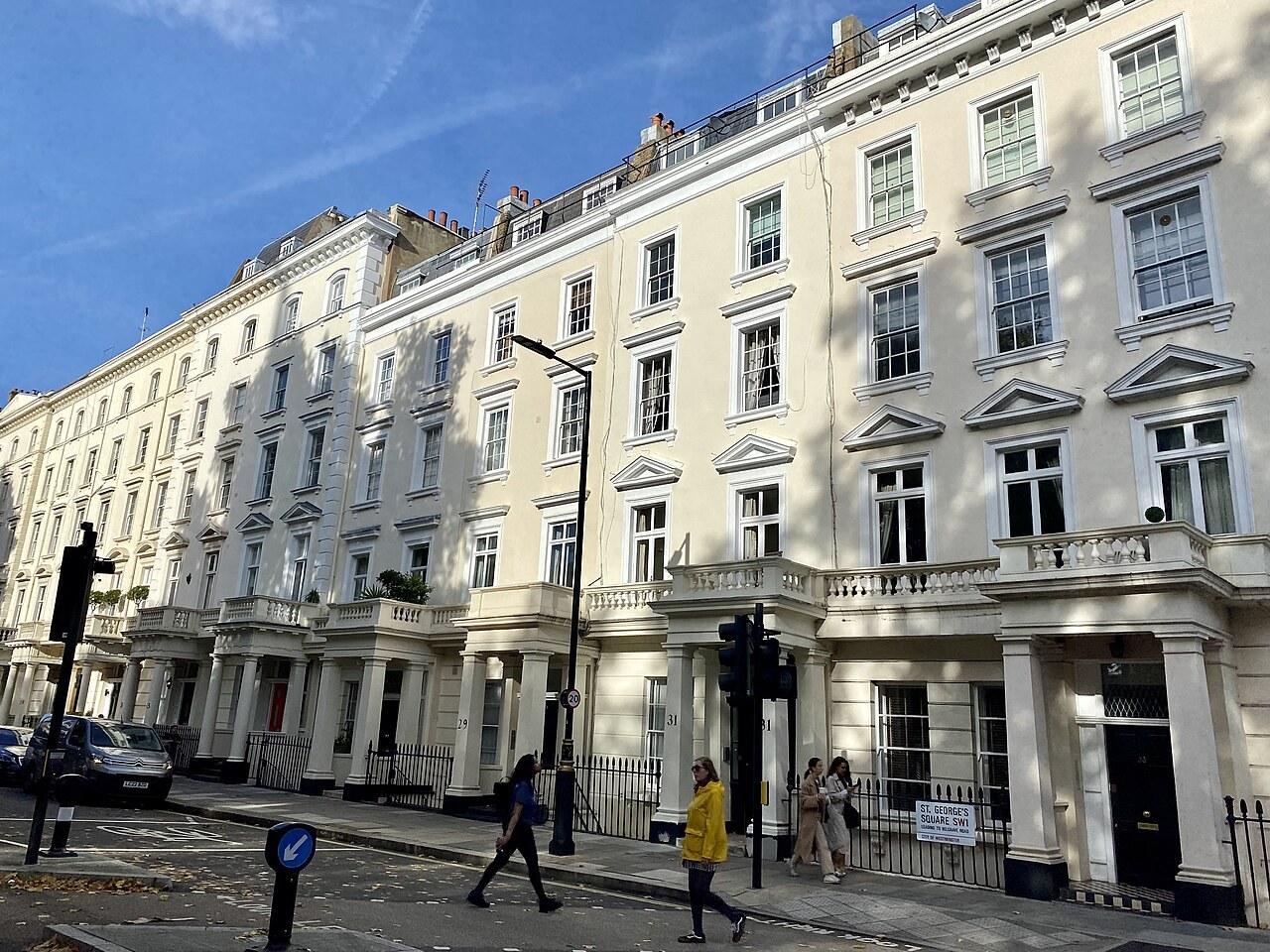
Stop 5 of 7
Bram belonged to the London Library from 1890 to 1897, the years in which he developed Dracula. Library researchers have compared marks in surviving books with his working notes and identified volumes they believe he used. The stop connects his imaginative fiction with a practical habit of reading, extracting details and organising research.
Library researchers compared marks in surviving volumes with Stoker’s working notes, identifying 26 books they consider almost certainly the copies he used. The list ranges from travel accounts to folklore. Think of Dracula as a book built through reading and note-taking as well as imagination. Check visitor arrangements before expecting to see books or enter reading rooms.
The exterior is visible from the square. Interior visits need a tour, event, day pass or membership arrangement.
London Library: ways to visit ↗
The Library’s research-book discovery ↗
Next: Continue towards Charing Cross Road to the Henry Irving statue beside the north side of the National Portrait Gallery.
Walking directions to the next stop ↗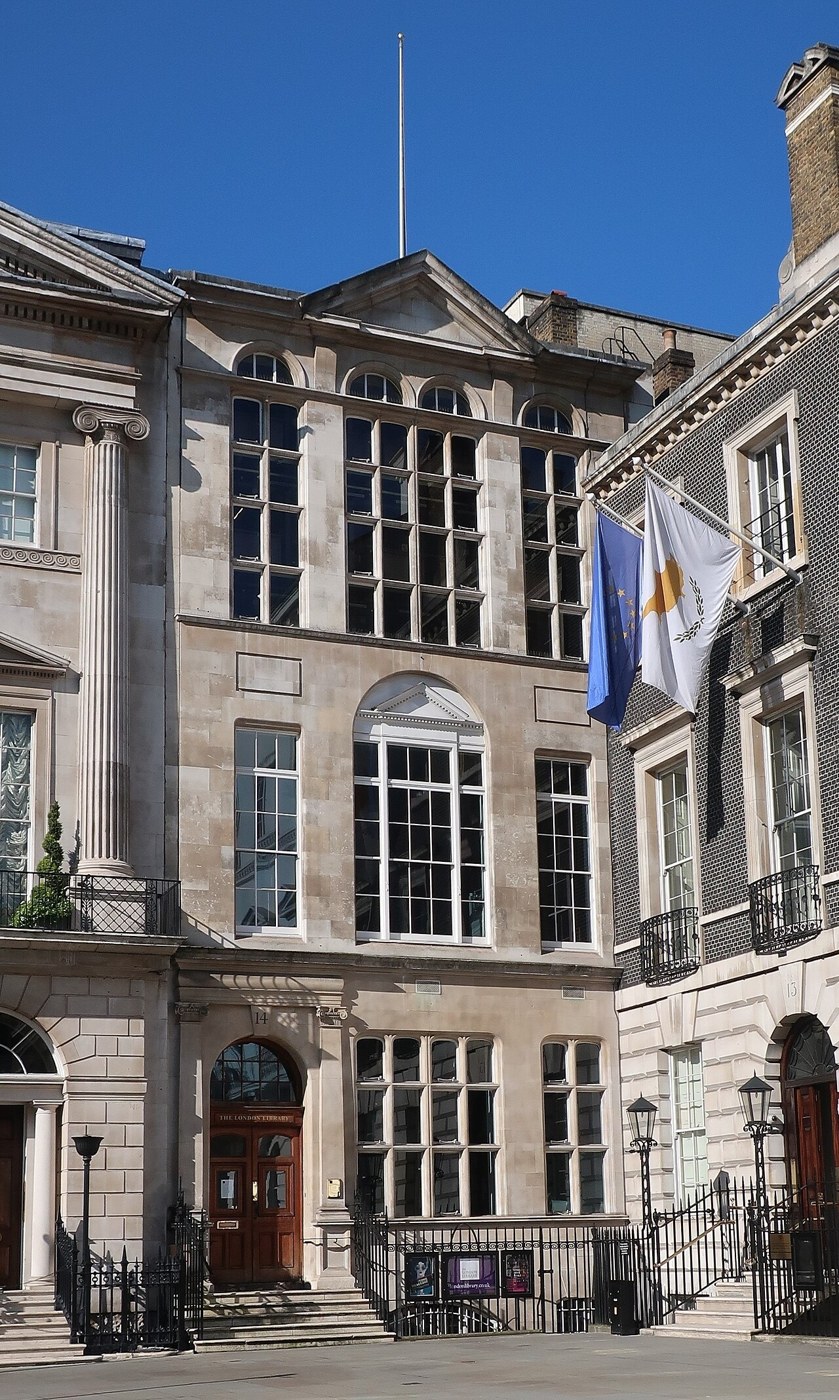
Stop 6 of 7
Henry Irving was central to Bram’s working life. From 1878 Bram managed the business of Irving’s Lyceum company, organising its seasons, correspondence and tours, and remained associated with the actor until his death in 1905. Bram’s two-volume Personal Reminiscences of Henry Irving (1906) records that long partnership. This memorial, erected in 1910, commemorates the actor five years after his death; it is a useful pause before reaching Bram’s workplace.
Thomas Brock’s bronze stands on Charing Cross Road by Irving Street, beside the National Portrait Gallery. Look for the name on the stone plinth and the figure’s theatrical bearing. Historic England records the statue’s date and sculptor. The photograph shows the monument rather than a portrait made during Bram’s life.
View from the pavement; use marked crossings and leave room for passers-by.
Henry Irving statue: official record ↗
Next: Follow Irving Street and the public streets towards the Strand, then Wellington Street to the Lyceum. Walk round to Burleigh Street to see the three names.
Walking directions to the next stop ↗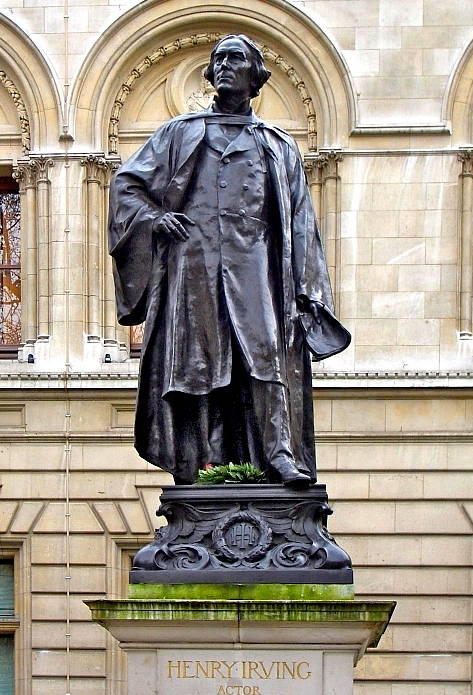
Stop 7 of 7
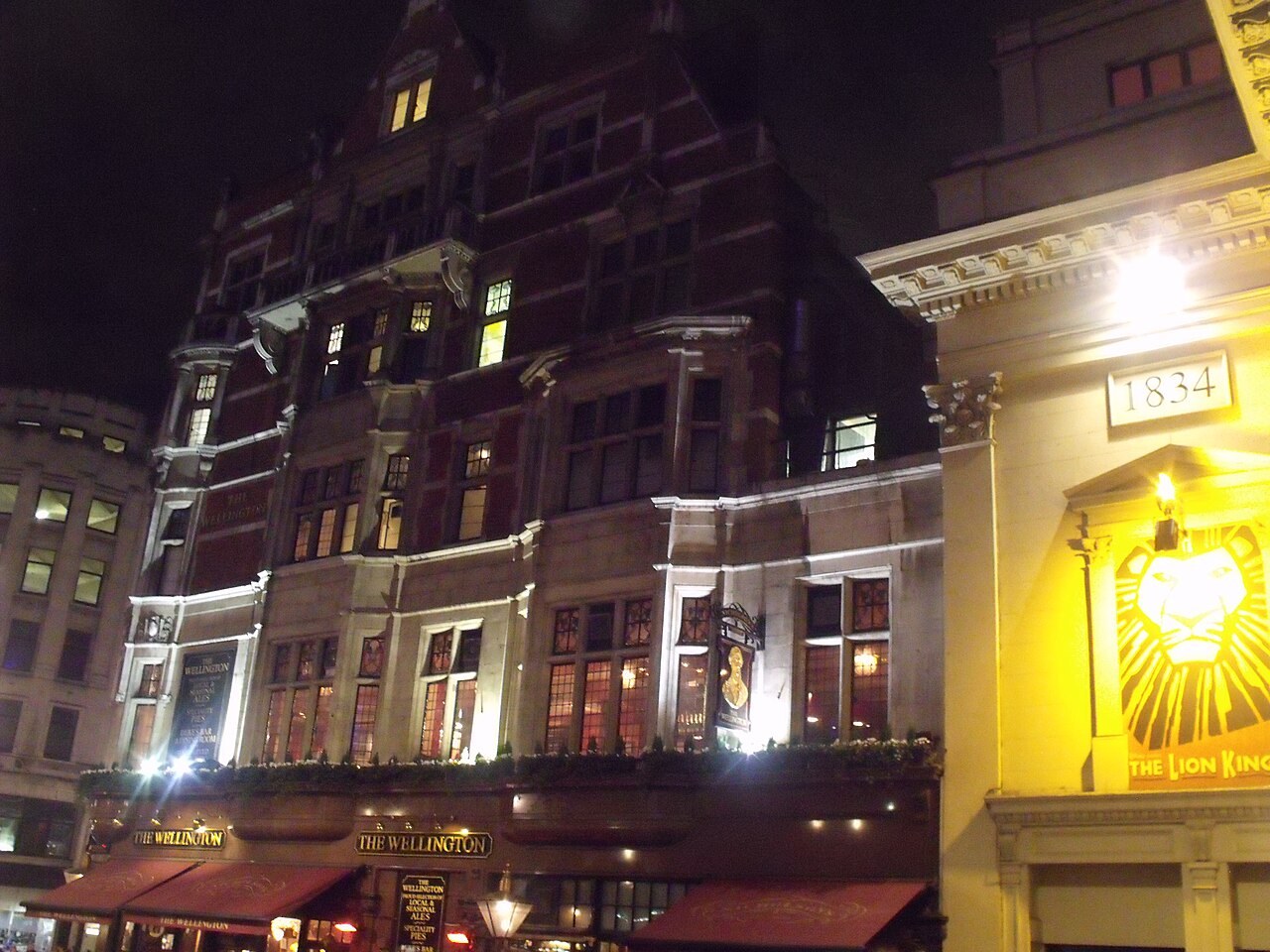
Bram joined Henry Irving in 1878 and became the Lyceum’s manager. He organised accounts, correspondence, tours and hospitality behind the performances in which Irving and Ellen Terry starred. He also arranged the 1897 copyright reading of Dracula; or, The Un-Dead here before the novel appeared. The theatre brings together the administrator, writer and friend whose working life was entwined with the company.
Stand across Wellington Street to see the portico without obstructing the pavement. Historic England distinguishes Samuel Beazley’s nineteenth-century frontage from Bertie Crewe’s later auditorium. That distinction helps you read the building: part of Bram’s working world survives, while the interior belongs to a subsequent theatrical chapter. Check the theatre’s programme if you want to extend the visit.
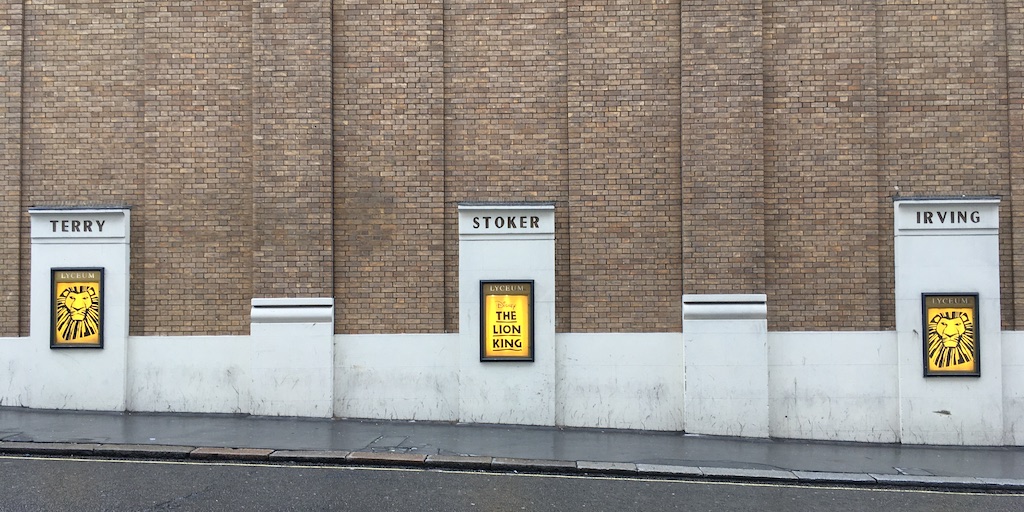
Walk round to Burleigh Street to find the names Terry, Stoker and Irving on the theatre’s rear wall. They commemorate Ellen Terry, the company’s leading actress; Bram, its manager; and Henry Irving, its actor-manager. Fran Allfrey’s photograph, published by Strandlines, shows the three names together. This is a later memorial on the theatre, rather than decoration from Bram’s working years.
View the entrance from the public pavement; performances and tours have separate ticketing.
Historic England: Lyceum Theatre ↗
Golders Green Crematorium, where Bram’s ashes rest, is outside this walk and is best approached as a separate visit.
Read more →