
Whitby walk · Stop 6 of 6
Whitby Abbey
Fiction · Gothic church · about 1225–50; setting in Dracula, Chapter 6
The Abbey brings a much longer span of history into the walk. Its surviving stonework and the stories told about it offer two different ways of reading this final landmark.
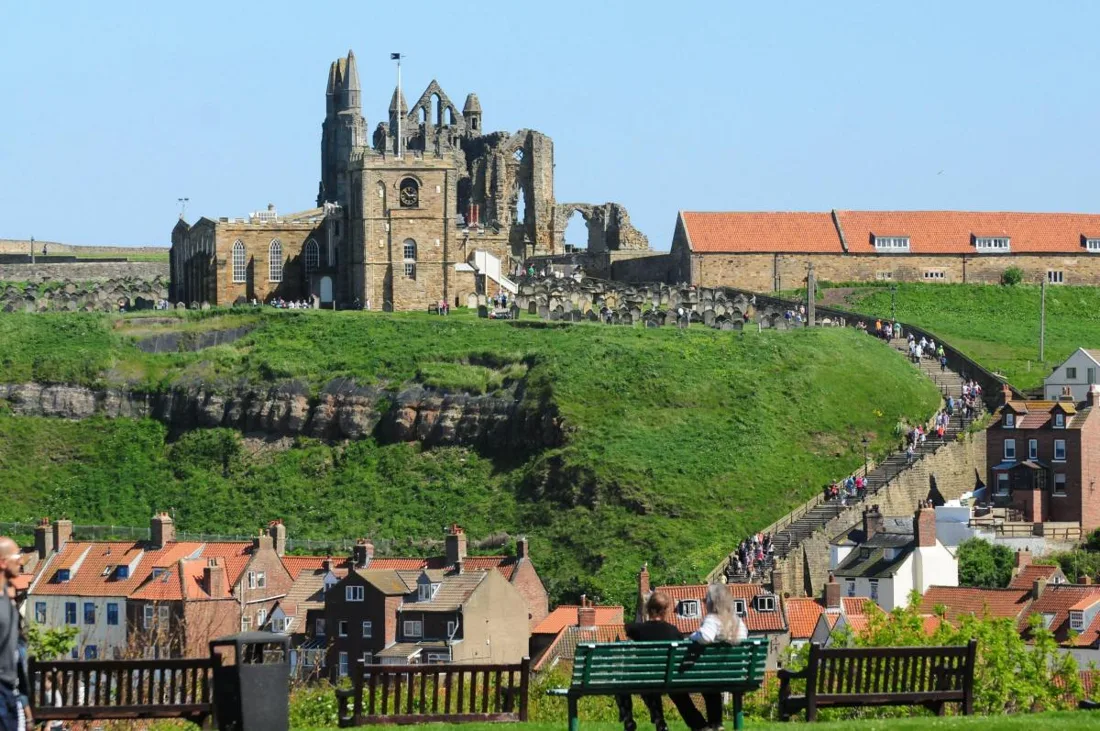
Look up at the east end of the Abbey church, its tiers of pointed arches open to the sky. English Heritage dates the first major Gothic building campaign to about 1225–50. Long before that, this headland held the seventh-century monastery associated with St Hild.
On her first day in Whitby, Mina looks up at this ruin and records its legend of a white lady seen at a window. Old Mr Swales dismisses such tales as fit only for trippers.
The silhouette you saw from the West Cliff now stands close at hand. It crowns the novel’s Whitby chapters: a real medieval ruin above the churchyard where Bram set Lucy’s night walk, and the skyline he knew in 1890.
Look for
The pointed arches and the exposed east end. Then turn towards the West Cliff and picture the same outline as Mina saw it, emerging from cloud by moonlight.
Read
“It is a most noble ruin, of immense size, and full of beautiful and romantic bits; there is a legend that a white lady is seen in one of the windows.”
“I wouldn’t fash masel’ about them, miss. Them things be all wore out.”
Evidence
Bram saw this skyline in 1890, and Mina describes the ruin in Chapter 6. The standing church is thirteenth-century Gothic; its literary fame is a later layer on a medieval site.
Practical information
Abbey entry is paid and subject to opening times; check current access before you set out.
English Heritage: plan your visit ↗
English Heritage: the Abbey’s building history →
Whitby Abbey – official tickets and opening times ↗
The walk ends at the Abbey; the harbour walk and Abbey admission are separate, and the present Whitby Museum in Pannett Park, whose visitors’ book records Bram’s 1890 signature, makes a good addition.
Give feedback on the Whitby walk →