
resources
Dracula chapter by chapter
No single narrator tells Dracula. This map shows, for each of the 27 chapters, who writes, in what form, on which dates and where, with a focus for study. Use it to plan lessons, to find a passage quickly in a closed-book exam course, or to track who knows what at each stage. Dates follow the novel’s own entries, which run from 3 May to 6 November in an unnamed year. The whole novel is about 160,000 words; chapters average 6,000.
For a reader’s version without plot details, see Reading Dracula. This page describes the full plot.
Part one: the castle (Chapters 1–4)
| Ch. | Dates | Documents | What happens | Focus for study |
|---|---|---|---|---|
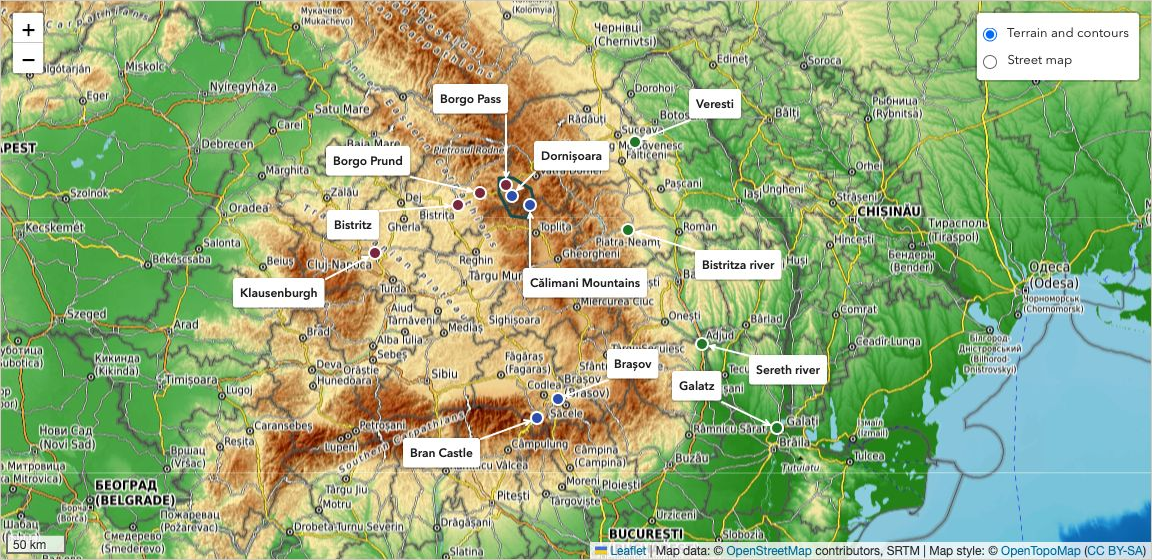
| 1 | 3–5 May | Jonathan Harker’s journal (shorthand) | Harker travels from Munich through Klausenburgh and Bistritz to the Borgo Pass; the landlady’s crucifix, the coach passengers’ gifts, the driver with the red eyes, the blue flames, the wolves. | The travelogue voice; precise detail against mounting unease; “the dead travel fast”. |
| 2 | 5–8 May | Harker’s journal | Arrival at the castle. The Count’s welcome, his English, his history of his race; no servants, no mirrors; the shaving-glass and the cut; “The castle is a veritable prison, and I am a prisoner!” | Hospitality turned to captivity; the Count as courteous host; dramatic irony. |
| 3 | 8–16 May | Harker’s journal | The Count’s pride in the Szekelys; Harker made to write letters on business only; the Count crawling down the wall; the three women and the “wicked, burning desire”; the bag with the child. | Desire and disgust; “nineteenth century up-to-date with a vengeance” against “the old centuries”. |
| 4 | 16 May – 30 June | Harker’s journal | The three post-dated letters; Harker’s own letters stolen; the Count in Harker’s clothes; the mother at the gate and the wolves; the chapel and the boxes of earth; the Count in his box, “gorged with blood”; Harker’s attempt with the shovel and his resolve to climb down. | The Count’s plan for England revealed through Harker’s eyes; the first break in narrative, since Harker’s fate is unknown for several chapters. |
Part two: Whitby and London (Chapters 5–9)
| Ch. | Dates | Documents | What happens | Focus for study |
|---|---|---|---|---|
| 5 | 9–26 May | Letters, Mina to Lucy and Lucy to Mina; Dr Seward’s phonograph diary; letter, Quincey Morris to Arthur Holmwood; telegram | Mina practises shorthand to help Jonathan. Lucy receives three proposals in one day: “Why can’t they let a girl marry three men?” Seward first describes Renfield. | Change of voice and form; the women’s letters; the New Woman question opens. |
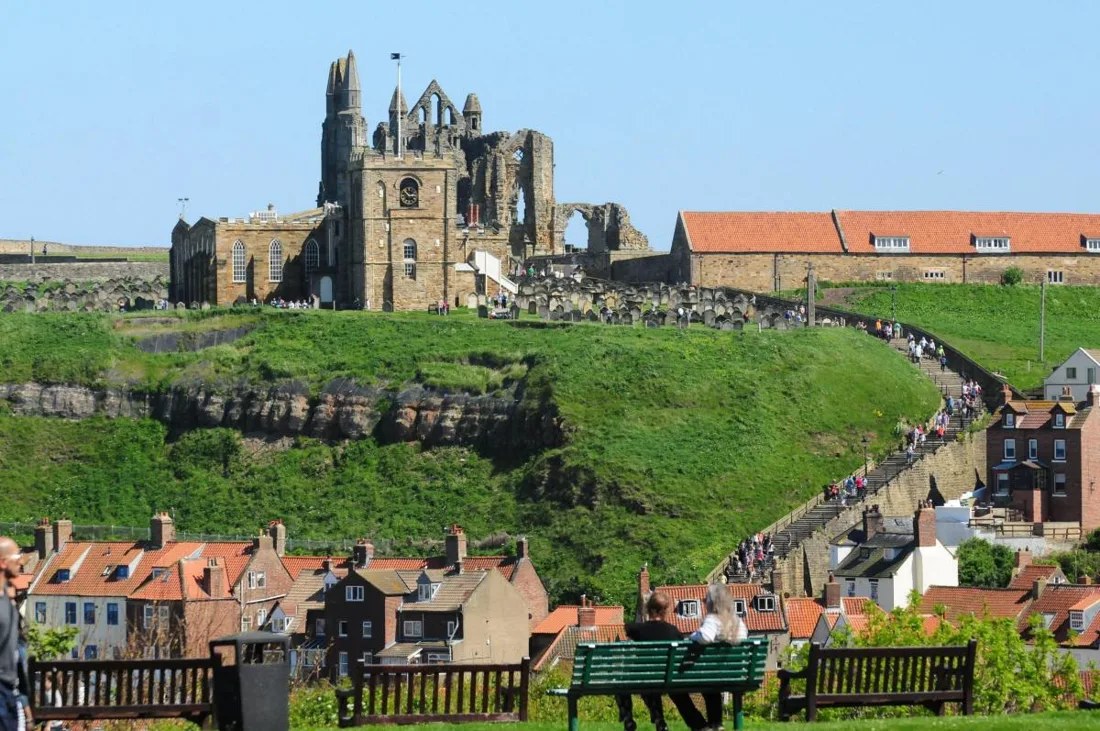
| 6 | 24 July – 6 August (Seward: 5 June – 20 July) | Mina Murray’s journal; Seward’s diary | Mina at Whitby: the harbour, the abbey, St Mary’s churchyard, Mr Swales and the lies on gravestones. Renfield’s flies, spiders and sparrows: a “zoöphagous (life-eating) maniac”. Lucy sleepwalks. | Setting built from a real place; Renfield as a parallel plot; superstition and local speech. |
| 7 | 8–10 August (the log: 18 July – 4 August) | Cutting from The Dailygraph; log of the Demeter; Mina’s journal | The storm and the wreck; the dead captain lashed to the wheel; the log of the crew’s disappearance one by one; the great dog leaping ashore; the funeral. | Public documents against private ones: what a newspaper can know; the log as a found text. |
| 8 | 10–21 August | Mina’s journal; letters between solicitors and carriers; letter from Sister Agatha; Seward’s diary | Mina finds Lucy in the churchyard with a tall dark figure bending over her; the two marks on Lucy’s throat; business letters trace the boxes to Carfax; Jonathan is found in a Budapest hospital. Renfield escapes to Carfax: “I am here to do Your bidding, Master.” | The chase of evidence through ordinary paperwork; dramatic irony at its strongest. |
| 9 | 24 August – 6 September | Letters, Mina and Lucy; Seward’s diary; Lucy’s diary; letters and telegrams between Seward, Holmwood and Van Helsing | Mina marries Jonathan in Budapest and seals his journal. Lucy’s decline at Hillingham. Van Helsing is summoned from Amsterdam and examines Lucy. | Marriage and trust; medicine arrives as the dominant discourse; the telegram as a narrative device. |
Part three: Lucy (Chapters 10–16)
| Ch. | Dates | Documents | What happens | Focus for study |
|---|---|---|---|---|
| 10 | 7–11 September | Letter, Seward to Holmwood; Seward’s diary; Lucy’s diary | The first transfusions, from Arthur and then Seward; the garlic flowers; Van Helsing’s silence about his suspicions. | Blood as a transaction between men; science and folk remedy side by side. |
| 11 | 12–18 September | Lucy’s diary; Seward’s diary; The Pall Mall Gazette on the escaped wolf; telegram; Lucy’s memorandum | Van Helsing gives his own blood; Mrs Westenra removes the garlic; the wolf Bersicker breaks the window; Lucy’s mother dies; the maids are drugged; Lucy’s memorandum written as she waits. Renfield attacks Seward: “The blood is the life!” | Comedy and horror together (the zoo-keeper interview); a dying woman’s own testimony. |
| 12 | 18–20 September | Seward’s diary; letters from Mina; Patrick Hennessey’s report | Quincey gives blood; Lucy’s teeth lengthen; the voluptuous voice; her death, which seems to give back her beauty. Van Helsing: “It is only the beginning!” | The transformation of Lucy’s body and language; the four men’s bond. |
| 13 | 22–25 September | Seward’s diary; Mina’s journal; The Westminster Gazette on the “Bloofer Lady” | Lucy’s funeral; Van Helsing’s hysterical laughter in the carriage afterwards; Mina and Jonathan see the Count in Piccadilly, grown younger; children are lured on Hampstead Heath. | How the group begins to converge; newspaper reports as clues; the Count in daylight London. |
| 14 | 23–26 September | Mina’s journal; letters and telegrams between Mina and Van Helsing; Jonathan’s journal; Seward’s diary | Mina transcribes Jonathan’s journal; Van Helsing reads it and believes it; he tells Seward that the children’s wounds were made by Lucy. “It is the fault of our science that it wants to explain all.” | The dossier begins; knowledge shared for the first time; the limits of science stated. |
| 15 | 26–29 September | Seward’s diary; Van Helsing’s note | The tomb visited twice; the empty coffin; the child in the churchyard; Lucy seen in her tomb, more beautiful than in life. | Evidence and belief: Seward as the resistant witness. |
| 16 | 29 September | Seward’s diary | The “Bloofer Lady” confronted; “Come to me, Arthur”; Arthur drives the stake; Lucy’s face returns to “sweetness and purity”; the pact to hunt the Count. | The novel’s most discussed scene; gender, violence and restoration. |
Part four: the alliance (Chapters 17–22)
| Ch. | Dates | Documents | What happens | Focus for study |
|---|---|---|---|---|
| 17 | 29–30 September | Seward’s diary; Mina’s journal; Jonathan’s journal | Mina arrives at the asylum, typewrites Seward’s phonograph cylinders and arranges every record in order; “the world seems full of good men”. Jonathan traces the boxes. | Mina as compiler: the book we read is being made inside the story. |
| 18 | 30 September – 1 October | Seward’s diary; Mina’s journal | Mina meets Renfield, who speaks lucidly. Van Helsing’s lecture on the vampire’s powers and limits; “We have on our side power of combination”. The men decide to exclude Mina: “She has man’s brain... and a woman’s heart.” Renfield begs to be released. | The rules of the vampire set out; the exclusion of Mina and its consequences. |
| 19 | 1–2 October | Jonathan’s journal; Seward’s diary; Mina’s journal | The men enter Carfax; the rats; 29 of the 50 boxes remain. Mina, alone, sees mist at her window and dreams of a white face and red eyes. | Mina’s narrative turns inward; the reader sees what the men refuse to. |
| 20 | 1–3 October | Jonathan’s journal; Seward’s diary; letter from the estate agents | Jonathan traces boxes to Bermondsey, Mile End and Piccadilly. Renfield’s conversation about souls; his fatal injuries. | London geography as plot; Renfield’s lucidity and its limits. |
| 21 | 3 October | Seward’s diary | Renfield’s deathbed account; the men break into the Harkers’ room: the Count forcing Mina to drink from his breast, “a child forcing a kitten’s nose into a saucer of milk”. “Unclean, unclean!” | The novel’s central act of violation; Mina’s shame; Jonathan’s hair turns white. |
| 22 | 3 October | Jonathan’s journal | The Host scars Mina’s forehead. The boxes at Carfax and Piccadilly are sterilised; the Count’s papers found. | The sacred against the undead; the documentary trail closes in. |
Part five: the pursuit (Chapters 23–27)
| Ch. | Dates | Documents | What happens | Focus for study |
|---|---|---|---|---|
| 23 | 3–4 October | Seward’s diary; Jonathan’s journal | The Count confronted in Piccadilly: “Your girls that you all love are mine already.” Mina asks to be hypnotised at dawn and hears water and sails: the Count is at sea. | His only speech made directly to the men; Mina turns her wound into an instrument. |
| 24 | 4–6 October | Seward’s phonograph diary spoken by Van Helsing; Jonathan’s and Mina’s journals | The Czarina Catherine sails for Varna. Van Helsing explains why the Count has fled and why he must be followed; Mina insists on going with them. | Mina’s analytical voice; the shift from defence to pursuit. |
| 25 | 11–28 October | Seward’s diary; Jonathan’s journal; telegram | Mina extracts the men’s promise to kill her if she turns. In Varna; Mina classifies the Count: “a criminal and of criminal type. Nordau and Lombroso would so classify him.” The ship is diverted to Galatz. | Degeneration theory in the characters’ mouths; the euthanasia promise. |
| 26 | 29 October – 4 November | Seward’s diary; Mina’s journal and memorandum; Jonathan’s journal | At Galatz; Mina’s memorandum, a formal “ground of inquiry”, works out the river route by a process of exclusion; the party divides: launch, horseback, and Mina with Van Helsing by carriage towards the Borgo Pass. | Modern logistics against ancient terrain; the geography of the final chase. |
| 27 | 1–6 November; Note seven years later | Mina’s journal; Van Helsing’s memorandum; Jonathan’s journal; Seward’s diary; the final Note | The three women destroyed in the castle; the Holy circle; the race to the box at sunset; Quincey’s death; the Count’s face at peace as he crumbles. The Note: Quincey Harker, and “hardly one authentic document”. | Endings: restoration, loss and doubt; what the Note asks us to believe. |
Chapter numbers and dates follow the 1897 text as reproduced by Project Gutenberg (ebook 345). A few editions divide chapters differently; check yours. The date inconsistencies within the novel (for example around Lucy’s funeral and the Westminster Gazette report) are the author’s own and are worth a class discussion in themselves.