
resources
What inspired Dracula
Dracula grew from reading, research and invention. Travel books helped Bram imagine a country he never visited, while places he knew, older stories and the habits of modern life supplied material he transformed into fiction. The surviving evidence lets us follow some of those choices without reducing the novel to a single source.
Building Transylvania
Bram never visited Transylvania. He created the Count’s homeland through travel writing, maps, folklore and imagination, drawing atmosphere from landscapes and buildings he knew elsewhere.
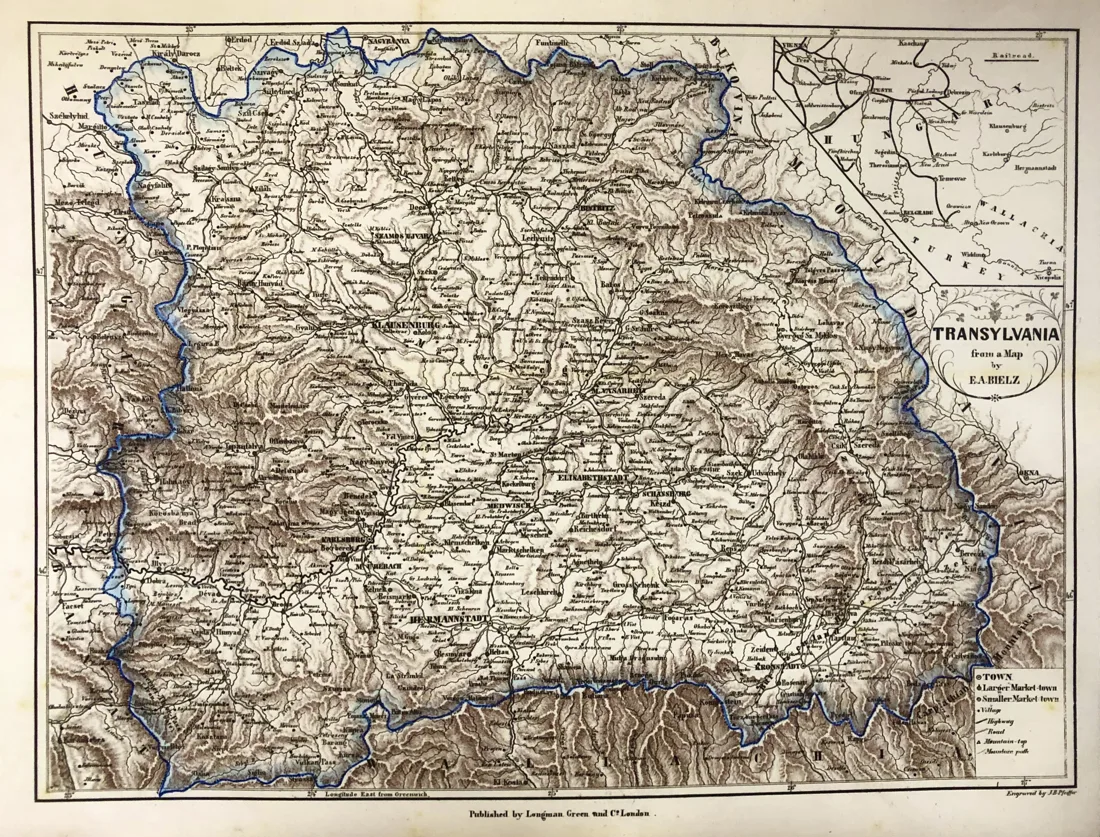
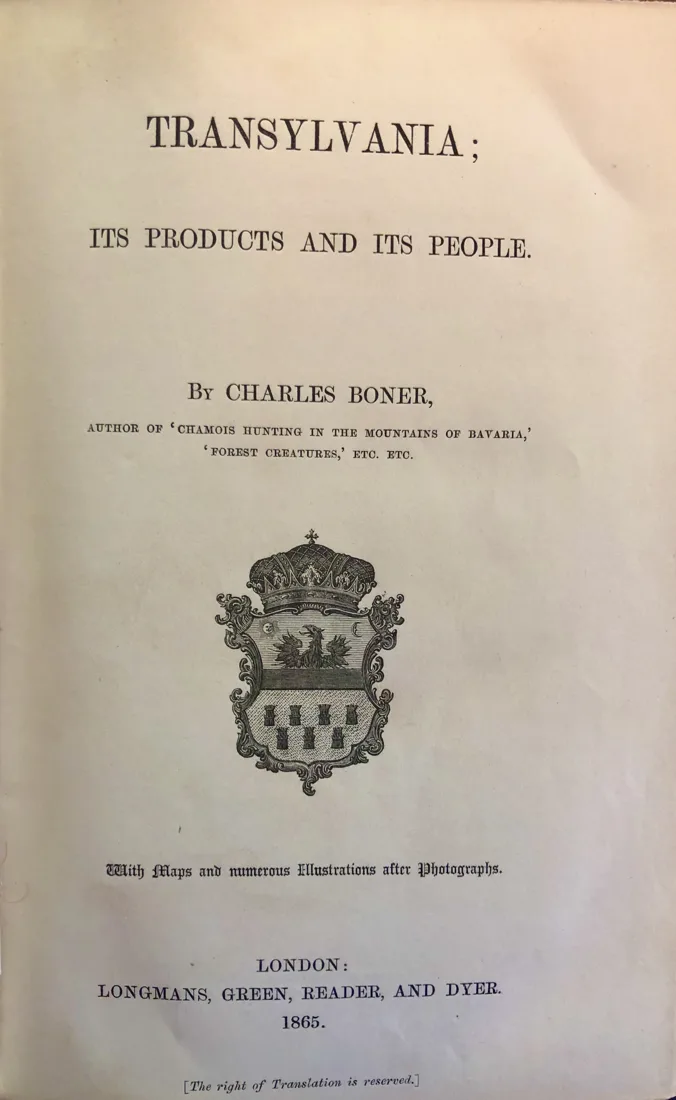
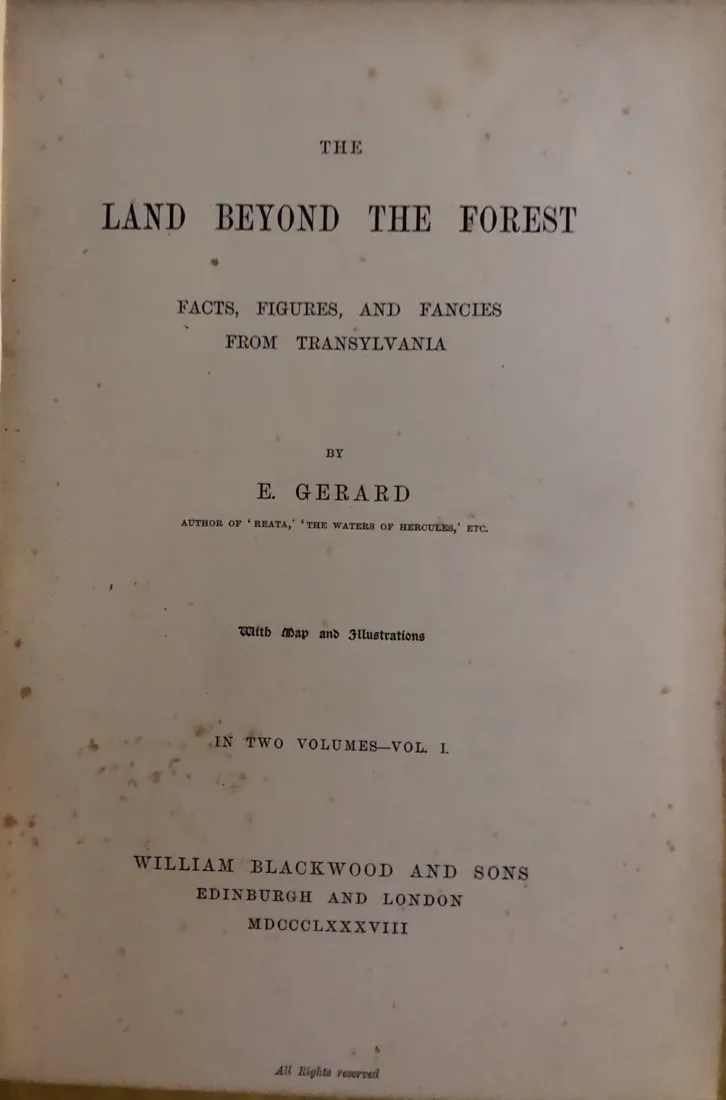
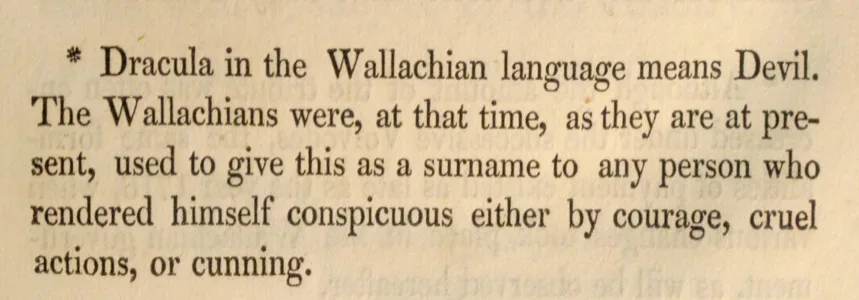
His sources included William Wilkinson’s An Account of the Principalities of Wallachia and Moldavia (1820), which supplied the name Dracula, and Emily Gerard’s The Land Beyond the Forest (1888), which supplied material about local beliefs. Other reading ranged from travel accounts to studies of werewolves and popular superstition. The working notes and surviving research books help trace how he selected and transformed this material.
The selected images bring some of that reading into view: a map, travel-book title pages and a printed account of the name Dracula. The working notes help us ask which details Bram used and how he transformed them.
Places he knew contributed different elements. The location pages tell their biographical stories; here the question is how they entered the fiction.
- Whitby supplied a harbour, cliff-top churchyard, abbey ruins and maritime atmosphere. The wreck of the Dmitry in 1885 is often linked with the fictional Demeter; the original records should be read alongside that interpretation.
- Cruden Bay was a repeated holiday and writing retreat. Slains Castle’s octagonal hall has been proposed as an influence on Castle Dracula. It is an intriguing comparison, rather than proof of a single model for the fictional castle.
- Ireland supplied family stories and a literary environment that included Sheridan Le Fanu’s Gothic fiction. Charlotte’s cholera account survives; any precise connection between a particular passage and Dracula needs evidence. There is no established record that Bram visited St Michan’s vaults.
- London supplied the novel’s urban settings and routes. The fictional geography can be explored alongside the real places associated with Bram’s life, without confusing the author’s travels with his characters’ journeys.
Where is Castle Dracula?
Bram placed the Count’s fictional castle in a real mountain landscape, but its precise location remains disputed. Bran Castle’s modern fame should be distinguished from the novel’s northern setting. Our separate resource Where is Castle Dracula? brings together the terrain map, the journey’s place names and the competing Borgo Pass and Călimani readings.
Seven years in the making
Bram’s surviving working notes trace the novel’s development from 1890. Early plans, reading extracts, character lists and chronologies show a story changing through research and revision. The Rosenbach Museum and Library in Philadelphia preserves these materials. Bram Stoker’s Notes for Dracula: A Facsimile Edition (2008), transcribed and annotated by Robert Eighteen-Bisang and Elizabeth Miller, makes them available to readers alongside the collection guide.
The novel developed alongside Bram’s theatrical work. Chelsea and the coastal retreats form part of that writing life. The evidence for specific stays and writing locations is explored on Places, with uncertain dates kept separate from established records.
In his 1897 interview, Bram recalled about three years of writing and a longer period with the plot in mind. This helps distinguish composition from the development recorded in his surviving notes.
Inside the working notes
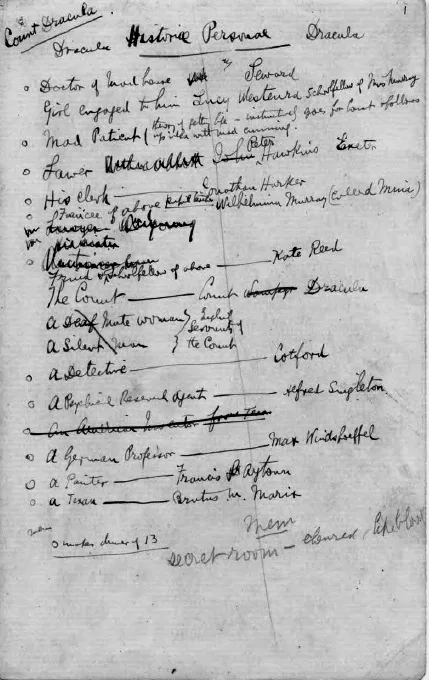
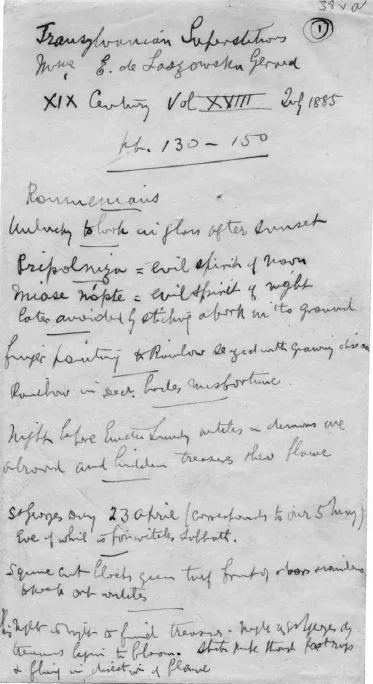
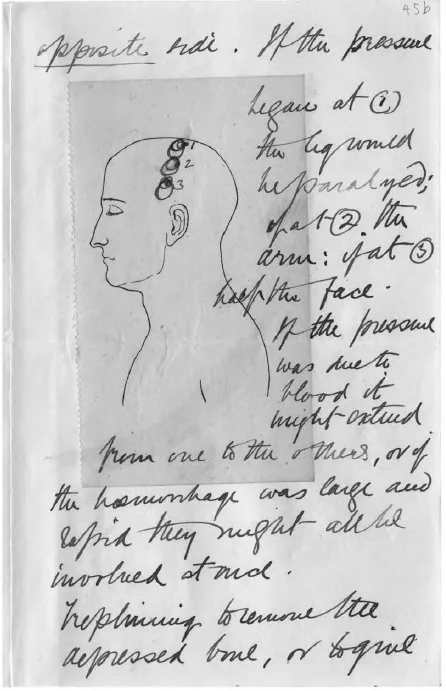
The notes let us look behind the finished novel. Character lists, extracts from reading and medical observations show the range of material Bram gathered. Read beside the published text, these working records show him actively making choices rather than simply copying a legend.
Medicine in the family
Medicine was part of Bram’s family world. His brother Thornley was a surgeon, and the research material for Dracula includes medical observations associated with him. Read beside Renfield’s injuries and the novel’s discussions of treatment, such records help us understand the practical questions Bram investigated.
This is stronger ground than identifying one person as the model for a whole character. Van Helsing is a fictional creation. George Stoker’s experience of the Balkans is another possible family connection, but evidence of his travels is not proof of how Bram used them.
In his 1897 interview with Jane Stoddard, Bram said Van Helsing was founded on a real character, but did not identify that person. This is evidence for a possible model, without telling us who the model was.
The books behind the book
The London Library has identified volumes it believes Bram used and marked while researching Dracula. The proposed connection rests on comparison with his working notes. The books offer a material link between his reading and the details he selected for fiction; the attribution of individual marks should retain the Library’s qualification.
Dracula and the historical Vlad
The Count is a fictional creation, not a biography of a historical prince. Bram took the name Dracula from his reading, but the extent of his knowledge of Vlad and the historical material behind the novel requires care. The modern tourist association with Bran Castle in Romania should also be distinguished from the evidence for Bram’s own sources.
Raymond McNally and Radu Florescu’s In Search of Dracula (1972) helped popularise a close connection with Vlad III. Elizabeth Miller’s Dracula: Sense & Nonsense challenged how much evidence supports it. The surviving notes document the borrowing of the name and limited historical information; they do not establish that Bram built the Count around Vlad’s reputation for impaling. Jarlath Killeen discusses this disputed connection alongside Irish interpretations of the novel.
Explore further
Read Dracula for an introduction to the novel and its characters. Reading Dracula offers a guide for first-time readers and book groups. For the places Bram actually visited, explore Places.
Other proposed influences
A resemblance between two stories, people or legends does not by itself establish influence. It helps to distinguish a surviving source in Bram’s notes, a documented meeting, and a later critic’s suggestion.
Sheridan Le Fanu’s Carmilla. The earlier vampire story and the Styrian setting in Bram’s early plans make this an important literary comparison. A comparison can illuminate the novel without proving that every shared detail was borrowed.
Henry Irving. Biographers have suggested that Irving’s commanding presence contributed to the Count. Bram’s long working relationship with him is documented; an equation between Irving and Dracula remains an interpretation.
Ármin Vámbéry. Bram met the Hungarian traveller, and readers have linked him with Van Helsing’s “friend Arminius”. The meetings do not establish exactly what was discussed or how it entered the novel.
Elizabeth Báthory and Irish folklore. Later writers have proposed these connections, including McNally’s Dracula Was a Woman (1983) and comparisons with the Abhartach legend. They should be presented as proposals rather than as documented sources in Bram’s working notes.
Jack the Ripper. The preface to the Icelandic Makt myrkranna refers to the Whitechapel murders. Questions about that version’s authorship and relationship to Bram’s text mean that the reference needs qualification; see the discussion of Powers of Darkness on the Dracula page.