
London walk · Stop 4 of 15
4 Durham Place – Chelsea
Bram’s address · by 1906 to 1911
Two kinds of writing survive from this address: a public remembrance and a private appeal. Together they reveal how different Bram’s circumstances could look on the printed page and in a personal letter.
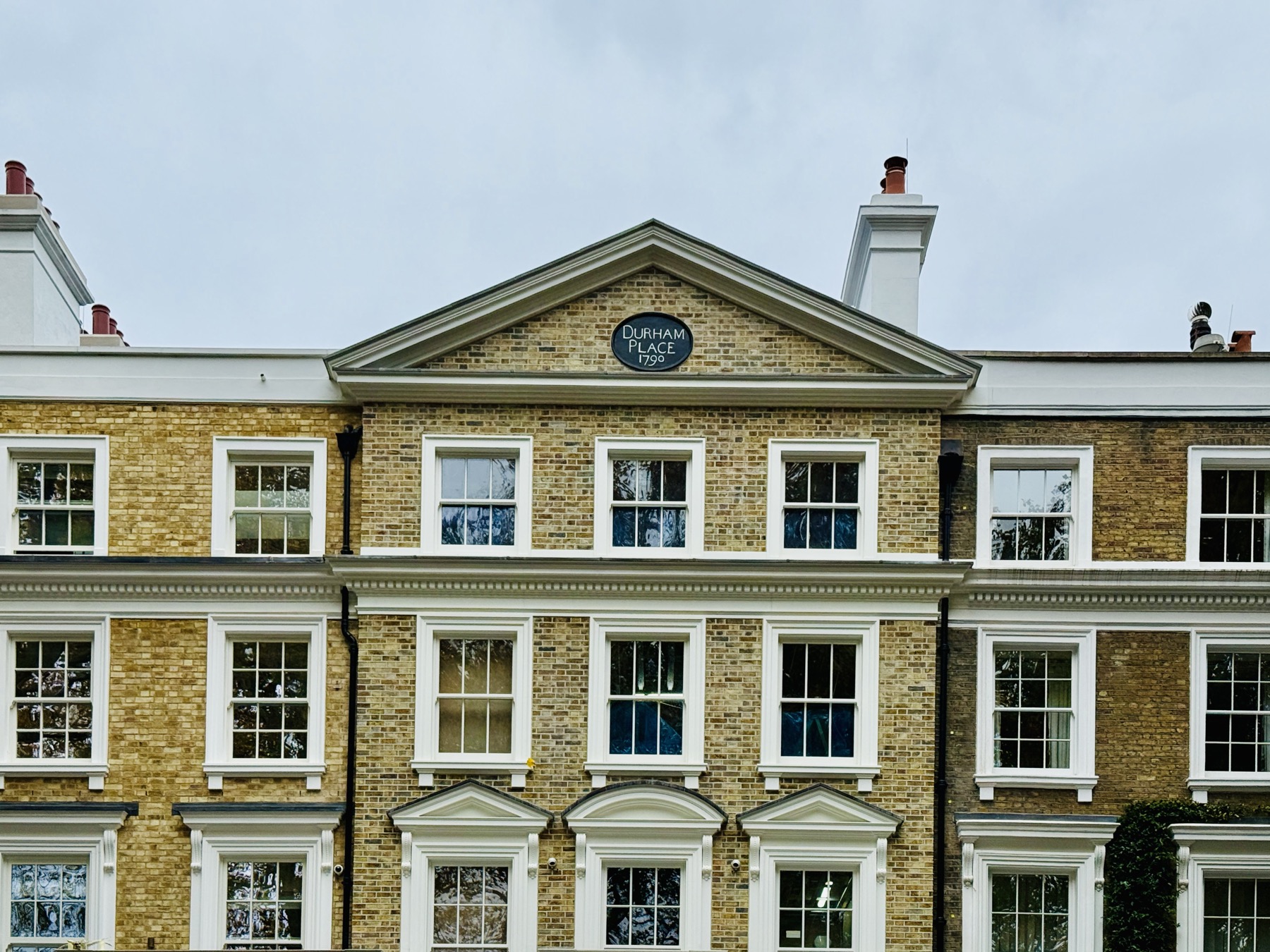
Look along Durham Place, a short Chelsea street of private houses. The preface to Bram’s Personal Reminiscences of Henry Irving, published in two volumes in 1906, ends with this address. Irving had died the year before, and the book records their long partnership.
On 25 February 1911 Bram wrote from here to the Royal Literary Fund, describing how illness had restricted his ability to earn. The Fund awarded him £100, and his signed receipt is dated 9 March 1911.
This house holds two sides of Bram’s last years: the devoted biographer of his friend, and a working writer under real financial pressure. Later in 1911 he moved to St George’s Square in Pimlico, the next stop on the walk.
Look for
The modest terrace fronts and doorways of Durham Place. Look for No. 4 among the house numbers; modern alterations and current works may change the view.
Read
“Let any one who will read the book through say whether I have tried to do him honour – and to do it by worthy means”
Evidence
The 1906 preface and the 1911 letter both give this address, so Bram was here from at least 1906 to February 1911. His exact moving-in and moving-out dates have not been established.
Practical information
Private residences: view from the pavement.
Royal Literary Fund: Bram’s letter ↗
1906 first edition, Volume I: preface ↗
Next: Continue towards Chelsea Bridge Road, then east along the north-bank streets to Pimlico and St George’s Square. Stay on the north bank rather than crossing Chelsea Bridge.
Source references
Bram Stoker’s application for assistance, 1911 — Royal Literary Fund