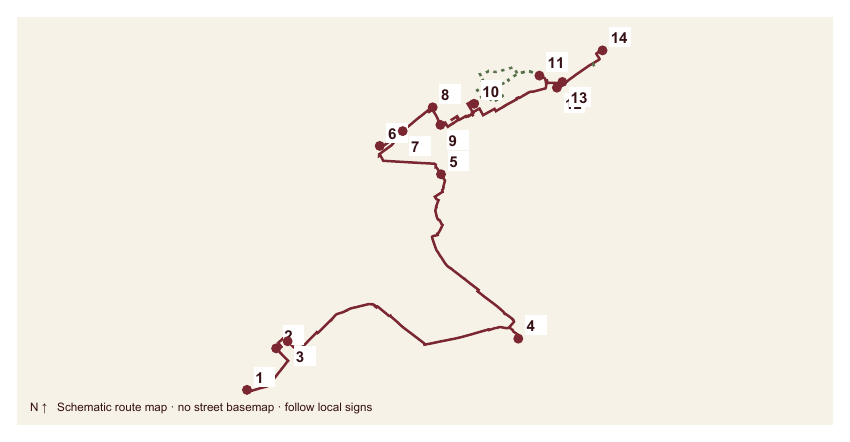
Follow Bram on his walk to work, from his Chelsea and Pimlico homes past Buckingham Palace and across Green Park to Piccadilly, the probable location of Dracula’s London house. Continue to the London Library, Irving’s statue, Oscar Wilde’s memorial, Coutts and the Lyceum. The full walk is about 10.4 km; the shorter West End walk starts at stop 6 and is around 3.7 km.
Approximate length
Allow
Underfoot
Start / finish
Full walkAbout 10.4 km / 6.5 miles
Half a day with stops; longer for interior visits
City pavements; busy road crossings
Cheyne Walk, near Nos. 26–27 → Lyceum Theatre, Wellington Street
Shorter walkAbout 3.7 km / 2.3 milesWest End only · stops 6–14
Lengths are approximate. Allow extra for crossings, detours and visits.
How to follow this walk and use your phone
Numbered pins mark the stops. Tap a pin for a short introduction and photo, then tap the photo for full details. Choose “Return to map” when you are done. For more room on your phone, choose Full screen map above the map.
Showing your location is optional and needs no app. Tap Show my location and choose Allow for your blue dot. The pale circle shows estimated accuracy. Keep this page open and your screen awake. The Estate does not receive or save your coordinates. Map information and privacy.
Location is off.
Routes are a guide: follow local signs, crossings and current access conditions. Report a map issue.
If Maps cannot use your location, enter a starting point there. To walk between two tour stops, use the next-stop links in the guide below. Your maps app may suggest a different route from this guide.
Schematic route map; follow local signs and current access conditions.
Stop 1 of 14
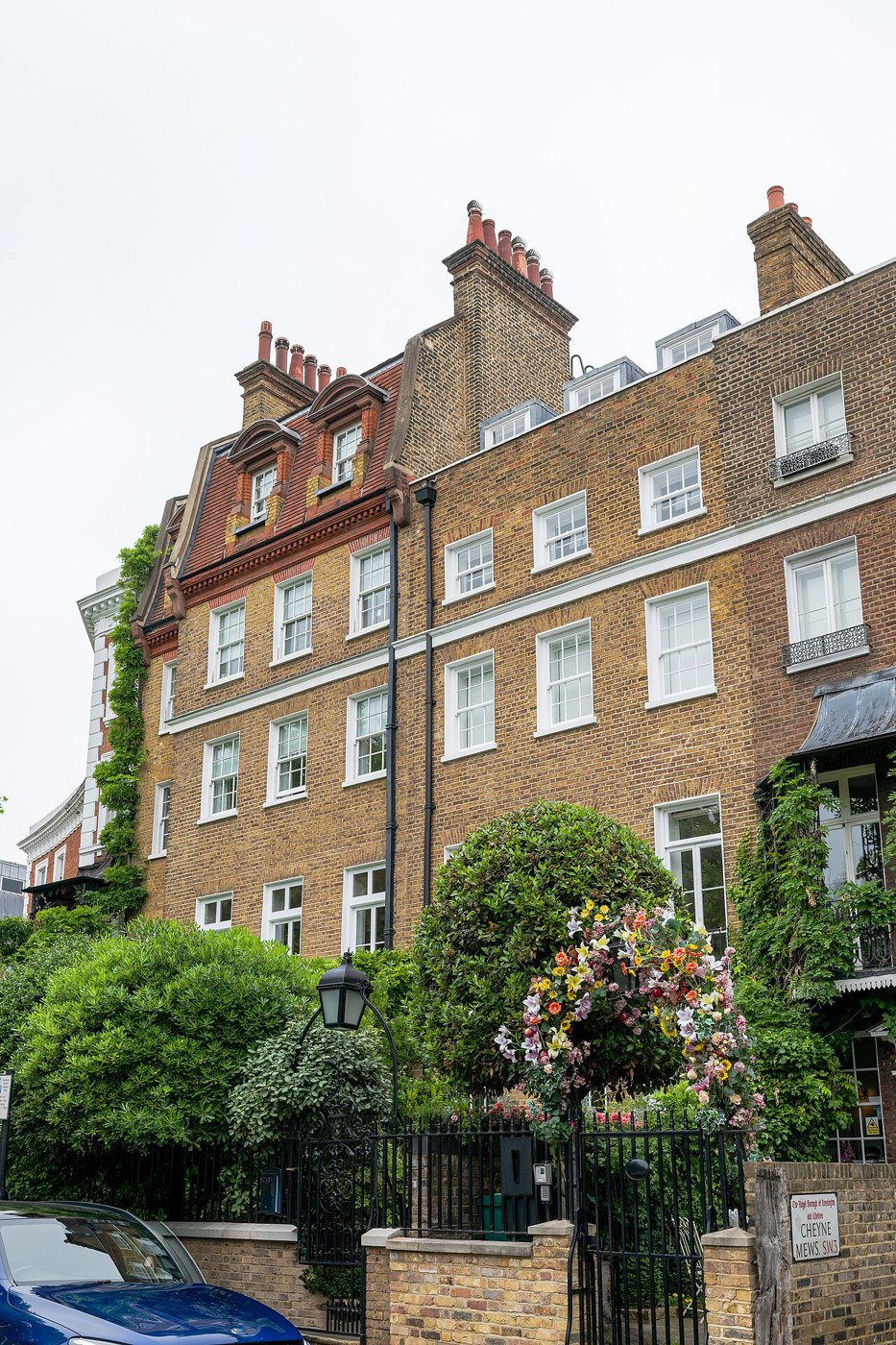
Cheyne Walk – No. 27, by the river
Family home · from about 1881
The Thames is more than a backdrop to this address. An emergency on the river became one of the stories through which Noel remembered his father.
Stand on the north-bank pavement and look across the road to the Thames. Bram, Florence and their young son Noel moved to this riverside terrace in about 1881, three years after Bram joined Henry Irving’s company at the Lyceum.
Noel later recalled his father’s attempt to rescue a man from the river, an act recognised by the Royal Humane Society. Newspaper reports and the medal record the episode, and its difficult aftermath stayed in the family’s memory of this house.
The house also welcomed the new friends that Irving’s world brought to Bram, among them the poet Tennyson’s family. From this riverside home the walk follows the Stokers’ later moves across Chelsea and Pimlico.
Look for
The long terrace facing the river, its doorways and railings, and the Thames immediately opposite. Our photograph shows the neighbouring Nos. 25–26.
Read
“My wife and I lunched with them; and their sons, Hallam and Lionel, spent Sunday evenings in our house in Cheyne Walk.”
Evidence
Bram’s memoir confirms a family house in Cheyne Walk, documented by 1882. Most accounts give No. 27 from about 1881; Noel’s recollection gives No. 26. The exact doorway and the full residence period are not established.
Practical information
Private houses: view from the public pavement. Stay on the Chelsea (north) bank.
Nos. 25–26 Cheyne Walk, on the north bank of the Thames.Tilman2007 · CC BY-SA 4.0 · Resized; no other edits.
Stop 2 of 14
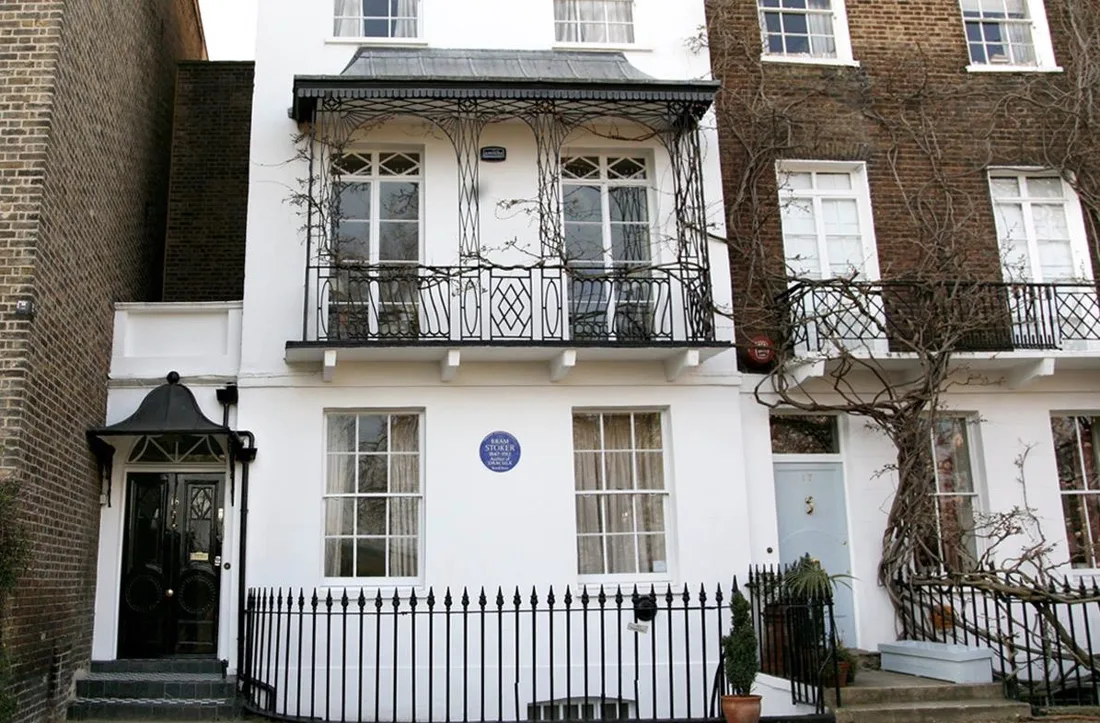
17–18 St Leonard’s Terrace – the blue plaque
Family homes · No. 17 about 1884–86; No. 18 about 1896–1906
A familiar blue roundel can make a writer seem settled in one place. The story behind this one is more mobile: adjoining homes, journeys across London and a book assembled over years.
Look up at the blue plaque on No. 18. The Greater London Council put it up in 1977, and it names Bram as the author of Dracula.
The family moved into No. 17 in about 1884 and later lived next door at No. 18, from about 1896 to 1906. Much of Bram’s work on Dracula, published in 1897, belongs to these Chelsea years. From this street he went out to research at the London Library and to earn his living at the Lyceum, both later on this walk.
The Lyceum could reach him here at any hour. Before dawn on 18 February 1898 a cab-driver knocked with a letter from Bow Street police station: the Lyceum’s scenery store in Southwark was on fire.
Look for
The blue plaque on No. 18 and the house numbers on both doors. Photograph plaque and numbers together so the neighbouring addresses stay distinct.
Read
“At ten minutes past five on the morning of Friday, 18th February 1898, I was wakened by a continuous knock at a door somewhere near my house in Chelsea.”
Evidence
The 1977 plaque records Bram’s residence but gives no dates. The house numbers and years rest on directory evidence and are approximate; census returns would settle them. Bram’s 1898 account names only “my house in Chelsea”.
Practical information
Private houses: view the plaque from the pavement.
18 St Leonard’s Terrace, Chelsea, with blue plaqueCourtesy of the Bram Stoker Estate.
Stop 3 of 14
4 Durham Place – Chelsea
Bram’s address · by 1906 to 1911
Two kinds of writing survive from this address: a public remembrance and a private appeal. Together they reveal how different Bram’s circumstances could look on the printed page and in a personal letter.
Look along Durham Place, a short Chelsea street of private houses. The preface to Bram’s Personal Reminiscences of Henry Irving, published in two volumes in 1906, ends with this address. Irving had died the year before, and the book records their long partnership.
On 25 February 1911 Bram wrote from here to the Royal Literary Fund, describing how illness had restricted his ability to earn. The Fund awarded him £100, and his signed receipt is dated 9 March 1911.
This house holds two sides of Bram’s last years: the devoted biographer of his friend, and a working writer under real financial pressure. Later in 1911 he moved to St George’s Square in Pimlico, the next stop on the walk.
Look for
The modest terrace fronts and doorways of Durham Place. Look for No. 4 among the house numbers; modern alterations and current works may change the view.
Read
“Let any one who will read the book through say whether I have tried to do him honour – and to do it by worthy means”
Evidence
The 1906 preface and the 1911 letter both give this address, so Bram was here from at least 1906 to February 1911. His exact moving-in and moving-out dates have not been established.
Next: Continue towards Chelsea Bridge Road, then east along the north-bank streets to Pimlico and St George’s Square. Stay on the north bank rather than crossing Chelsea Bridge.
Durham Place, Chelsea: a street view, not a confirmed close-up of No. 4.Mike Quinn · CC BY-SA 2.0 · Resized; no other edits.
Stop 4 of 14
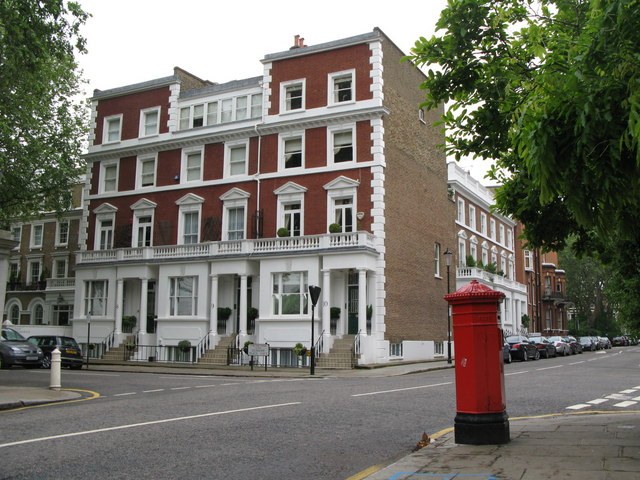
26 St George’s Square – Bram’s final address
Final home · 1911–20 April 1912
The working life traced through Chelsea comes to an end in this square. Its place in the walk is a moment to consider how Bram was remembered, alongside the official record of his final days.
Walk into the square and picture Pimlico in the spring of 1912. Bram moved here from Chelsea in 1911, and he died at No. 26 on 20 April 1912, aged 64.
His death certificate describes him as an author. It names his son Noel as the informant and records that Noel was present at the death in this, the last of Bram’s London homes.
Contemporary notices remembered Bram’s long association with Irving, the partnership he had set down in his memoir six years earlier. Indeed, some obituaries did not even mention Dracula. His ashes rest at Golders Green Crematorium, described under More to explore. From this quiet square the walk turns north, away from the family homes, towards Buckingham Palace, Green Park and the West End where Bram spent his working life.
Look for
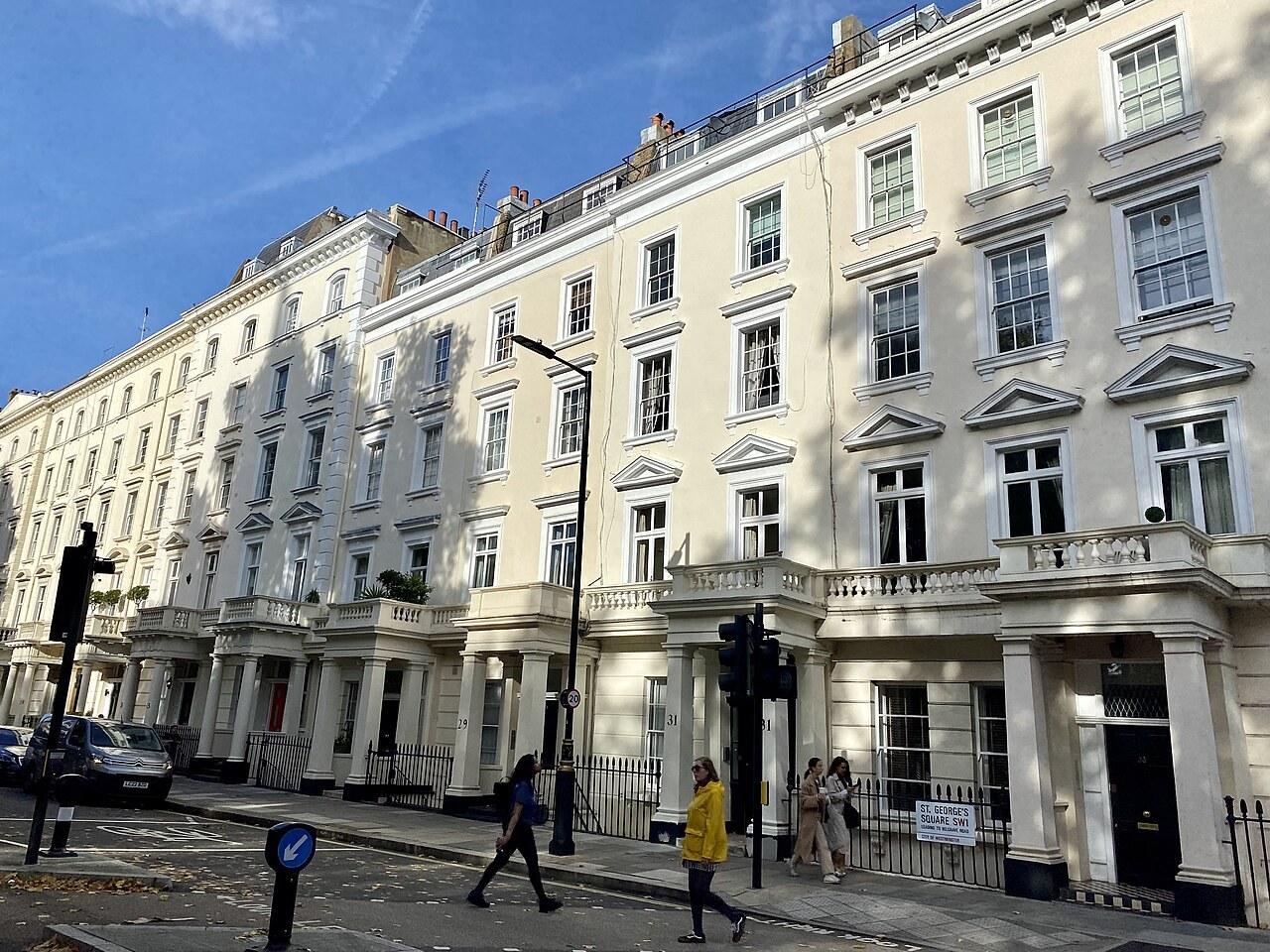
The garden square and its surrounding terraces. Compare the historical address with today’s numbering; our photograph shows the neighbouring Nos. 27–33.
Read
“For nearly thirty years I was an intimate friend of Irving; in certain ways the most intimate friend of his life.”
Evidence
The death certificate documents the address and date. The pin marks the square’s setting: No. 26 has not been matched to a surviving doorway under today’s numbering.
Practical information
Residential square: use public space and respect residents.
Next: Walk to Buckingham Palace Road and follow it north to the Palace. Use the marked crossings by the Victoria Memorial to reach the pedestrian area facing the Palace.
Nos. 27–33 St George’s Square: the neighbouring terrace, not Bram’s verified doorway.No Swan So Fine · CC BY-SA 4.0 · Resized; no other edits.
Stop 5 of 14
Buckingham Palace – Bram, Irving and the Prince of Wales
Supper on the Lyceum stage · 7 May 1883
Royal guests brought another kind of theatre to Irving’s circle. Pausing beside the Palace opens a story of supper tables, carefully staged hospitality and a gift remembered by Bram’s family.
We tell this story beside Buckingham Palace as our walk passes it, but the Prince’s London home was nearby Marlborough House, on Pall Mall, where he lived with Princess Alexandra before becoming King Edward VII in 1901.
At the Lyceum, Henry Irving and Bram entertained distinguished guests in the Beefsteak Room, often over supper after a performance. Guests included William Gladstone, Sarah Bernhardt, Richard and Isabel Burton, the pianist Ignacy Jan Paderewski and the Prince of Wales.
When the Prince joined a group of fifty on 7 May 1883, the larger royal party needed the theatre’s stage, as the Beefsteak Room seated only thirty-six. Chandeliers hung beneath a great tent-roof, crimson curtains surrounded the diners, and a quartet played behind palms and flowers.
At the centre of the round table lay a low mass of yellow flowers, kept to nine inches high so that guests could see one another.
According to family recollection, the Prince of Wales also gave Bram a gold pen and pencil set.
Look for
The Palace front and the Victoria Memorial. Marlborough House stands nearby on Pall Mall; the royal supper described here took place at the Lyceum, the final stop on this walk.
Read
“Sometimes the Beefsteak Room, which could only seat at most thirty-six people, was too small; and at such times we migrated to the stage.”
“I remember the Prince saying that he had never seen a more lovely table.”
Evidence
Bram’s memoir documents the supper of 7 May 1883 and the Prince’s remark. The gold pen and pencil set rests on family recollection.
Practical information
Pause on the pedestrian area near the Victoria Memorial. Keep crossings and entrances clear; no Palace admission is needed.
Next: Enter Green Park beside Canada Gate and turn left onto the footpath above the horse ride, parallel to Constitution Hill. Follow it west, then take the path north to Piccadilly and use a marked crossing to reach No. 138, the most likely location of Dracula’s London house.
138 Piccadilly – the most likely location of Dracula’s London house
Possible location · The Count’s No. 347 Piccadilly · Dracula, 1897
Start here for the shorter West End walk (3.7 km, about 1½ hours)
Piccadilly gives the Count a place in the everyday city of houses, clubs and hotels. This stop turns the walk into a small architectural investigation, with the novel as its guide.
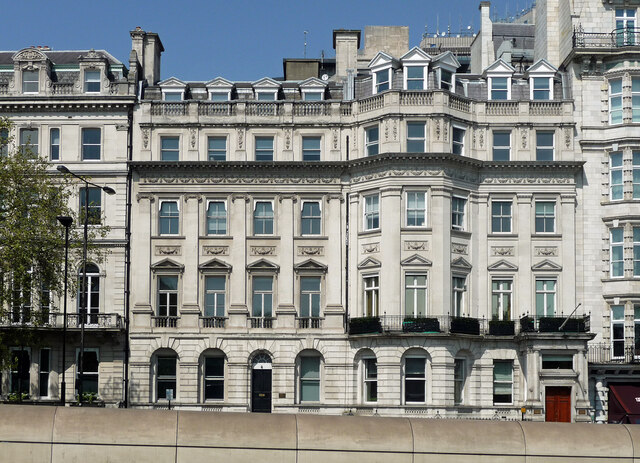
Look across Piccadilly at Nos. 138–139, near Old Park Lane. Researchers have compared this row with the Count’s fictional house at No. 347 Piccadilly, which Jonathan tracks down in Chapter 20. He finds it dusty and shuttered, with a torn-down notice-board in front of the balcony.
Historic England dates the present refacing of No. 138 to 1891, the years when Bram was developing the novel. Its stone front, canted bay, raised entrance and balcony invite comparison with Jonathan’s description.
Chapters 22 and 23 add a harder architectural test: a rear dining room, a lower stone-paved yard, a stable and an escape into a mews. As you walk east, compare No. 128 and the site of No. 107, two alternative proposals for the same house.
Look for
The stone front of No. 138, its canted bay, raised entrance and first-floor balcony. Then, walking east, No. 128 and the site of No. 107.
Read
“At Piccadilly Circus I discharged my cab, and walked westward; beyond the Junior Constitutional I came across the house described, and was satisfied that this was the next of the lairs arranged by Dracula.”
“The windows were encrusted with dust, and the shutters were up. All the framework was black with time, and from the iron the paint had mostly scaled away.”
Evidence
No. 347 is fictional. No. 138 is a later proposal, not a proved identification, and a similar frontage is only part of the evidence. Nos. 128 and 107 are alternative suggestions.
Practical information
Exterior street stop. Use public pavements and crossings, keep entrances clear and stay out of private yards.
138–139 Piccadilly, photographed in 2019. No. 138 is a proposed model, not a confirmed identification of Dracula’s house.Stephen Richards / Geograph · CC BY-SA 2.0 · Unmodified photograph.
Stop 7 of 14
Giuliano’s – Harker recognises Dracula
Fictional use of a real location · Mina’s journal, 22 September · Dracula, Chapter 13
A moment of recognition interrupts an ordinary walk through the West End. This is a place to notice how little Bram needs to turn a familiar London street into a threat.
Look along Piccadilly to No. 115, where Carlo Giuliano’s jewellery shop once stood. In Chapter 13, Mina and Jonathan walk down Piccadilly from Hyde Park Corner arm in arm, after Mr Hawkins’s funeral.
Mina is admiring a beautiful girl in a carriage outside the shop when Jonathan suddenly clutches her arm. He has recognised the tall, thin man with a beaky nose and pointed beard who is watching the same girl: it is Dracula.
The girl drives off up Piccadilly, and the Count follows and hails a hansom. Shaken and pale, Jonathan lets Mina lead him away to rest in Green Park, a later stop on this walk. The novel spells the shop’s name “Guiliano’s”.
Look for
The building at No. 115 and the busy Piccadilly kerb, where the victoria waited and the Count hailed his hansom.
Read
“I was looking at a very beautiful girl, in a big cart-wheel hat, sitting in a victoria outside Guiliano’s, when I felt Jonathan clutch my arm so tight that he hurt me…”
“I believe it is the Count, but he has grown young.”
Evidence
Giuliano’s shop at 115 Piccadilly was an actual location for a fictional encounter. The Victorian shop interior does not survive.
Practical information
View from public pavements; use marked crossings and respect private entrances.
The original Berkeley Hotel – Van Helsing’s London base
Fictional use of real location · Van Helsing’s hotel in Dracula · 1897
A hotel can give a scattered group somewhere to meet, leave messages and plan its next move. In Dracula, the Berkeley supplies that practical thread through a complicated pursuit.
Stand at the corner of Berkeley Street and Piccadilly, where the original Berkeley Hotel stood and where Dracula gives Van Helsing his London base. On 13 September Dr Seward calls for him here and finds the Professor ready, bag in hand.
The hotel serves the hunters again and again. In Chapter 15 Van Helsing summons Seward, Arthur and Quincey to meet him here at ten at night, and in Chapter 17 a telegram from Mina is waiting when the two doctors arrive. In Chapter 20 Jonathan finds the estate agents Mitchell, Sons & Candy in a directory here, then sets off for their office in Sackville Street.
Historic England holds a photograph of the hotel’s reception room dated 17 June 1897, only weeks after Dracula appeared – the kind of room in which Bram imagined the Professor waiting.
Look for
The corner of Berkeley Street and Piccadilly, with Berkeley Street running north. Sackville Street, Jonathan’s next call in Chapter 20, is an optional detour from here.
Read
“Called at the Berkeley and found Van Helsing, as usual, up to time. The carriage ordered from the hotel was waiting. The Professor took his bag, which he always brings with him now.”
“To-morrow night you will come to me to the Berkeley Hotel at ten of the clock. I shall send for Arthur to come too, and also that so fine young man of America that gave his blood.”
“Having learned the address of Mitchell, Sons, & Candy from a directory at the Berkeley, I was soon at their office in Sackville Street.”
Evidence
The corner marks the site of the original hotel; the novel describes none of its rooms. The Berkeley moved to Knightsbridge in 1972, so today’s hotel of that name stands elsewhere.
Practical information
View from public pavements; use marked crossings and respect private entrances.
Next: Use a marked crossing to reach the Green Park side of Piccadilly near the station, then enter the park and follow Queen’s Walk south along its eastern edge.
Fictional use of real location · Mina’s journal, 22 September · Chapters 13 and 22
The park offers a change of pace after Piccadilly’s crowded pavements. In the novel, its shade briefly shelters a couple whose ordinary London outing has become deeply unsettling.
Find a seat in the shade along Queen’s Walk. After Jonathan recognises the Count outside Giuliano’s, Mina leads her shaken husband into Green Park, and on this hot autumn day he is soon asleep with his head on her shoulder.
Twenty minutes later he wakes, apologises for his rudeness and suggests a cup of tea, apparently with no memory of the encounter. Mina is left troubled, and her journal entry for 22 September turns a London park into a place of quiet dread.
The park returns in Chapter 22, when Jonathan, Seward and Van Helsing stroll in from Arlington Street and sit on a bench, smoking, with the Piccadilly house in view. They wait there while Godalming and Morris bring a locksmith to open its door.
Look for
Shady seats along Queen’s Walk, any of which could stand in for Mina’s. To the north lies Piccadilly, where the novel places the Count’s house within sight of the park.
Read
“We walked a little further, and then went in and sat for a while in the Green Park. It was a hot day for autumn, and there was a comfortable seat in a shady place.”
“After a few minutes’ staring at nothing, Jonathan’s eyes closed, and he went quietly into a sleep, with his head on my shoulder.”
“We sat down on a bench within good view, and began to smoke cigars”
Evidence
Dracula names Green Park, Arlington Street and a bench, but no particular entrance or seat. Queen’s Passage is this walk’s link to the London Library, not a place in the novel.
Practical information
Park paths; use marked crossings at Piccadilly. If Queen’s Passage is closed, return to Piccadilly and use St James’s Street.
Next: Follow Queen’s Walk south and take Queen’s Passage into St James’s Place, then on to St James’s Street. Cross carefully and take King Street east into St James’s Square, to the London Library at No. 14.
Behind this frontage is another way into Dracula: the books that fed Bram’s imagination. Library records and the volumes themselves make literary research part of the walk.
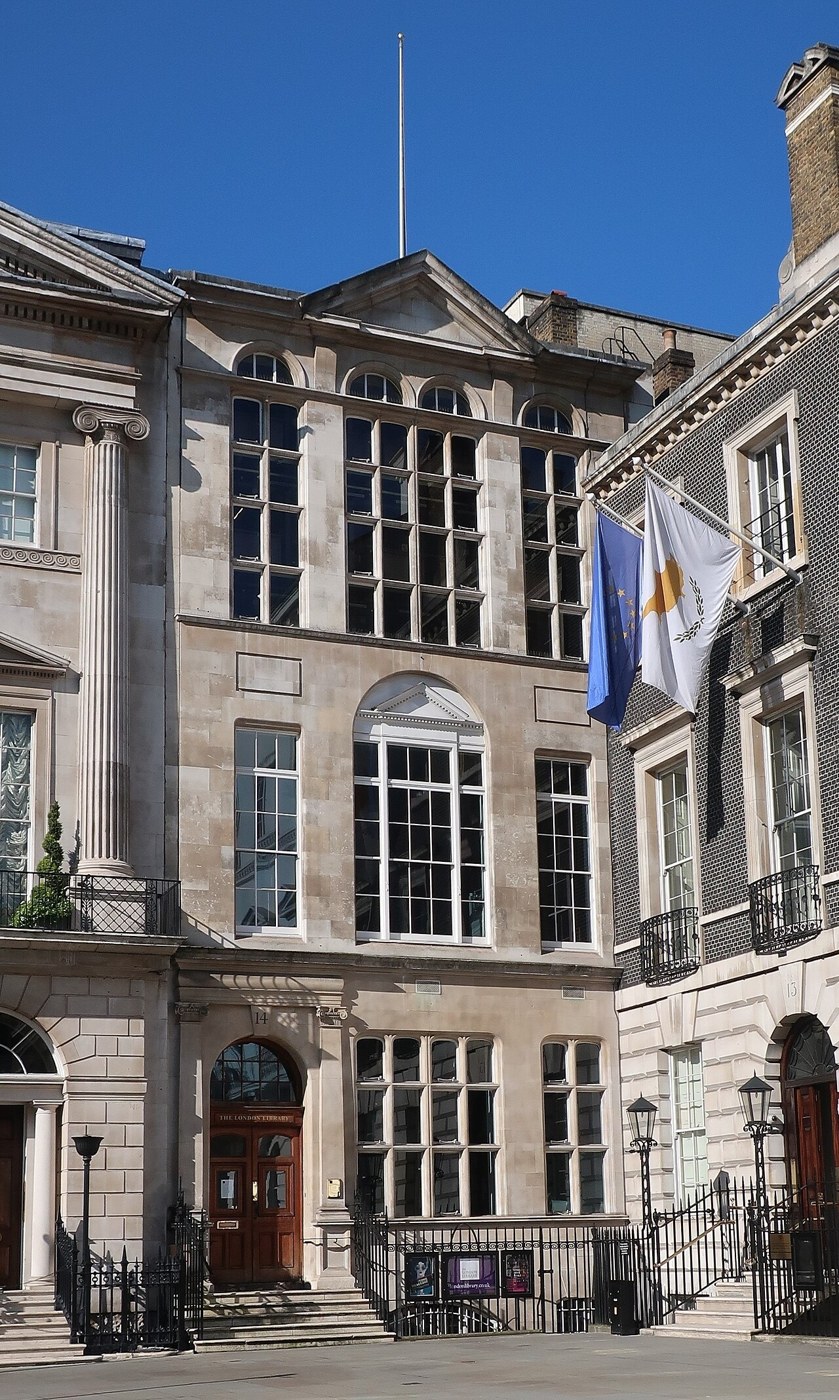
Look for No. 14 on St James’s Square. Bram was a member of the London Library from 1890 to 1897, the years in which he developed Dracula, and he read widely here in geography, travel and folklore.
Library researchers later compared marks in surviving volumes with Bram’s working notes for the novel. They identified 25 books whose markings match references in those notes, and six more with similar marks that the notes do not cite.
The stop shows a working habit as well as an imagination. Bram read, extracted details and organised his findings, much as Jonathan prepares for his own journey with books and maps in the library of the British Museum.
Look for
The Library’s entrance at No. 14. Picture Bram arriving with his notebook; the marked books themselves stay inside, in the collection he used.
Read
“I had visited the British Museum, and made search among the books and maps in the library regarding Transylvania”
Evidence
Membership from 1890 to 1897 is dated by the Library. The book attribution is the Library’s reasoned judgement: it calls the marks likely to be Bram’s, and no full borrowing record survives.
Practical information
Exterior visible from the square. Interior visits need a booked tour, event, day pass or membership.
Next: Leave the square by the east side towards Pall Mall, then follow Pall Mall east to Cockspur Street and Trafalgar Square. Continue towards the National Portrait Gallery and the Irving statue on Charing Cross Road, or take Optional A to Café Royal or Optional B to Ole & Steen for a refreshment break.
The London Library, 14 St James’s Square.GrindtXX · CC BY-SA 4.0 · Resized; no other edits.
Optional A · Lunch or tea
Café Royal – lunch or tea today, Bram’s supper in 1885
Supper with the Burtons · 27 June 1885
After the theatre came the prospect of a good supper and even better conversation. At Café Royal, the evening Bram recalled took an unexpectedly abrupt turn.
Stand on Regent Street outside Café Royal. On 27 June 1885, after a Lyceum performance of Olivia, Bram and Irving came here to sup with Richard and Isabel Burton, who had just arrived in London.
All four had hoped for a long evening, and Irving was longing to hear Burton speak of the death of his friend Edmund Henry Palmer three years earlier. The licensing rules intervened: punctually at midnight the party was turned out, and no protest or bribe could change it.
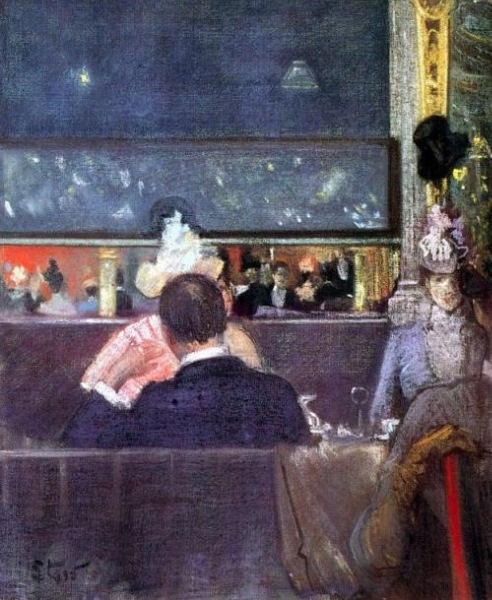
Today’s Hotel Café Royal serves afternoon tea in its historic Grill Room, and Sydney Starr’s painting At the Café Royal, of about 1890, evokes the period of Bram’s supper. Pause here for lunch or tea before rejoining the walk at Irving’s statue.
Look for
The Café Royal name on Regent Street. If you go in, the Grill Room is where today’s afternoon tea is served.
Read
“The Burtons had just come to London and had asked Irving and me to take supper with them at the Café Royal after the play, Olivia.”
“Punctually at midnight we were inexorably turned out. Protests, cajoleries, or bribes were of no avail. Out we had to go!”
Evidence
Bram’s memoir records the date, the company and the midnight closing. It does not name the room, so today’s Grill Room evokes the period rather than marking their table.
Practical information
Optional and paid. Reserve ahead, or rest free in the garden of St James’s Square on a weekday (open until about 4.30 pm).
Next: From the Library, follow the square to Duke of York Street, then Jermyn Street and Eagle Place to Piccadilly and Regent Street. Afterwards, go via Piccadilly Circus to Irving’s statue and rejoin the main walk: about 1 km and 20 minutes’ walking in all. Optional B, Ole & Steen, is on Haymarket near Piccadilly Circus.
Ole & Steen – a modern version of the Aërated Bread Company
A modern bakery break · Dracula, Chapter 20
Follow Jonathan’s example and stop for a cup of tea before continuing into Theatreland.
The Danish bakery Ole & Steen at 56 Haymarket opened its first UK shop here in 2016. It offers a present-day place for a bread-and-tea break while we follow Jonathan Harker’s London.
In Chapter 20, Jonathan has traced the Count’s Piccadilly house and questioned the estate agents Mitchell, Sons & Candy in Sackville Street. Darkness has fallen and he is tired and hungry: he takes a cup of tea at an Aërated Bread Company shop before catching the train back to Purfleet.
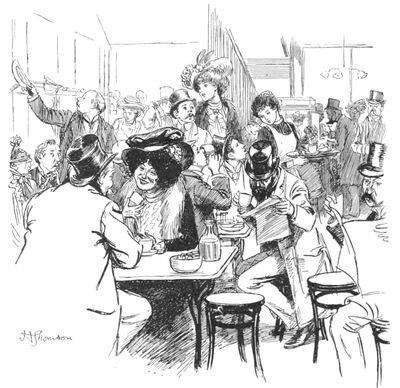
The Aërated Bread Company was incorporated in London in 1862. Despite the diaeresis – the two dots over the ë – its name was not Scandinavian. It described bread raised by forcing carbon dioxide into dough. ABC’s affordable tea shops became a familiar part of London life.
Look for
The Ole & Steen bakery at 56 Haymarket, on the Haymarket edge of St James’s Market.
Read
“It was now dark, and I was tired and hungry. I got a cup of tea at the Aërated Bread Company and came down to Purfleet by the next train.”
Evidence
Dracula names the Aërated Bread Company but does not identify the branch. This pin marks today’s Ole & Steen, opened in 2016: a modern refreshment stop, rather than an identified site of Jonathan’s fictional café.
Practical information
Optional and paid. The Estate receives no commission or payment. For a free rest, use a seat in the garden of St James’s Square, open to the public Monday to Friday until about 4.30 pm and closed at weekends.
Next: From the Library, follow St James’s Square to Charles II Street, use the marked crossings at Waterloo Place and continue through St James’s Market to 56 Haymarket. After your break, follow the pedestrian routes and crossings east towards Irving’s statue beside the National Portrait Gallery. This optional leg is about 0.9 km and 15–20 minutes’ walking, plus your stop.
An Aerated Bread Shop, illustrated by Hugh Thomson in Highways and Byways in London (first published 1902; 1920 edition shown).Hugh Thomson / Project Gutenberg · Public domain · Unmodified scan.
Stop 11 of 14
Henry Irving statue – Charing Cross Road
Later memorial · Thomas Brock’s bronze · 1910
The walk now gives the actor a face. After the addresses connected with their work, this memorial is a chance to consider the friendship at the centre of Bram’s theatrical life.
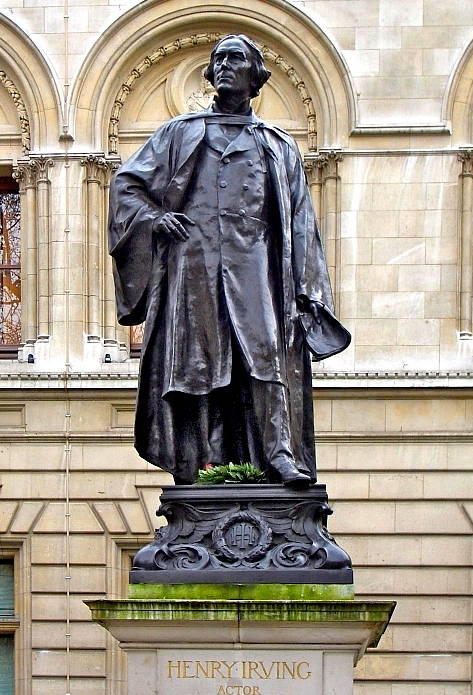
Look up at Thomas Brock’s bronze of Henry Irving, raised here in 1910. Irving was the centre of Bram’s working life: from 1878 Bram managed the business of Irving’s Lyceum company, organising its seasons, correspondence and tours, and he stayed at the actor’s side until Irving’s death in 1905.
Irving was buried in Westminster Abbey, and Bram described the silent crowds at the funeral as a tribute without equal. The next year he published Personal Reminiscences of Henry Irving (1906), his two-volume account of their long partnership.
In its preface Bram wrote that sculptors and painters could record a man’s outward appearance, while his own book would show the friend he knew. Brock’s statue supplied that outward likeness five years after Irving’s death, while Bram was still living.
Look for
Irving’s name on the plinth beside the National Portrait Gallery, and the bronze figure above it: the record of “external appearance” that Bram’s preface leaves to the sculptor.
Read
“Of him the other arts can make record in so far as external appearance goes.”
“For my own part the work which I have undertaken in this book is to show future minds something of Henry Irving as he was to me.”
“Never in the world was greater tribute to any man.”
Evidence
Brock’s statue was erected in 1910, during Bram’s lifetime. The partnership it recalls, and the funeral, are documented in Bram’s own memoir of 1906.
Practical information
View from the pavement; use marked crossings and leave room for passers-by.
Next: Walk south towards St Martin-in-the-Fields, follow Duncannon Street, then turn into Adelaide Street for the Oscar Wilde memorial. Use marked crossings.
The empty place on this bench makes the memorial feel like an invitation. Pause here for the more personal connections between the Wildes, Bram and Florence.
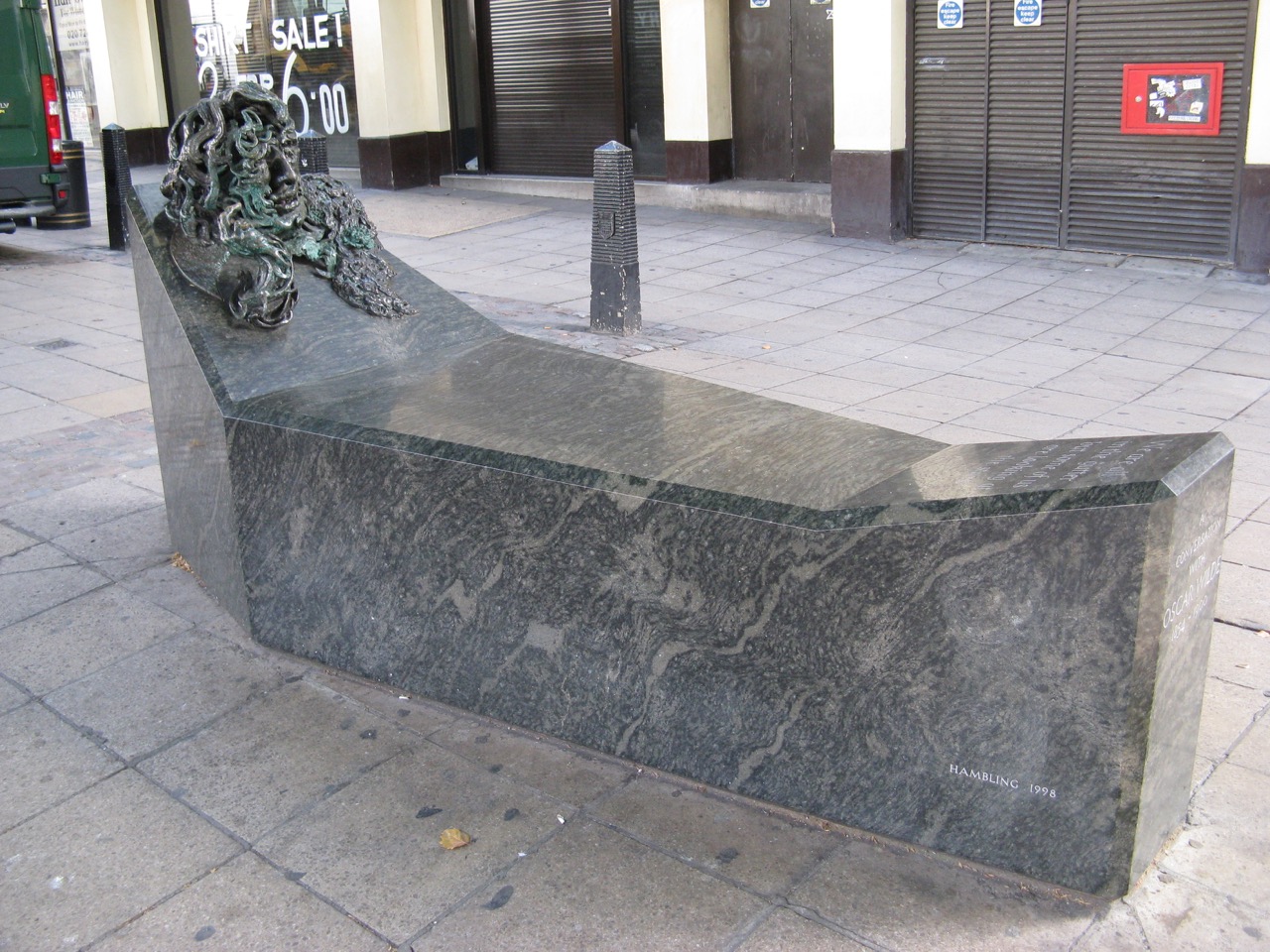
Sit beside Oscar on Maggi Hambling’s A Conversation with Oscar Wilde, where two Dublin writers and their families meet again in memory.
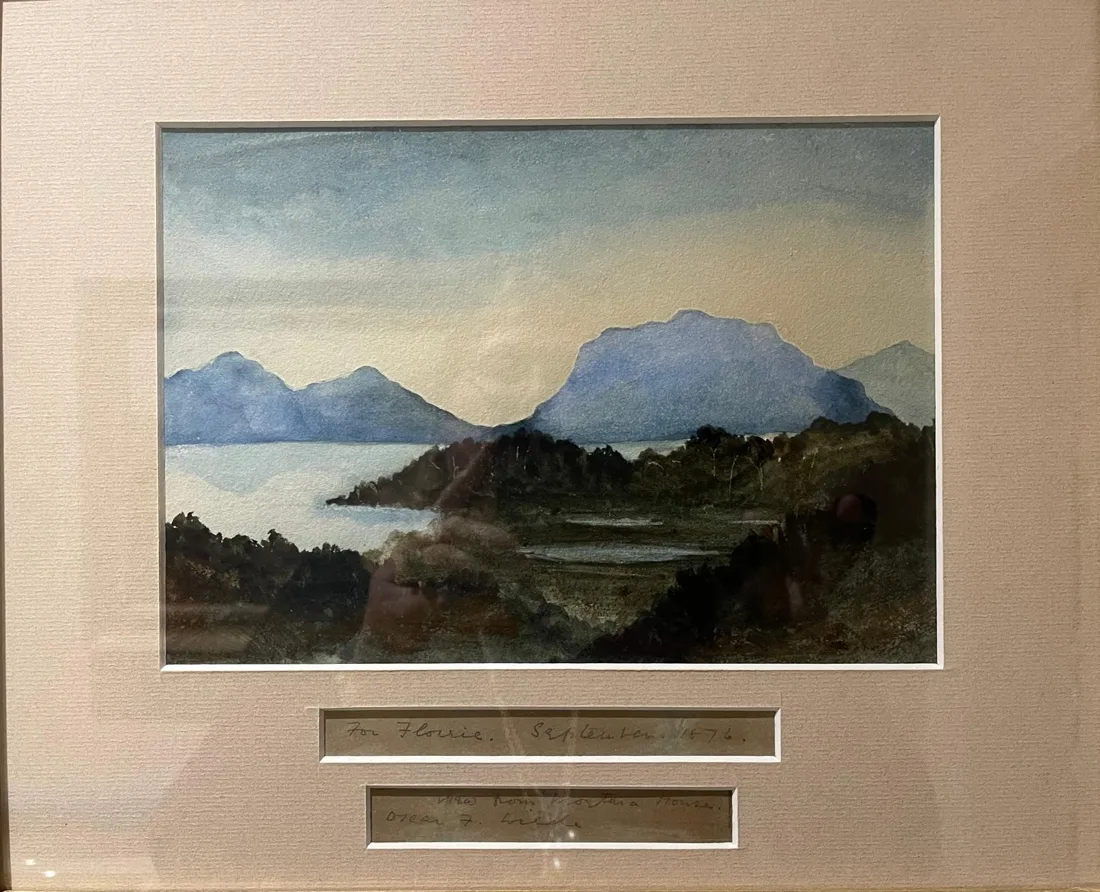
Before she married Bram, Florence Balcombe was courted by Oscar, who in September 1876 gave her a watercolour of Moytura House, the Wilde family’s retreat beside Lough Corrib, inscribed for “Florrie”. Florence married Bram at St Ann’s Church, Dublin, on 4 December 1878, and they moved to London as he began work with Irving.
Oscar married Constance Lloyd on 29 May 1884. Constance wrote children’s stories and campaigned for women’s rights and practical dress. A note in the Lyceum Collection begins “My Dear Bram”: Constance is unwell and resting in Brighton for ten days, so Oscar will come to supper alone.
Look for
Oscar’s bronze figure, cigarette in hand, rising from a green granite coffin that doubles as a bench. Along the top runs his line “we are all in the gutter, but some of us are looking at the stars”.
Evidence
A modern memorial: no meeting of the Stokers and Wildes is recorded here. The watercolour and the supper note survive; the note, in the Shakespeare Birthplace Trust’s Lyceum Collection, is undated.
Practical information
Outdoor memorial on Adelaide Street. View from the pedestrian space and keep the pavement clear.
Maggi Hambling’s A Conversation with Oscar Wilde on Adelaide Street, London, photographed in 2009.Yair Haklai · CC BY-SA 4.0 · Unmodified photograph.Oscar Wilde’s View from Moytura House, inscribed for Florence (“Florrie”), September 1876.Courtesy of the Bram Stoker Estate.
Stop 13 of 14
Coutts on the Strand – Bram’s bank and the Count’s letter
Bram’s bank · 59 Strand until 1904; 440 Strand from 1904
Money and correspondence keep Dracula’s journey moving as surely as the supernatural does. A banking address on the Strand brings those practical arrangements into the same city as Bram’s own affairs.
Pause outside 440 Strand, the Coutts banking house since 1904. Bram banked with Coutts, which still names him among its former clients; when Dracula appeared in 1897, the bank did business at its earlier premises, No. 59 Strand, farther east.
In Chapter 3 the Count leaves his newly written letters face down on a table at the castle, and Jonathan turns them over: one to Whitby, one to Varna, one to Coutts & Co., London, and one to bankers in Buda-Pesth. The Count’s London plans pass through a real bank on this street.
Coutts appears in Bram’s own memoir too. Describing Richard Burton’s Arabian Nights, he notes that subscribers paid in full and directly to Coutts and Co., so there were no fees or discounts.
Look for
The banking house at No. 440. As you walk on, look for the former No. 59 address area on the south side, where Bram’s bank stood in 1897.
Read
“One of the letters was directed to Samuel F. Billington, No. 7, The Crescent, Whitby, another to Herr Leutner, Varna; the third was to Coutts & Co., London, and the fourth to Herren Klopstock & Billreuth, bankers, Buda-Pesth.”
“The entire edition was subscribed, the amounts being paid in full and direct to Coutts and Co., so that there were no fees or discounts.”
Evidence
Coutts names Bram among its former clients. The novel names the bank but describes no account or visit. The old building at No. 59 was demolished in 1923.
Practical information
Exterior stop only. Please keep the bank entrance clear.
Next: Continue east along the Strand on public pavements, using marked crossings. At Wellington Street, turn north to the Lyceum; Optional C, the Savoy, is on the way.
Irving’s dinner for James Whitcomb Riley · 29 July 1891
A grand hotel makes a surprisingly intimate setting for this stop. The story Bram preserved is about a dinner party whose composure could not survive a poem.
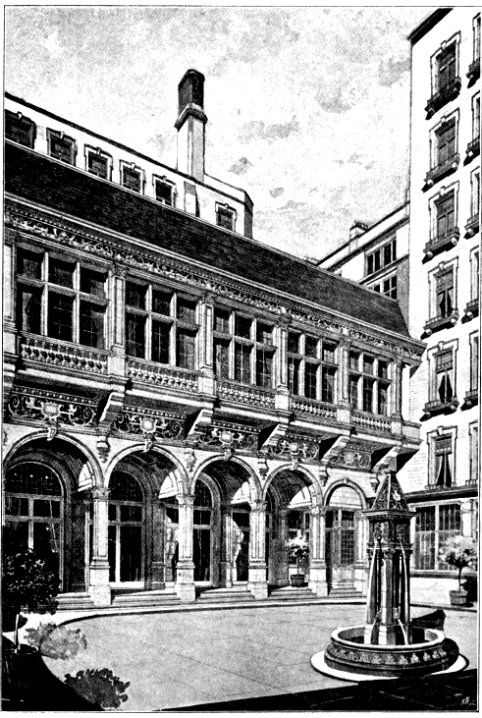
Step into Savoy Court and look up at the hotel. On 29 July 1891 Irving gave a dinner here for the American poet James Whitcomb Riley, whom his friends called “Jamesy”. Riley recited several of his poems, and “Good-bye, Jim” moved every other man at the table to tears.
The hotel grew out of the theatre next door: Richard D’Oyly Carte opened the Savoy Theatre in 1881 for the Gilbert and Sullivan operas, and their success helped make the hotel possible in 1889.
The partnership touched the Stokers’ own circle, for W. S. Gilbert knew the family, especially Florence, while Arthur Sullivan composed music for Irving’s Macbeth at the Lyceum. Pause here for lunch or tea before the last stop on the walk.
Look for
The forecourt of Savoy Court and the hotel entrance. Thomas E. Collcutt’s additions, published in 1897, belong to the Savoy of Bram’s lifetime.
Read
“His rendering of the powerful little poem, “Good-bye, Jim,” made every one of the other eight men at the table weep.”
Evidence
Bram’s memoir records the date, the host and the recitation, but not the room. The 1897 illustration of Collcutt’s additions records the building, not this dinner.
Practical information
Optional and paid. Book ahead, or rest free in Victoria Embankment Gardens beside the Savoy.
Next: Use the marked crossing on the Strand to reach Savoy Court, and watch for vehicles in the forecourt. Afterwards, return to the Strand and continue east to Wellington Street and the Lyceum.
The Lyceum brings the walk back to the work around which Bram organised much of his life. Its public face opens onto a story of long partnership and demanding daily business.
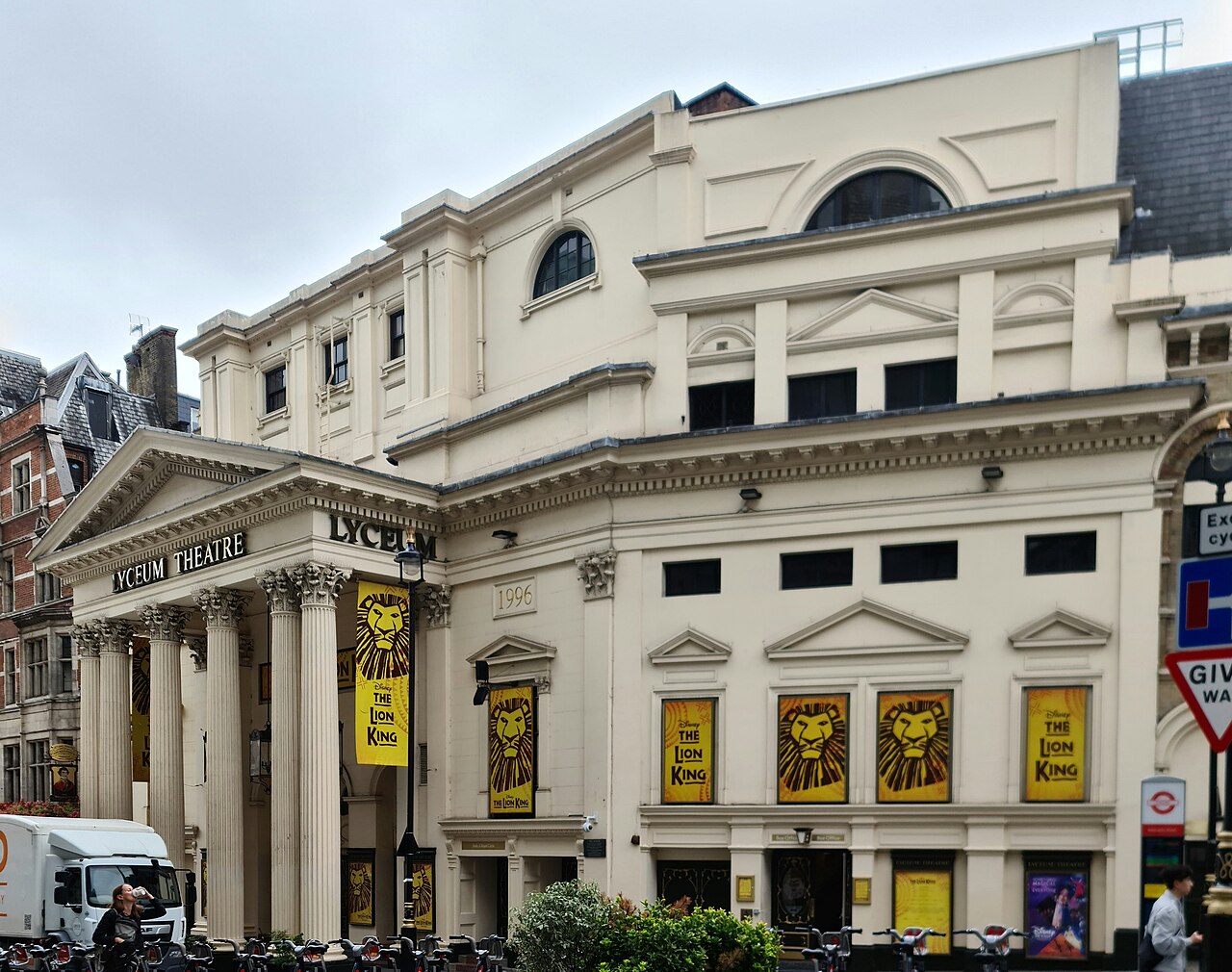
Look across Wellington Street at Samuel Beazley’s portico. In 1878 Irving took the Lyceum into his own hands and asked Bram to leave the Civil Service and run his business; Bram accepted at once, and remained his manager until Irving’s death in 1905.
Behind the performances in which Irving and Ellen Terry starred, Bram organised accounts, correspondence, tours and hospitality. On 18 May 1897 he arranged the copyright reading of Dracula; or, The Un-Dead here, eight days before the novel’s publication.
The Beefsteak Room was the heart of that hospitality, where Irving entertained after performances and talk could last all night. One evening, which Bram thought was in February 1887, the two men supped alone and discussed Macbeth until dawn; Bram believed the talk helped Irving decide to revive the play.
Look for
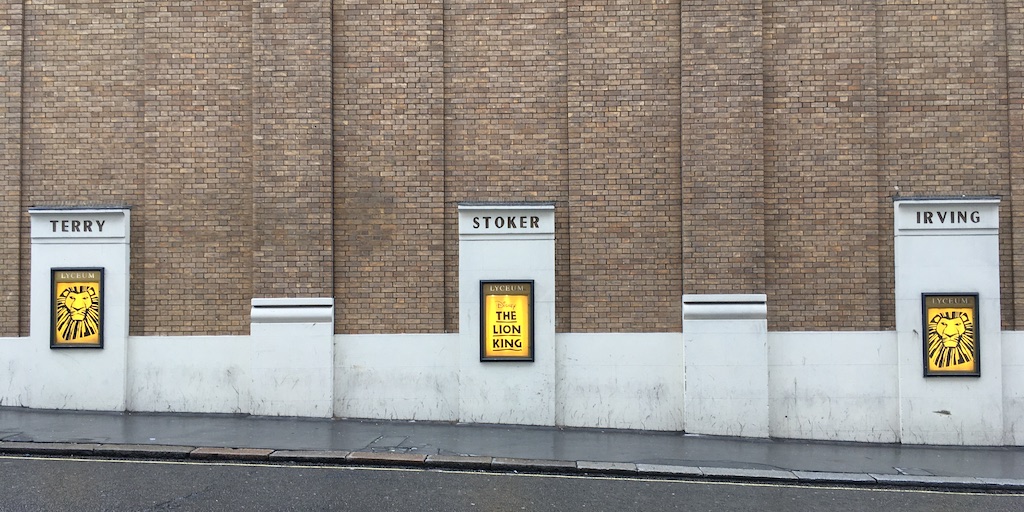
Beazley’s nineteenth-century portico. Then walk round to Burleigh Street for the names Terry, Stoker and Irving on the rear wall, later commemorations of Ellen Terry, Bram Stoker and Henry Irving.
Read
“He asked me if I would give up the Civil Service and join him; I to take charge of his business as Acting Manager. I accepted at once.”
“having supped alone in the Beefsteak Room, talked over the play till the windows began to show their edges brightening in the coming day”
Evidence
Bram managed Irving’s business from 1878 to 1905; the Lyceum company’s tenancy ended in 1902. Historic England distinguishes Beazley’s surviving frontage from Bertie Crewe’s later auditorium. The Beefsteak Room’s survival is not established.
Practical information
View the entrance from the public pavement. For an interior visit, check the theatre’s current performances and visitor arrangements.
The walk ends here at the Lyceum on Wellington Street, where Bram worked for Irving. To go inside, book a performance through the theatre’s official ticketing.
Bram’s remains are at Golders Green Crematorium, 62 Hoop Lane, London NW11 7NL. This is a separate biographical visit, not a setting in Dracula. The operator requires an appointment to visit Bram’s memorial in the columbaria; check its current arrangements before travelling.
Hampstead and the Heath – Lucy’s fictional landscape
The novel places the Bloofer Lady reports around Hampstead Heath and names Lucy’s churchyard Kingstead. Hillingham and Kingstead are fictional locations: this extension explores the wider landscape, not a confirmed house or tomb. Read chapters 13–16.
Highgate Cemetery is a separate Gothic and cultural-history visit. It is not named as Lucy’s churchyard in the novel, and the later Highgate Vampire story must not be confused with Stoker’s text. Admission is paid; guided tours are optional. Book admission or a tour through the Cemetery’s official website.
Spitalfields and Mile End New Town – Chicksand Street
In chapter 20, six earth-boxes are delivered to 197 Chicksand Street, Mile End New Town. The historical district name should not send you to the present Mile End station by assumption. Explore the Chicksand Street area as an optional outing; the novel’s house has not been matched to a surviving doorway.
Another six boxes go to Jamaica Lane, Bermondsey. Its exact modern equivalent has not been established for this guide; do not substitute a modern Jamaica Road address without evidence. This is a separate district extension, not a mapped extra leg.
Jonathan Harker consults books and maps at the British Museum before his journey; Van Helsing later researches there too. This is a fictional research connection distinct from Bram’s London Library membership. The historical Reading Room is at the British Museum, not the present British Library. Advance booking for free Museum entry is recommended. Check current Reading Room access before travelling; the entry booking is for the Museum.
The escaped wolf episode gives London Zoo a direct place in the novel’s London geography. Stoker’s fictional wolf Bersicker escapes from the Zoo and later breaks through Lucy’s bedroom window. Treat it as a separate outing and distinguish Stoker’s fictional incident from a documented historical escape. A visit inside today’s Zoo requires admission. Book online for the best-value tickets, or check the current gate arrangements.
Chapter 9 names the Great Eastern Hotel when Van Helsing asks Seward to arrange rooms. This makes a worthwhile separate railway-and-hotel outing, distinct from his Berkeley Hotel base in the West End. The central walk does not extend to Liverpool Street.
Seward’s Chapter 9 letter arranges to meet Lucy at “the Stores”. Gill Davies identifies this as Harrods. The novel does not name Harrods, so this remains an attributed reading rather than a confirmed shop address. Consider it an optional literary question if visiting Knightsbridge, not an extra stop on the main route.
Gill Davies’s March 2004 essay connects the novel’s London locations with wealth, transport, empire and Victorian anxieties about outsiders. It prompted this further walk research. Its map is an interpretation to compare with the novel, not proof of every proposed site.
Optional detour from the Berkeley Hotel: Arthur Holmwood writes from the Albemarle Hotel on 31 August, asking Dr Seward to help Lucy. This Chapter 9 letter begins the chain that brings Van Helsing into her care.
Optional detour from the Berkeley Hotel: In Chapter 20, Jonathan visits the estate agents Mitchell, Sons & Candy in Sackville Street to discover who bought the Piccadilly mansion.