
US high-school study
Context and themes
Contexts are the historical and literary circumstances that help explain the novel. Themes are the ideas it explores through characters, language and events. The sections below keep them distinct, with passages and sources for developing an interpretation.
For how context is assessed on your particular paper, see Chapter C: Your course and examination. Use the guidance here to connect that context to the novel.
Historical and literary contexts
Fin de siècle: the end of an era
French for “end of century”, the term describes the expectations and anxieties surrounding the close of the nineteenth century. Dracula appeared in 1897, the year of Queen Victoria’s Diamond Jubilee, celebrating sixty years of an ageing queen’s reign. The Jubilee celebrated monarchy and empire, while contemporary debates about degeneration, changing gender roles and national decline questioned what the future might bring. Victoria died on 22 January 1901, almost four years after the novel appeared.
Read the period through that tension between confidence and unease. Jonathan’s collision of the “old centuries” with “modernity” in Chapter 3, and Mina’s use of degeneration theory in Chapter 25, give specific passages to test. See the term’s historical meanings and Victoria’s Jubilee and death.
Theme connections: science and modernity; belonging and exclusion.
Gothic and Victorian fiction
Castles, imprisonment and predatory aristocrats connect the novel with earlier Gothic fiction; multiple witnesses connect it with sensation fiction. Harker’s professional journal brings those inheritances into a modern documentary world. The literary-history example essay develops the connection; compare Collins’s The Woman in White.
Earlier Gothic writers also debated how fear works. Ann Radcliffe’s 1826 essay distinguishes imaginative terror, sustained by uncertainty, from horror that overwhelms the faculties. Test the distinction through Jonathan’s castle journal and Lucy’s staking, using the worked explanation in Form and narrative.
Theme connection: knowledge and uncertainty.
Women, education and work
The 1890s New Woman debate concerned independence, marriage and useful work. Mina’s teaching, shorthand and typing give that debate a practical form in Chapters 5 and 17–19. Her rejection of a label does not settle how her actions relate to it. Jordan Kistler’s research and the Mina example essay offer contrasting ways into the issue.
Theme connection: gender, work and agency.
Empire, travel and the foreign
Harker journeys east on English business; the Count then studies English institutions and travels towards London. Stephen Arata calls this pattern reverse colonisation: the imagined movement of a supposedly subordinate foreign power into the imperial centre. His reading interprets the Count’s journey towards England as an invasion anxiety. It is a critical account to test through particular passages, especially Chapters 1–4. Arata’s argument.
Theme connection: belonging and exclusion.
Medicine and classification
Lucy’s transfusions belong to a period when the procedure was known but dangerous. Katie Dabin’s account places them in medical history. In Chapter 25, the characters’ references to Nordau and Lombroso introduce another historical vocabulary: theories used to classify degeneration and criminality. These are period ideas to analyse, rather than diagnoses to adopt. Dabin’s medical history; context chronology.
Theme connection: blood, death and restoration.
Communications and record keeping
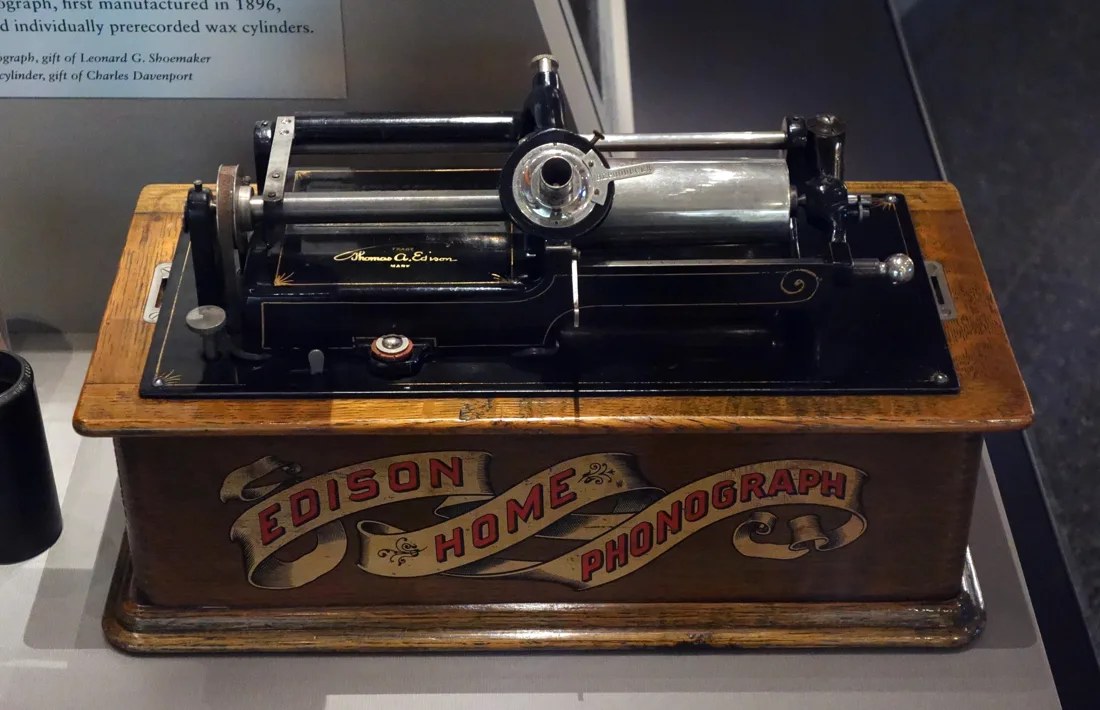
Phonograph recordings, telegrams, shorthand and typing are active parts of the investigation. Lehner examines how the novel brings different media into its typewritten record. Chapters 17 and 27 make the relation between copying, cooperation and proof especially visible. Lehner’s research.
Theme connection: knowledge and uncertainty.
Explore the novel’s documents and voices →
Ireland and Anglo-Irish identity
Stoker’s Dublin upbringing and later London career provide a context for questions of belonging, land and cultural authority. Irish interpretations differ, so a biographical connection needs a precise textual argument. Niall Carson’s survey and Bram’s biography provide starting points.
Theme connection: belonging and exclusion.
Religious traditions
Harker identifies himself as an English Churchman when he hesitates over a crucifix in Chapter 1. The hunters later depend on Christian protective objects and ritual. These differences illuminate the movement from scepticism to reliance on belief, without making every character’s religious language a statement of the author’s position. Religion and belonging in the example essay.
Theme connection: religion, salvation and forgiveness.
Class, professions and institutions
The solicitor, doctor and wealthy patrons have different kinds of authority and resources. Workers provide information, while Renfield speaks from confinement in an asylum. Chapters 18 and 26 expose differences in who can pay, act and be believed. Class and the asylum develops the textual comparison.
Theme connection: law and moral authority; madness and medical authority.
Stoker’s family and women’s public work
Charlotte’s advocacy for education and women’s self-support gives a specific comparison with Mina’s useful work. Florence’s later management of the literary legacy illustrates practical authority within loyalty to a husband’s work, but cannot prove an influence before 1897. Use the archive comparison and the Mina essay to distinguish documented activity from speculation about inspiration.
Theme connection: gender, work and agency.
Themes in the novel
Read each theme as an argument to test, not a label to attach. The chapter links lead to the chapter map and full text; quotations follow the reading edition in Source materials. In the fuller entries, compare the opening argument with the competing reading before reaching your own conclusion.
Knowledge and uncertainty
The group must combine partial accounts before it can act. The final note nevertheless doubts whether the surviving record could convince outsiders. Chapters 17 and 27 make knowledge an achievement that remains vulnerable to questions about proof. Documents and the promise of truth.
Madness, sanity and the limits of reason
The novel makes sanity a question of evidence and authority: seeing what others cannot believe may look like madness, while a confident diagnosis may conceal a failure to understand. Jonathan fears for his reason; Seward classifies Renfield; the hunters must reconsider what counts as possible.
- Chapter 3: Jonathan appeals to “bare, meagre facts” and later cries “God preserve my sanity”. His journal both tests his perceptions and records experiences that threaten his confidence in them.
- Chapter 18: Renfield insists that he is “a sane man fighting for his soul”. His confinement and history affect how his plea is judged; the reader can ask whether his doctor’s authority makes it harder to hear him.
- Chapter 19 and Chapter 20: Mina’s dream of mist and a white face conveys a danger she cannot yet explain. Seward himself wonders whether the hunters will “wake to sanity in strait-waistcoats”, turning his profession’s language back upon the group.
- Chapter 23: Mina’s hypnotic report becomes useful evidence. Lucy’s sleepwalking in Chapter 8 and Mina’s later hypnosis connect altered states with vulnerability, but also with access to knowledge.
A competing reading: the shared records eventually substantiate the supernatural danger, so the novel does not leave every perception equally uncertain. Nor does Renfield’s insight make all his beliefs reliable. Analyse the narrator’s judgement rather than diagnosing characters from a modern clinical standpoint; terms such as “lunatic” belong to the characters’ period vocabulary. See Form and narrative for the difference between an experience and the account that reaches us.
Question to test: does the novel locate madness in those who see the extraordinary, or expose the limits of those who refuse to believe them?
Power, control and consent
Hospitality becomes captivity, possession invades bodies, and protective authority can exclude the person it claims to help. Compare Harker’s imprisonment with the decision to keep Mina uninformed in Chapters 18–19. Power operates within the alliance as well as through the Count.
Law, civilisation and moral authority
The Count exploits ordinary legal and commercial arrangements, while the people defending society find themselves using deception and force. The novel separates acting lawfully from claiming to act rightly, and makes professional status part of that tension.
- Chapter 2: Jonathan’s legal work helps the Count acquire Carfax. The threat enters England through a property transaction, rather than through the collapse of every civil institution.
- Chapter 13: Van Helsing reminds Seward that he is “a lawyer as well as a doctor” and refers to Seward’s avoidance of the coroner. Professional knowledge can help the group manage what others are allowed to investigate.
- Chapter 22: Van Helsing discusses the “conscience of the housebreaker” and ways of entering the Piccadilly house without attracting police attention. Their protective purpose does not remove the practical problem of someone else’s property rights.
- Chapter 25: Mina’s use of Nordau and Lombroso to classify the Count brings criminality into the argument. This is the characters’ historical vocabulary, not a scientifically valid diagnosis for readers to adopt.
A competing reading: ordinary procedures cannot readily answer a supernatural emergency, so the hunters’ exceptional actions may appear necessary. Nevertheless, their wealth, connections and professional authority help them act with freedoms denied to others. Read this beside power, control and consent and class and the asylum.
Question to test: what gives the hunters the right to act outside ordinary legal procedures?
Gender, work and agency
Mina’s contribution conflicts with the restrictions imposed on her; Lucy’s jokes reveal limits on choice in marriage. The issue includes who acts and who later narrates that action. Mina Harker and the New Woman examines how Mina’s traditional and modern qualities coexist.
Desire and transgression
Attraction and fear coexist in Harker’s encounter with the vampire women, while the Count’s language of possession unsettles conventional relations. Queer and feminist interpretations analyse those patterns without requiring fiction to prove facts about the author’s private life. Desire in the example essay.
Belonging and exclusion
The hunters depend on foreign expertise while defining themselves against a foreign threat. The unequal voices given to the Szgany, Renfield and the professional narrators complicate a simple division between insiders and outsiders. Difference and belonging develops this argument.
Science, modernity and the limits of progress
Modern methods make the hunt possible, but progress offers no automatic protection: Dracula uses modern systems too, and the hunters need older forms of knowledge as well as new technology. Avoid treating the plot as a contest between a wholly modern England and an entirely pre-modern Count.
- Chapter 2: the Count studies English reference books and uses a solicitor to establish his English home. His preparations turn ordinary information and professional services into resources for predation.
- Chapter 10: transfusions temporarily sustain Lucy, while Van Helsing also uses garlic. Read the combination through the medical history of transfusion; medical intervention and folklore are not presented as mutually exclusive.
- Chapter 17: Mina turns phonograph recordings and separate journals into a shared typescript. The advance is organisational as well as mechanical: information becomes useful because people can compare it.
- Chapter 26: transport, maps and route planning organise the pursuit, but changing routes and difficult terrain frustrate the hunters. Technology enables action without guaranteeing control.
A competing reading: the alliance’s adaptability can support confidence in progress, provided reason becomes open to unfamiliar evidence. Jonathan’s remark that mere “modernity” cannot kill the powers of the old centuries (Chapter 3) nevertheless prevents a simple story of new knowledge replacing old. See Lehner on the novel’s media and religion and salvation.
Question to test: does modernity defeat the vampire, or provide opportunities for both sides?
Religion, salvation and forgiveness
Christian protection offers more than a weapon against the vampire: it makes the fate of the soul central to rescue, and opens the possibility that destroying a monster may also release a sufferer. Religious language can unite the hunters, but it can also intensify shame.
- Chapter 1: Jonathan calls himself an “English Churchman” and hesitates over the crucifix. His response marks a difference within Christianity, rather than a simple division between faith and unbelief.
- Chapter 22: the consecrated Host burns Mina’s forehead. Her cry, “Even the Almighty shuns my polluted flesh!”, is her interpretation of the mark; the scene lets us question the association of victimhood with impurity.
- Chapter 23: against Jonathan’s anger, Mina insists that the hunt “is not a work of hate”. Her compassion extends to the Count and reframes destruction as the release of his better self.
- Chapter 27: Mina sees “a look of peace” on the Count’s face. The ending invites a reading of salvation as well as defeat, although the expression reaches us through her testimony.
A competing reading: sacred objects work materially within the plot, supporting a Christian victory over evil. Yet Mina’s pity complicates an account in which evil is simply something alien to be eliminated. Do not turn these fictional rituals into proof of Stoker’s private religious convictions. Compare religion and belonging in the example essay.
Question to test: does destroying the vampire also save him?
Blood, death and restoration
Keeping a body alive and saving a person are not always the same thing in the novel. Blood connects care with coercion, while restoration repeatedly requires suffering or loss. Pay attention to who describes an intervention as rescue.
- Chapter 10: Arthur’s and Seward’s transfusions are acts of care, but the men also attach emotional and relational meanings to the exchange. Compare those claims with Lucy’s limited knowledge of what is done to her.
- Chapter 16: Arthur’s staking is narrated as the recovery of Lucy’s “sweetness and purity”. The language offers reassurance even as the physical violence makes that restoration troubling.
- Chapter 21: the Count calls Mina “blood of my blood”. A phrase of kinship becomes a declaration of coercive possession; his language must be distinguished from the novel’s endorsement.
- Chapter 27: Mina’s scar disappears, but Quincey dies. The final family scene commemorates him through the child’s name, joining renewal to an absence that victory cannot undo.
A competing reading: the ending can be understood as a firm restoration of family, faith and social order. Yet its peace is purchased through violence and sacrifice, and the final note still questions the documentary proof. Compare spiritual salvation, love and sacrifice, and the blood and body quotation bank.
Question to test: what does victory restore, and what can it never give back?
Love, loyalty and sacrifice
Affection motivates the alliance, but care can also become restriction. Mina’s compassion for the Count and Quincey’s sacrifice complicate a simple opposition between protective love and destructive hunger. Chapters 23–27 bring those competing meanings into the pursuit and ending.
The Gothic as entertainment and unease

Explore Bram’s Whitby →
Is Dracula meant to be enjoyed? Yes, and saying so is an analytical point, not a lapse. Stoker wrote a popular novel for a market that wanted thrills, and the first reviewers responded to it as one: the Daily Mail (1 June 1897) judged it “even more appalling in its gloomy fascination” than Udolpho or Frankenstein.
How does the novel produce pleasure and fear?
Suspense through form: the Demeter log (Chapter 7) is printed after the newspaper report, so the reader already knows that the captain was found dead, lashed to the wheel, before reading his mounting dread: “God and the Blessed Virgin and the saints help a poor ignorant soul trying to do his duty”.
Withheld knowledge: readers recognise the Count in Whitby and London long before the characters do.
Spectacle: the Count crawling “face down” down the castle wall (Chapter 3); the staking of Lucy (Chapter 16).
Comic relief that sharpens fear: the zookeeper’s interview (Chapter 11) sits in the same chapter as the night of the wolf attack and her mother’s death.
Try it: choose one of these moments and write a paragraph on how it entertains, by building suspense, shock or relief, before you say what it might mean. Then ask whether the pleasure and the meaning pull in the same direction.
Turn a theme into a pattern across the novel
| Theme | Read these moments together | Question to test |
|---|---|---|
| Knowledge | Castle journal; compilation in Chapter 17; final note. | Does the record overcome uncertainty or preserve some of it? |
| Gender and agency | Lucy’s Chapter 5 letter; Mina’s work in Chapter 17; exclusion in Chapters 18–19. | Who can choose, act and define another person? |
| Power and consent | Harker’s captivity; Renfield’s appeal; the assault on Mina. | How do coercion and protective authority differ, and where do they overlap? |
| Blood and the body | The transfusions; Lucy’s tomb; Mina’s scar. | When is a bodily intervention represented as care, possession or purification? |
| Belonging | Jonathan’s travel descriptions; Van Helsing’s expertise; the final pursuit. | Why does some foreignness become indispensable while other difference is marginalised? |
| Belief | The crucifix in Chapter 1; Van Helsing’s explanations; the Host in Chapter 22. | What kinds of evidence persuade different characters? |
| Desire | The castle women; Lucy’s transformation; the Count’s language to Mina. | How do point of view and narrative framing shape what seems attractive or threatening? |
| Love and sacrifice | Lucy’s suitors; Mina’s compassion; Quincey’s death and the final family scene. | What does care enable, and what restrictions does it justify? |
| Madness and sanity | Jonathan’s Chapter 3 journal; Renfield’s appeal in Chapter 18; Mina’s dreams and hypnosis. | Who decides which experiences count as evidence, and whose judgement can be challenged? |
| Law and moral authority | The Carfax purchase; the coroner in Chapter 13; entry to Piccadilly in Chapter 22. | Does a protective purpose justify methods the hunters would otherwise condemn? |
| Religion and salvation | Jonathan’s crucifix; Mina’s scar; her compassion in Chapter 23; the Count’s final expression. | Is the vampire’s destruction punishment, release, or both? |
| Science and modernity | The Count’s reference books; transfusions; Mina’s typescript; the final pursuit. | Does progress remove old dangers or give them new routes into modern life? |
These are starting points for an argument, not a requirement to mention every theme. Choose the pattern that answers your question and return to the narrative method that makes it visible.
Using context in an argument
- Locate the words. Identify the speaker, document and point in the story. What does this narrator know?
- Choose relevant evidence. Use a source that explains the language, form, institution or debate involved. A date alone is not an explanation.
- Make the connection. Explain what the historical or literary context makes you notice in the passage.
- Test the limit. Find another passage that complicates the argument. Avoid treating one character as the voice of all Victorian society.
Literary context and wider reading can contribute alongside historical and social context. Other courses have different objectives; use the Chapter C: Your course and examination for your qualification.
Use context to develop an interpretation
Historical context should help explain the writing. Start with a detail, identify a relevant circumstance and show what it changes in your interpretation. The AP rubric has no separate context or named-critic allocation; broader context can contribute to a sophisticated argument when developed, but a background paragraph does not automatically earn credit.
For a researched class essay, your teacher may require secondary reading and citations. For AP guidance, see what AP readers reward.
A worked paragraph
Question: How does Stoker present the limits placed on Mina’s independence? Read Chapter 18 alongside Chapter 19.
Example paragraph written for this guide
Van Helsing’s praise of Mina’s “man’s brain” appears to acknowledge her ability, but the possessive makes intellectual authority masculine: she is valued as a woman who approaches a male standard. The same speech, recorded and explicitly endorsed in Seward’s diary (“I agreed heartily with him”), turns praise straight into exclusion — the hunt “is no part for a woman” (Chapter 18). In 1897 that move had a specific edge. The New Woman debate, which took its name from an 1894 exchange between Sarah Grand and Ouida in the North American Review, turned on whether education and paid work should give women a share in public business, and shorthand and typing — Mina’s skills — were among the clerical skills that were opening that kind of work to educated women. Stoker makes the limit practical rather than theoretical. The woman who insisted in Chapter 17 that “every item” be “put in chronological order” writes soon afterwards that it is “strange to me to be kept in the dark as I am to-day” (Chapter 19), and readers can measure the cost of the men’s decision against what they have watched her do. The sequence supports a criticism of protective paternalism — although Mina’s own acceptance of the decision stops her from becoming a simple spokeswoman for emancipation.
Commentary on the example. It begins with a phrase and says who speaks it and in what document. It then uses one dated and specific context – not “Victorian attitudes to women” – to explain why the phrase matters, turns to the order of events, and ends with a qualification. It offers one defensible interpretation, not a prescribed answer. For the debate and its sources, read The New Woman debate.
A weaker version would say only that Victorian women were oppressed and that Mina is a New Woman. It would not explain Van Helsing’s words, would not say which women or which debate it means, and would not show how the novel tests his authority.
Charlotte Stoker and an evidence-led comparison
Charlotte Stoker, Bram’s mother, argued publicly for education and women’s self-support. Her work makes a useful archive exercise. Read her educational advocacy and the record of her workhouse-emigration paper alongside Mina’s Chapter 5 letter. What does each understand by useful work? Who receives the benefits, and what freedoms does it allow?
The source entry explains how modern scholarship reports Charlotte’s workhouse-emigration paper. Distinguish that account from a fresh transcription of an original copy. Neither this comparison nor Charlotte’s approving letter about Dracula proves that Mina was modelled on her. A comparison can be valuable without establishing direct influence.
Taking the argument into a comparative essay
Practice prompt: “Gothic narratives give outsiders a voice only to contain it.” Compare Dracula with your partner text. Begin with the voices the works allow us to hear, then connect those differences to their forms and historical settings. Use this as a practice question, not an official examination question.
For wider reading, compare the documentary frames of Dracula and Carmilla, or the witnesses in The Woman in White. Wider reading and examined partner texts serve different purposes; check your course’s text requirements.
Printable classroom exercise
Open the printable student worksheet · Open the separate teacher commentary. Both are web sheets that can be printed or saved as PDF through your browser. The student sheet leaves space for notes; the teacher sheet gives possible approaches, not a marking scheme.
Stoker’s world and biographical evidence
- Charlotte and women’s public work. Compare Charlotte Stoker’s educational and charitable work with Mina’s language of usefulness and practical authority. The comparison can illuminate a debate without proving a one-to-one model for Mina.
- Wilde and public respectability. The Wilde family connection supplies a documented social setting for Stoker’s world. Keep it distinct from the claim that the Count encodes Wilde. The worked comparative essay tests the novels through their representations of reputation and concealed conduct.
- Irving and performance. Stoker’s work with Henry Irving and Ellen Terry invites attention to entrances, spectators, voices and scenes of revelation. Compare an observable effect in the novel with the theatre context; resemblance alone does not establish a direct source.
- Whitman and correspondence. The Whitman correspondence is evidence of Stoker’s reading and personal expression. A queer interpretation still needs analysis of the fiction; it cannot be established by using a letter as a substitute for the novel.
For composition, compare the working notes with the 1897 interview. For a research project, use the Research guide to identify holdings and the individual source entries to check what is actually available.
Where next?
Prepared by the Bram Stoker Estate. Page last updated 8 November 2026. Report a correction here.