
US high-school study
Understanding and reading the novel
Follow who acts, who tells the story and when each person learns the truth. This guide describes the whole plot. Spoiler alert!
Before turning your reading into assessed work, check Chapter C: Your course and examination for your course’s task and permitted texts.
Beginning a study reading
Read enough of each episode to experience its pace before pausing to analyse it. Keep an initial response and an evidence record separately: surprise, discomfort or sympathy may be worth investigating even when you later revise your explanation.
- Keep a small chapter record. Note the place and date, the document’s writer, one change in knowledge and one passage you may want to return to. Use the chapter map after reading to check the sequence.
- Mark uncertainty. Distinguish an event from a character’s explanation of it. When Harker doubts his senses, write down what happened and what he thinks it means. Later chapters may change your judgement.
- Build connections gradually. Return to an early passage when a later one changes it: hospitality and captivity; Lucy’s proposal letter and her treatment; Mina’s typing and exclusion. This gives you evidence across the novel before you settle on an essay answer.
- Read criticism after making an observation. Use Context and themes and Source materials to test a question you already have. Check whether a source is a contemporary document, later scholarship or an adaptation.
For a lighter first encounter, use the six-session reading plan. For advanced work, continue to University study and research.
Unfamiliar words
Which words will I need to look up? A few recur, and knowing them saves time. The chapter reference shows where each first appears.
- leiter-wagon
- a long peasant cart (Chapter 1)
- boyar
- a noble (Chapter 2)
- Voivode
- a warlord-prince; the term is used in the Count’s account of his family’s history (Chapter 3)
- hetman
- a headman or leader (Chapter 4)
- Szgany
- Roma travellers, whom the novel calls “gipsies” (Chapter 4)
- stenograph
- to write in shorthand (Chapter 5)
- zoöphagous
- life-eating; Seward’s label for Renfield (Chapter 6)
- Un-Dead
- the novel’s term for vampires, neither ordinarily alive nor finally dead (see Chapter 15)
- Kukri
- a curved Gurkha knife, Jonathan’s weapon (Chapter 23)
Some speech is hard to read on purpose. Van Helsing’s English and Mr Swales’s Yorkshire dialect are written to sound different: see Voices on the page on Form and narrative.
Characters and relationships
This guide distinguishes what the novel tells us about a character’s background from an interpretation of their role. It covers the principal cast individually and the smaller named figures and unnamed groups below. Where the book supplies no biography, none is invented. Chapter links lead to the text; the quotation bank belongs to practice and revision. You may find it helpful to return to this page from time to time as you read.
Count Dracula · Jonathan Harker · Mina Murray / Mina Harker · Lucy Westenra · Arthur Holmwood / Lord Godalming · Dr John Seward · Quincey P. Morris · Professor Abraham Van Helsing · R. M. Renfield
Count Dracula
Background and relationships. A Transylvanian nobleman and vampire who claims a Szekely warrior ancestry. He lives in an isolated castle, studies English life and arranges property purchases before moving to England. His account of his family’s past is a claim made by a character, not a reliable biography of Vlad the Impaler.
Role and development. His apparent hospitality becomes captivity. He can learn, bargain and organise transport as well as exercise supernatural force; reducing him to an ancient threat misses his ability to use modern systems. His perspective reaches us through his opponents rather than through a diary of his own.
Read Chapter 2, Chapter 3, Chapter 18, Chapter 23.
Key quotations: see Quotations, key terms and critical readings.
Jonathan Harker
Background and relationships. A young Englishman working for Peter Hawkins’s legal business in Exeter; Mina’s fiancé and later husband. The castle journey is his first-person account of a professional assignment becoming imprisonment. After his escape, he recovers in Budapest and returns to England.
Role and development. His knowledge of property and paperwork later becomes a weapon against the Count. Follow the change from deferential visitor to traumatised witness and determined pursuer. His experience of helplessness also complicates a simple division between active men and passive women.
Read Chapter 1, Chapter 4, Chapter 9, Chapter 20, Chapter 27.
Key quotations: see Quotations, key terms and critical readings.
Details to follow. Jonathan initially travels on Peter Hawkins’s legal business. Carfax is the estate at Purfleet bought for the Count; his first assignment should not be confused with the later search through London delivery records.
Mina Murray / Mina Harker
Background and relationships. An assistant schoolmistress before her marriage to Jonathan. She practises shorthand and typing, corresponds with her friend Lucy and becomes the compiler of the group’s records. She says she never knew either parent and mourns Hawkins as a father figure; the novel otherwise gives little account of her childhood.
Role and development. She combines conventional language about service and marriage with intellectual authority. Her organisation and reasoning connect the evidence; after Dracula’s assault, her hypnotic impressions help the pursuit. Distinguish her practical decisions from the men’s praise, protective exclusions and descriptions of her.
Read Chapter 5, Chapter 17, Chapter 18, Chapter 21, Chapter 26.
Key quotations: see Quotations, key terms and critical readings.
Details to follow. Her shorthand, typewriting and three manifold copies of Seward’s diary make information searchable and shareable. Her timetable knowledge and reconstruction of the Sereth–Bistritza route remain important during the pursuit.
Lucy Westenra
Background and relationships. Mina’s close friend, a young woman from a wealthy household, living with her widowed mother. She receives proposals from Seward, Morris and Holmwood and accepts Arthur Holmwood’s proposal. Her letters, diary and memorandum give her a voice before illness and transformation make others her principal interpreters.
Role and development. Read the lively correspondent alongside the sleepwalker, patient and vampire. Her joking wish to marry several admirers is not consent to Dracula’s attacks. Her changing representation raises questions about desire, vulnerability, medical authority and the violence called rescue.
Read Chapter 5, Chapter 8, Chapter 11, Chapter 12, Chapter 16.
Key quotations: see Quotations, key terms and critical readings.
Details to follow. Arthur, Seward and Quincey all propose on the same day; Lucy accepts Arthur. Her mother dies in the wolf attack at Hillingham. Later Arthur performs the staking in the tomb, under Van Helsing’s direction.
Arthur Holmwood / Lord Godalming
Background and relationships. Lucy’s accepted suitor and a close friend of Seward and Morris. He becomes Lord Godalming after his father’s death; the change of title does not introduce a new character. His rank, money and social connections support the investigation.
Role and development. He gives blood to Lucy and later drives the stake into her vampire body. The scene joins grief, religious duty and disturbing violence. Track how personal loss becomes collective commitment and how inherited privilege makes the group’s campaign possible.
Read Chapter 5, Chapter 10, Chapter 16, Chapter 26.
Key quotations: see Quotations, key terms and critical readings.
Details to follow. Arthur is the first blood donor for Lucy. He succeeds his father as Lord Godalming during the novel and later destroys the Un-Dead Lucy; these are separate events, not one hospital scene.
Dr John Seward
Background and relationships. A young English doctor who runs a private asylum beside Carfax, the Count’s newly purchased property. An unsuccessful suitor of Lucy, he is Van Helsing’s former pupil and Renfield’s physician. He records much of his diary on a phonograph.
Role and development. His observations give medicine a strong narrative presence, but his professional vocabulary does not guarantee understanding. He sometimes treats Renfield as material for study and sometimes recognises his intelligence and suffering. Read his judgement as a situated perspective rather than the novel’s unquestioned verdict.
Read Chapter 5, Chapter 6, Chapter 18, Chapter 21.
Key quotations: see Quotations, key terms and critical readings.
Details to follow. Seward is the doctor in charge of the asylum. Hennessey deputises for him; Van Helsing is his former teacher and a visiting adviser. Renfield’s words usually reach us through Seward’s selected and recorded observations.
Quincey P. Morris
Background and relationships. An American from Texas, a traveller and friend of Arthur and Seward. Lucy declines his proposal, but he supports her and joins the campaign. The novel offers fragments of his past through conversation; it does not give him an independent diary.
Role and development. His practical courage and equipment contribute to the pursuit, and he dies after the final confrontation. An outsider becomes central to the alliance and its family memory. Compare the freedom granted to his foreignness with the treatment of other outsiders.
Read Chapter 5, Chapter 12, Chapter 20, Chapter 27.
Key quotations: see Quotations, key terms and critical readings.
Details to follow. Quincey is from Texas. He gives blood to Lucy and uses a bowie knife in the final attack on the Count. The Harkers’ child is called Quincey in his memory.
Professor Abraham Van Helsing
Background and relationships. A Dutch professor from Amsterdam, medically trained and learned in several fields, summoned by his former pupil Seward. His personal losses and his wife’s illness briefly emerge, but he is known chiefly through his work with the group.
Role and development. He combines clinical practice, experiment, folklore and Christian ritual. His authority can protect others while withholding explanations. His accented English marks him as foreign even as the English characters depend on his knowledge; his deductions should be followed and tested, not merely repeated.
Read Chapter 9, Chapter 14, Chapter 18, Chapter 27.
Key quotations: see Quotations, key terms and critical readings.
Details to follow. Seward addresses Van Helsing as his old friend and master in Amsterdam. Van Helsing supplies explanations and rituals, but other members contribute records, money, transport, local knowledge and practical action.
R. M. Renfield
Background and relationships. A 59-year-old patient in Seward’s asylum. His consumption of living creatures and calculations about life attract Seward’s interest. Renfield recognises Dracula as a powerful master, then tries to resist him when Mina is threatened.
Role and development. The novel does not make him the solicitor who first visited the castle: that belongs to adaptations. His speech can expose gaps in the doctor’s understanding. Read his appeal for release and final testimony beside his status as a confined patient whose credibility is controlled by others.
Read Chapter 5, Chapter 6, Chapter 18, Chapter 20, Chapter 21.
Key quotations: see Quotations, key terms and critical readings.
Details to follow. Seward records his sequence of flies, spiders and sparrows and his request for a kitten. Renfield later admits inviting Dracula inside and resists him when he understands Mina is being harmed; the patient’s recorded speech complicates Seward’s classification.
Other characters
Family, households and carers
- Mrs Westenra. Lucy’s widowed mother, seriously ill with a heart condition. She removes protective garlic without knowing its purpose and dies when the wolf breaks into the room. Her will, explained by Mr Marquand, raises questions about property and Lucy’s dependence. Do not reduce her to a foolish obstacle: the doctors have deliberately kept her uninformed. Read Chapter 11.
Related quotation themes: women, marriage and care.
- Peter Hawkins. Jonathan’s elderly employer in Exeter, a solicitor and paternal supporter of both Harkers. His illness initially prevents him travelling to the Count. His later bequest changes the couple’s financial position and professional independence. Read Chapter 13.
Related quotation themes: women, marriage and care.
- Sister Agatha and the hospital Superior. Agatha nurses Jonathan in Budapest, writes to Mina and assists the couple’s reunion. The Superior permits their marriage at the hospital. They supply practical care before the English alliance is formed. Read Chapter 9.
Related quotation themes: women, marriage and care.
- Arthur’s father, Lucy’s father and Van Helsing’s family. Arthur’s father is the previous Lord Godalming, whose illness and death affect Arthur’s movements. Lucy’s deceased father matters through inherited property. Van Helsing refers to a lost son and a wife who is still living but mentally ill. These are brief family histories, not fully narrated subplots. Read Chapter 13.
Related quotation themes: women, marriage and care.
- The Harkers’ son Quincey. The child in the final note is born after the main action and named in memory of the dead American, with other names recalling the group. He represents a future shaped by the story’s losses; he is not Quincey Morris returned to life. Read Chapter 27.
Related quotation themes: women, marriage and care.
- Lucy’s servants, including the maid who stays with her. Domestic workers keep the household functioning and become vulnerable during the attack. The drugged wine disables the servants when Lucy needs help. Their work and exposure to danger sit behind the attention given to the central family. Read Chapter 11.
Related quotation themes: women, marriage and care.
The castle and local witnesses
- The three vampire women. Unnamed women at the castle, two dark and one fair. They threaten Jonathan and later approach Mina; Van Helsing destroys them. The novel does not establish their individual histories or identify them simply as three wives. Read their dialogue, the Count’s control and the child brought to them together. Read Chapter 3.
Related quotation themes: hospitality, borders and the foreign.
- The woman outside the castle and her child. The mother demands her child back and is attacked by wolves. Her brief appearance makes the castle’s predation visible beyond Jonathan’s experience. Her child’s story is not independently recorded. Read Chapter 4.
Related quotation themes: hospitality, borders and the foreign.
- The Bistritz innkeeper, his wife, coach passengers and driver. The Golden Krone’s hosts receive Jonathan; the innkeeper’s wife urges him not to travel and gives him a crucifix. Travellers offer protective signs and warnings. People Jonathan initially views as superstitious recognise a danger his professional confidence cannot explain. Read Chapter 1.
Related quotation themes: hospitality, borders and the foreign.
- The Count’s coachman. The mysterious driver collects Jonathan at the Borgo Pass; Jonathan later recognises connections between the driver and Dracula. Treat the disguise as part of the Count’s control of his guest’s movements, rather than supplying an invented servant’s biography. Read Chapter 2.
Related quotation themes: hospitality, borders and the foreign.
- The Szgany and Slovak workers and carriers. Groups seen moving earth boxes and guarding or transporting the Count’s property. The narrators describe them through period ethnic stereotypes. Their actions matter to the plot, but the text gives little access to their motives; employment, obedience and shared belief are not interchangeable explanations. Read Chapter 4.
Related quotation themes: hospitality, borders and the foreign.
- Mr Swales and his Whitby companions. An elderly local man whose conversations with Mina challenge respectable accounts on gravestones. His own death follows an expression of fear. The gap between public memorial and lived history anticipates the novel’s wider concern with records and credibility. Read Chapter 6.
Related quotation themes: hospitality, borders and the foreign.
- George Canon and Edward Spencelagh. Men named on the Whitby gravestones discussed by Swales. Their reported histories are stories within a conversation, not events Mina witnesses. They show why a written inscription may need interpretation rather than automatic belief. Read Chapter 6.
Related quotation themes: hospitality, borders and the foreign.
- Mrs Tom and other briefly named townspeople. The newspaper account’s references to local residents widen the public witness of the Whitby storm. These names help give a report the texture of local news; they do not come with developed individual biographies. Read Chapter 7.
Related quotation themes: hospitality, borders and the foreign.
Professionals, workers and institutional witnesses
- The Demeter’s captain and first mate; Petrofsky, Abramoff and Olgaren. The captain’s log records the destruction of the crew on the voyage from Varna. Petrofsky disappears; Abramoff is named as the sailor who relieved him; Olgaren reports a stranger aboard. The mate’s changing response makes scepticism and terror part of the shipboard sequence. The captain is unnamed. Read Chapter 7.
Related quotation themes: knowledge, records and modernity.
- The coastguard, newspaper reporter and Surgeon J. M. Caffyn. Their reports of the wreck convert an extraordinary arrival into public evidence. Caffyn examines the captain’s body. These witnesses establish effects they cannot fully explain; the reader combines their records with knowledge unavailable to them. Read Chapter 7.
Related quotation themes: knowledge, records and modernity.
- Thomas Bilder, his wife and the wolf Bersicker. Bilder is the London Zoo keeper interviewed about the escaped wolf; his wife contributes to the domestic conversation. Bersicker returns after breaking Lucy’s window. The comic interview changes the tone while carrying vital information. The wolf is not a human accomplice with a stated plan. Read Chapter 11.
Related quotation themes: knowledge, records and modernity.
- Dr Patrick Hennessey, Dr Vincent and Simmons. Hennessey reports on Renfield while Seward is away; Vincent is the hospital doctor who shows Van Helsing and Seward a child’s throat wounds; Simmons is an asylum attendant. These smaller figures keep the medical institution visible beyond Seward’s diary. Their brief appearances do not establish detailed personal histories. Read Chapter 13, Chapter 15, Chapter 21.
Related quotation themes: knowledge, records and modernity.
- Samuel F. Billington and his son; Carter, Paterson & Co.. Whitby solicitors and the London carriers handle the Count’s earth boxes. Their business correspondence supplies a trail that Jonathan can retrace. An ordinary commercial record becomes evidence of supernatural activity. Read Chapter 8.
Related quotation themes: knowledge, records and modernity.
- Jack Smollet, Thomas Snelling and Sam Bloxam. Workmen involved in moving the boxes. Jonathan follows their information across London; payments and local contacts help him locate further addresses. Hennessey’s report names Smollet as Jack, while an address later uses Joseph: retain the text’s variation rather than inventing two separate carriers. Read Chapter 20.
Related quotation themes: knowledge, records and modernity.
- Mr Marquand and Mitchell, Sons & Candy. Marquand explains Mrs Westenra’s will. The house agents Mitchell, Sons & Candy provide information about the Count’s Piccadilly property. Law and ownership shape both domestic security and the hunt. Read Chapter 13.
Related quotation themes: knowledge, records and modernity.
- Mr Joseph Smollet’s household and the lodging-house deputy. Smollet’s home and the deputy who helps locate Bloxam show the social networks through which information moves. Working people are sources with local knowledge, even when the narrators present their speech as comic. Read Chapter 20.
Related quotation themes: knowledge, records and modernity.
- Archibald Winter-Suffield and the men at Doolittle’s Wharf. Winter-Suffield is the deceased former owner whose executors sell the Piccadilly house. Separately, unnamed shipping-office and dockside contacts identify the Count’s departure. These are distinct links in the investigation’s property and transport trail. Read Chapter 20.
Related quotation themes: knowledge, records and modernity.
- Rufus Smith, the vice-consul, Hapgood and Mackenzie & Steinkoff. Lloyd’s contact Smith sends shipping news; consular and commercial connections assist the travellers abroad. These named people and firms form the communications network around the pursuit. A business name is not necessarily a separately characterised individual. Read Chapter 25.
Related quotation themes: knowledge, records and modernity.
- Captain Donelson. The captain of the Czarina Catherine describes the unusually rapid voyage and identifies who received the box. Unlike the Demeter’s captain, he survives to answer questions, yet he also cannot account fully for his passenger’s powers. Read Chapter 26.
Related quotation themes: knowledge, records and modernity.
- Immanuel Hildesheim and Petrof Skinsky. Hildesheim clears the box at Galatz and hands it to Skinsky, who deals with river traders and is later found dead. Read the narrators’ antisemitic description of Hildesheim critically: it is a feature of the representation, not a reliable account of Jewish identity. Read Chapter 26.
Related quotation themes: knowledge, records and modernity.
- Herr Leutner, Ristics, bankers and other commercial contacts. Leutner in Varna and the firms Coutts & Co. and Klopstock & Billreuth appear among the Count’s correspondence; Ristics is named in the planned delivery at Varna. These references show the reach of his arrangements, but the novel supplies almost no personal background. Read Chapter 3.
Related quotation themes: knowledge, records and modernity.
- Children, nurses, servants, police, porters and neighbours. The children attacked near Hampstead, hospital staff, household servants and witnesses encountered during the hunt enlarge the human cost of the story. Some receive only a line or an indirect report. Ask whose safety matters to the alliance and whose voice survives in its record. Read Chapter 13.
Related quotation themes: knowledge, records and modernity.
Now, read chapter by chapter
Use the map below to follow the dates, documents, places and events across all 27 chapters. Select a chapter number to read the text in full. The separate chapter-map page also provides a printable version.
No single narrator tells Dracula. This map covers all 27 chapters: the dates covered, the documents and their writers, the events and a focus for study. Select a chapter number in the left-hand column to read that chapter in full. Open “Key details and passages” for a closer look.
How to read the dates. Chapters overlap and move back in time: the table follows the order of the book, not a single uninterrupted timeline. Dates refer to entries and the events they cover; earlier embedded records are identified separately where needed. The main records run from 3 May to 6 November in an unnamed year, with Jonathan’s final note seven years later. Chapter 1 also recalls his departure from Munich on 1 May.
For a reader’s version without plot details, see Reading Dracula. This page describes the full plot.
Printable version: Chapter map and timeline (PDF).
Part one: the castle (Chapters 1–4)
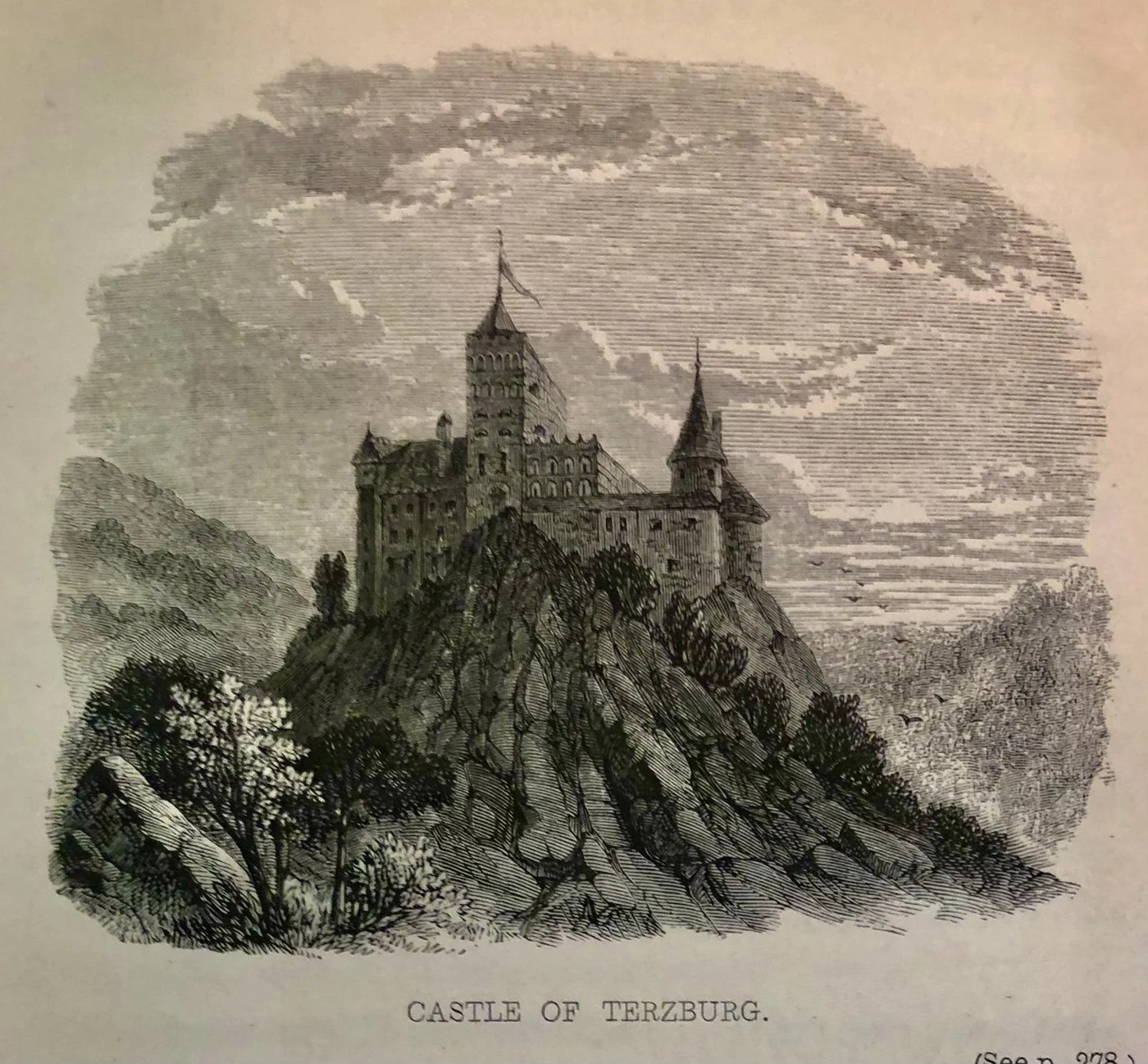

Where is Castle Dracula? →
| Chapter | Dates covered | Documents | What happens | Focus for study |
|---|---|---|---|---|
| 1 | 3–5 May (journey begins 1 May) | Jonathan Harker’s journal (shorthand) | Harker travels from Munich through Klausenburgh and Bistritz to the Borgo Pass; the landlady’s crucifix, the coach passengers’ gifts, the driver with the red eyes, the blue flames, the wolves. Key details and passagesJonathan’s journal is kept in shorthand. Before travelling he researches Transylvania in the British Museum library, but cannot locate the castle precisely. He notes the paprika hendl recipe for Mina. At Bistritz the landlady warns that it is the eve of St George’s Day and gives him a crucifix. The quoted line about the dead travelling fast comes from Bürger’s ballad Lenore; Walpurgis Night belongs to the separately published “Dracula’s Guest”. | The travelogue voice; precise detail against mounting unease; “the dead travel fast”. |
| 2 | 5–8 May | Harker’s journal | Arrival at the castle. The Count’s welcome, his English, his history of his race; no servants, no mirrors; the shaving-glass and the cut; “The castle is a veritable prison, and I am a prisoner!” Key details and passagesThe Count welcomes Jonathan with “Enter freely and of your own will!” and delights in the wolves as “the children of the night”. Jonathan sees no reflection of him in the shaving mirror; the Count throws the mirror from the window, and recoils when he touches Jonathan’s crucifix. Jonathan sees his host doing household work and suspects there are no servants. The Count studies English, Bradshaw’s Guide, Whitaker’s Almanac and other reference works. The Carfax property at Purfleet is described as adjoining a private asylum. Hospitality ends in Jonathan’s recognition that he is a prisoner. The Count introduces himself with “I am Dracula; and I bid you welcome, Mr. Harker, to my house.” The greeting becomes a claim of hospitality that the imprisonment of his guest contradicts. | Hospitality turned to captivity; the Count as courteous host; dramatic irony. |
| 3 | 8–16 May | Harker’s journal | The Count’s pride in the Szekelys; Harker made to write letters on business only; the Count crawling down the wall; the three women and the “wicked, burning desire”; the bag with the child. Key details and passagesJonathan sees the Count crawling head down along the castle wall, “just as a lizard moves along a wall”. Three women approach him while he lies in a forbidden room. He writes to Mina in shorthand in the hope that it will puzzle the Count, but a private code cannot by itself secure the post or his freedom. The Count identifies himself with the Szekelys and claims Attila’s blood; Jonathan records this as the Count’s own account of his ancestry, not an independently verified genealogy. | Desire and disgust; “nineteenth century up-to-date with a vengeance” against “the old centuries”. |
| 4 | 16 May – 30 June | Harker’s journal | The three post-dated letters; Harker’s own letters stolen; the Count in Harker’s clothes; the mother at the gate and the wolves; the chapel and the boxes of earth; the Count in his box, “gorged with blood”; Harker’s attempt with the shovel and his resolve to climb down. Key details and passagesThe Count makes Jonathan write three letters with future dates, creating a false account of his departure. In the chapel Jonathan finds him resting in a box of earth. Jonathan tries to strike him with a shovel. His remaining hope is to climb down the castle wall. | The Count’s plan for England revealed through Harker’s eyes; the first break in narrative, since Harker’s fate is unknown for several chapters. |
Part two: Whitby and London (Chapters 5–9)
| Chapter | Dates covered | Documents | What happens | Focus for study |
|---|---|---|---|---|
| 5 | 9–26 May | Letters, Mina to Lucy and Lucy to Mina; Dr Seward’s phonograph diary; letter, Quincey Morris to Arthur Holmwood; telegram, Arthur Holmwood to Quincey P. Morris | Mina practises shorthand to help Jonathan. Lucy receives three proposals in one day: “Why can’t they let a girl marry three men, or as many as want her, and save all this trouble?” Seward first describes Renfield. Key details and passagesMina describes herself as an assistant schoolmistress and says she practises shorthand and typewriting. Lucy writes to Mina about three proposals in one day, from Seward, Quincey and Arthur; she chooses Arthur. Her wish that a girl might marry three men is immediately qualified as “heresy”. Seward’s diary is introduced as kept on a phonograph. | Change of voice and form; the women’s letters; the New Woman question opens. |
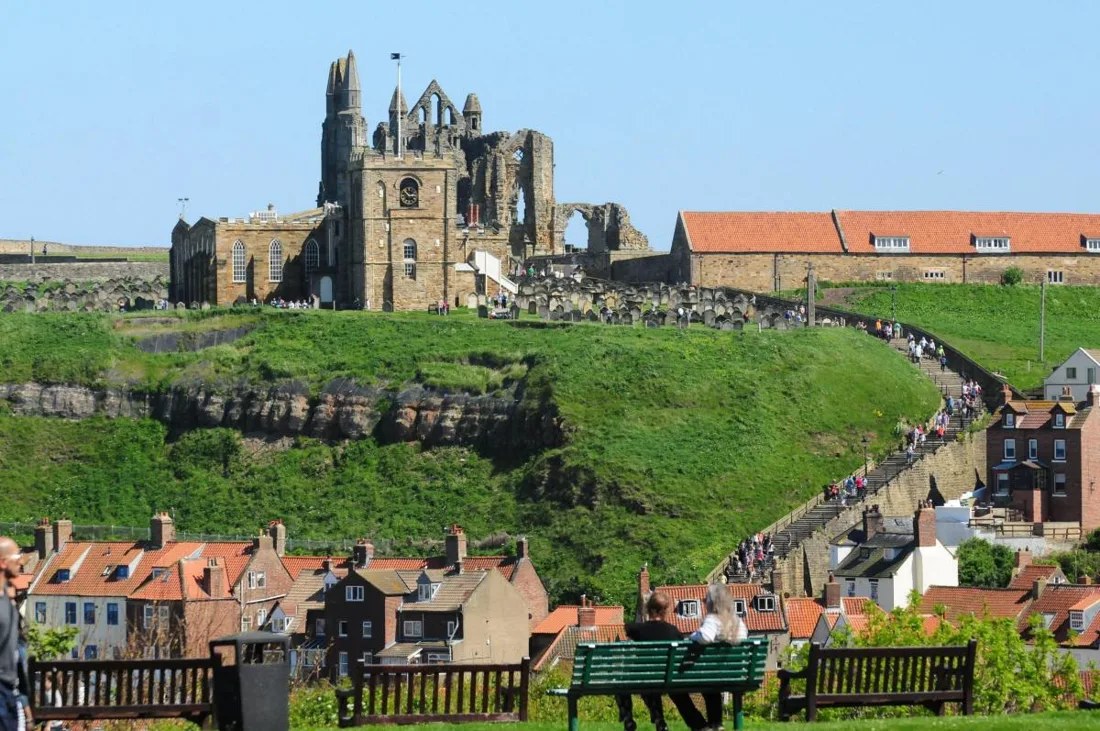
| 6 | 5 June – 6 August (Mina: 24 July – 6 August; Seward: 5 June – 20 July) | Mina Murray’s journal; Seward’s diary | Mina at Whitby: the harbour, the abbey, St Mary’s churchyard, Mr Swales and the lies on gravestones. Renfield’s flies, spiders and sparrows: a “zoöphagous (life-eating) maniac”. Lucy sleepwalks. Key details and passagesMina meets the elderly Mr Swales at Whitby. Seward records Renfield collecting flies, then spiders and sparrows, feeding smaller creatures to larger ones and asking for a kitten. He calls him a “zoöphagous (life-eating) maniac”: the phrase is Seward’s attempted classification, not the patient’s own account. Arthur is identified as Lord Godalming’s only son. After keeping flies, spiders and sparrows, Renfield asks Seward for a kitten and then a full-grown cat. Seward refuses, suspecting that he wants the cat to eat the birds. | Setting built from a real place; Renfield as a parallel plot; superstition and local speech. |
| 7 | 8–10 August; ship’s log covers 6 July – 4 August | Cutting from The Dailygraph; log of the Demeter; Mina’s journal | The storm and the wreck; the dead captain lashed to the wheel; the log of the crew’s disappearance one by one; the great dog leaping ashore; the funeral. Key details and passagesThe Dailygraph cutting of 8 August is pasted in Mina’s journal. Inside it, the captain’s log reaches the reader through a translation dictated by the Russian consul’s clerk to the correspondent. The Demeter arrives at Whitby in a storm with its captain dead and tied to the wheel; the other crew members have disappeared or died. An immense dog leaps ashore. Its cargo includes boxes of earth. The storm can be read as reflecting the approaching horror, while the nested documents complicate any claim that the log reaches us unmediated. | Public documents against private ones: what a newspaper can know; the log as a found text. |
| 8 | 10–21 August | Mina’s journal; letters between solicitors and carriers; letter from Sister Agatha; Seward’s diary | Mina finds Lucy in the churchyard with a tall dark figure bending over her; the two marks on Lucy’s throat; business letters trace the boxes to Carfax; Jonathan is found in a Budapest hospital. Renfield escapes to Carfax: “I am here to do Your bidding, Master.” Key details and passagesLucy sleepwalks, and Mina finds her on their churchyard seat at Whitby with a dark figure bending over her. Sister Agatha writes from the Hospital of St Joseph and Ste Mary in Buda-Pesth about Jonathan’s illness. Mina also speculates, humorously, that the New Woman may one day do the proposing herself: identify the speaker and situation before treating that comment as the author’s view. | The chase of evidence through ordinary paperwork; dramatic irony at its strongest. |
| 9 | 20 August – 6 September | Letters, Mina and Lucy; Seward’s diary; Lucy’s diary; letters and telegrams between Seward, Holmwood and Van Helsing | Mina marries Jonathan in Budapest and seals his journal. Lucy’s decline at Hillingham. Van Helsing is summoned from Amsterdam and examines Lucy. Key details and passagesMina joins Jonathan in Buda-Pesth and they marry while he is recovering. She initially wraps and seals his Transylvanian journal as a sign of trust. Seward writes to his old friend and teacher Professor Van Helsing in Amsterdam about Lucy. The correspondence establishes their prior relationship, rather than introducing Van Helsing as Lucy’s regular family doctor. | Marriage and trust; medicine arrives as the dominant discourse; the telegram as a narrative device. |
Part three: Lucy (Chapters 10–16)

Read Chapter 10: Lucy’s treatment →
| Chapter | Dates covered | Documents | What happens | Focus for study |
|---|---|---|---|---|
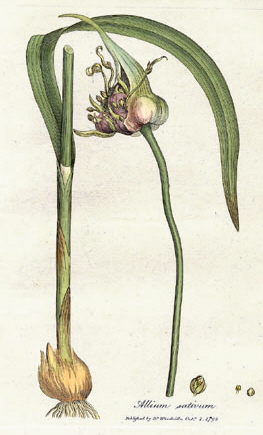
| 10 | 6–11 September | Letter, Seward to Holmwood; Seward’s diary; Lucy’s diary | The first transfusions, from Arthur and then Seward; the garlic flowers; Van Helsing’s silence about his suspicions. Key details and passagesArthur gives the first transfusion, arriving after Seward has offered to act as donor. Seward, Van Helsing and Quincey also give blood during Lucy’s treatment across Chapters 10–12. Van Helsing surrounds Lucy with garlic flowers as a protective measure; the flowers are not merely a decorative gift. | Blood as a transaction between men; science and folk remedy side by side. |
| 11 | 12–18 September | Lucy’s diary; Seward’s diary; The Pall Mall Gazette on the escaped wolf; telegram; Lucy’s memorandum | Van Helsing gives his own blood; Mrs Westenra removes the garlic; the wolf Bersicker breaks the window; Lucy’s mother dies; the maids are drugged; Lucy’s memorandum written as she waits. Renfield attacks Seward: “The blood is the life!” Key details and passagesLucy’s mother removes the garlic and opens the window, believing that she is helping. Later a wolf breaks the window and the shock kills her; Lucy finds the servants unconscious after drinking drugged wine. The Pall Mall Gazette report “The Escaped Wolf” interviews the keeper Thomas Bilder about Bersicker. Van Helsing’s urgent telegram of 17 September is misdirected to Carfax, Sussex, and delivered twenty-two hours late. Seward also records Renfield attacking him and repeating “The blood is the life!” | Comedy and horror together (the zoo-keeper interview); a dying woman’s own testimony. |
| 12 | 17–20 September (includes Mina’s letter of 17 September) | Seward’s diary; letters from Mina; Patrick Hennessey’s report | Quincey gives blood; Lucy’s teeth lengthen; the voluptuous voice; her death, which seems to give back her beauty. Van Helsing: “It is only the beginning!” Key details and passagesLucy dies after Van Helsing prevents Arthur from accepting her invitation to kiss her. Arthur’s father also dies during this part of the story, so Arthur succeeds to the title Lord Godalming. The separate illnesses, telegrams, letters and diary entries need to be read in sequence rather than compressed into one scene. | The transformation of Lucy’s body and language; the four men’s bond. |
| 13 | 22–25 September | Seward’s diary; Mina’s journal; The Westminster Gazette on the “Bloofer Lady” | Lucy’s funeral; Van Helsing’s hysterical laughter in the carriage afterwards; Mina and Jonathan see the Count in Piccadilly, grown younger; children are lured on Hampstead Heath. Key details and passagesThe Westminster Gazette reports the “Hampstead Horror” and the children’s accounts of a “bloofer lady”. Mina records Jonathan recognising a younger-looking Count in Piccadilly. These are distinct moments: the children’s reports concern Lucy’s transformed existence, while the London sighting reawakens Jonathan’s memories of the castle. | How the group begins to converge; newspaper reports as clues; the Count in daylight London. |
| 14 | 23–26 September | Mina’s journal; letters and telegrams between Mina and Van Helsing; Jonathan’s journal; Seward’s diary | Mina transcribes Jonathan’s journal; Van Helsing reads it and believes it; he tells Seward that the children’s wounds were made by Lucy. “it is the fault of our science that it wants to explain all” Key details and passagesMina reads and types Jonathan’s journal after his disturbing London recognition. At their first meeting Van Helsing calls her one of life’s “lights”. In conversation with Seward he asks him to believe “in things that you cannot”; their discussion names the French neurologist Charcot in connection with hypnotism. The passage asks what will count as knowledge, rather than simply dismissing science. | The dossier begins; knowledge shared for the first time; the limits of science stated. |
| 15 | 26–29 September | Seward’s diary; Van Helsing’s note | The tomb visited twice; the empty coffin; the child in the churchyard; Lucy seen in her tomb, more beautiful than in life. Key details and passagesSeward and Van Helsing find Lucy’s coffin empty at night. The discovery, their observations of the children and Lucy’s return force Seward to reconsider his earlier explanations. Record which observer knows what at each visit: the reader’s developing understanding is not identical to Seward’s. | Evidence and belief: Seward as the resistant witness. |
| 16 | 29 September | Seward’s diary | The “Bloofer Lady” confronted; “Come to me, Arthur”; Arthur drives the stake; Lucy’s face returns to “sweetness and purity”; the pact to hunt the Count. Key details and passagesArthur drives the stake through the Un-Dead Lucy’s heart while Van Helsing reads the prayer. The men then remove her head and put garlic in her mouth. They understand these actions as releasing her; students can examine both that stated purpose and the violent language and actions through which it is represented. | The novel’s most discussed scene; gender, violence and restoration. |
Part four: the alliance (Chapters 17–22)
How Mina makes the records usable →
| Chapter | Dates covered | Documents | What happens | Focus for study |
|---|---|---|---|---|
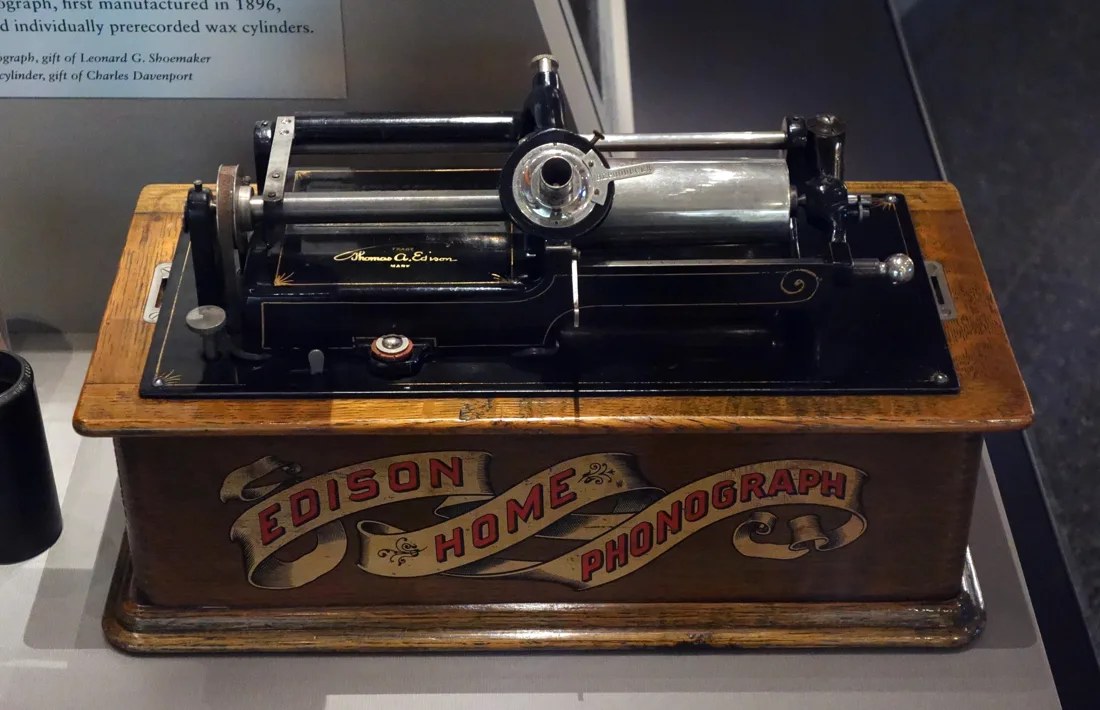
| 17 | 29–30 September | Seward’s diary; Mina’s journal; Jonathan’s journal | Mina arrives at the asylum, typewrites Seward’s phonograph cylinders and arranges every record in order; “the world seems full of good men”. Jonathan traces the boxes. Key details and passagesSeward cannot readily pick out a particular part of his phonograph diary. Mina transcribes it using manifold paper and makes three copies. She wants the records put in chronological order, so that dates connect apparently separate experiences. Her contribution involves retrieval, comparison and circulation of information, not typing alone. | Mina as compiler: the book we read is being made inside the story. |
| 18 | 30 September – 1 October | Seward’s diary; Mina’s journal | Mina meets Renfield, who speaks lucidly. Van Helsing’s lecture on the vampire’s powers and limits; “We have on our side power of combination”. The men decide to exclude Mina: “She has man’s brain... and a woman’s heart.” Renfield begs to be released. Key details and passagesVan Helsing praises Mina’s “man’s brain” and “woman’s heart”, then the men decide to exclude her from the immediate dangers. Renfield asks to leave the asylum. Mina introduces Quincey as being from Texas. Van Helsing’s account of vampire limits includes an initial invitation from someone in the household; daylight restricts the Count, but does not instantly destroy him. These are rules presented through a character’s explanation and the group’s observations. Van Helsing says that a branch of wild rose laid on a vampire’s coffin prevents it from leaving. This particular rule differs from the garlic protections used elsewhere in the novel; he invokes the wild rose again when planning to intercept the Count’s box in Chapter 24. | The rules of the vampire set out; the exclusion of Mina and its consequences. |
| 19 | 1–2 October | Jonathan’s journal; Seward’s diary; Mina’s journal | The men enter Carfax; the rats; 29 of the 50 boxes remain. Mina, alone, sees mist at her window and dreams of a white face and red eyes. Key details and passagesWhen the men search the chapel at Carfax, only twenty-nine of the original fifty earth boxes remain. Rats confront them, and Arthur’s terriers help drive them away. The missing boxes become a practical problem of deliveries, addresses and additional refuges. | Mina’s narrative turns inward; the reader sees what the men refuse to. |
| 20 | 1–2 October; continues into the night of 2–3 October | Jonathan’s journal; Seward’s diary; letter from the estate agents | Jonathan traces boxes to Bermondsey, Mile End and Piccadilly. Renfield’s conversation about souls; the attendant finds him on the floor “all covered with blood” (his account and death follow in Chapter 21). Key details and passagesJonathan questions people involved in moving the boxes and follows their destinations through commercial records. The report of Renfield’s serious injury arrives at the end of this chapter; the examination and operation are described in Chapter 21. Keep the first report separate from the later account of what caused the injuries. | London geography as plot; Renfield’s lucidity and its limits. |
| 21 | 3 October | Seward’s diary | Renfield’s deathbed account; the men break into the Harkers’ room: the Count forcing Mina to drink from his breast, “a child forcing a kitten’s nose into a saucer of milk”. “Unclean, unclean!” Key details and passagesRenfield tells how he admitted the Count with the words “Come in, Lord and Master!” He turns against him when he realises Mina is being harmed. During the bedroom attack Dracula forces Mina to drink blood from his chest. Her words about being “Unclean” and not touching or kissing Jonathan belong to this immediate aftermath, before the different cry following the Wafer in Chapter 22. | The novel’s central act of violation; Mina’s shame; Jonathan’s hair turns white. |
| 22 | 3 October | Jonathan’s journal | The Host scars Mina’s forehead. The boxes at Carfax and Piccadilly are sterilised; the Count’s papers found. Key details and passagesThe Sacred Wafer burns Mina’s forehead. Her cry that even the Almighty shuns her polluted flesh follows this event, not the earlier bedroom scene. Pieces of the Wafer are used to make the Count’s earth boxes unusable. Mina’s insistence that “There must be no concealment” also belongs to this chapter. | The sacred against the undead; the documentary trail closes in. |
Part five: the pursuit (Chapters 23–27)
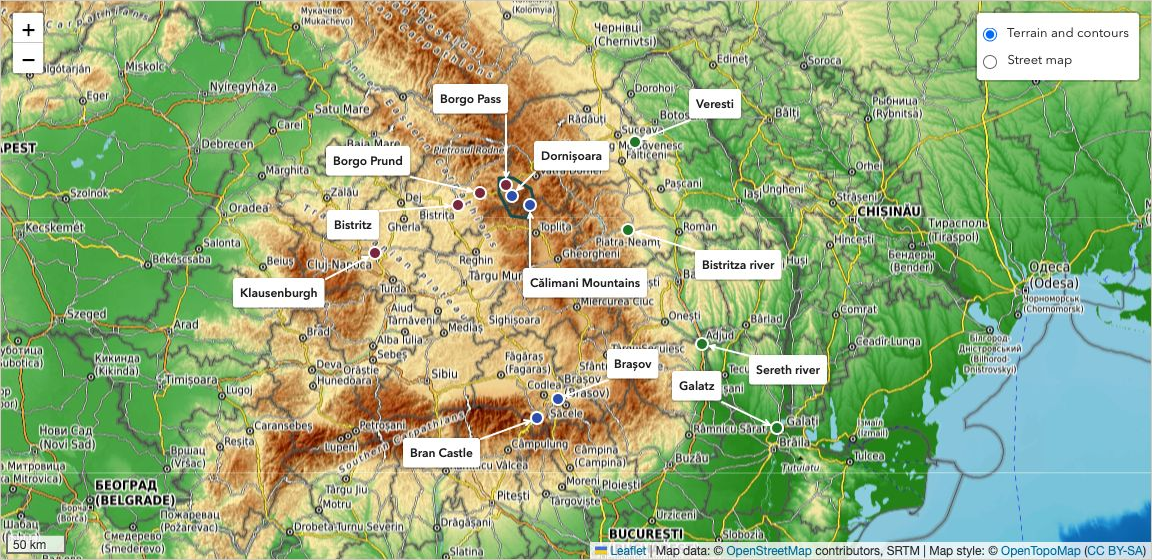
| Chapter | Dates covered | Documents | What happens | Focus for study |
|---|---|---|---|---|
| 23 | 3–4 October | Seward’s diary; Jonathan’s journal | The Count confronted in Piccadilly: “Your girls that you all love are mine already.” Mina asks to be hypnotised at dawn and hears water and sails: the Count is at sea. Key details and passagesAt Piccadilly Jonathan’s knife cuts the Count’s coat, scattering money, rather than destroying him. Dracula escapes and threatens revenge over centuries. Mina’s hypnosis at dawn supplies sounds of water and shipboard activity, not a complete view of the Count’s destination. | His only speech made directly to the men; Mina turns her wound into an instrument. |
| 24 | 4–6 October | Seward’s phonograph diary spoken by Van Helsing; Jonathan’s and Mina’s journals | The Czarina Catherine sails for Varna. Van Helsing explains why the Count has fled and why he must be followed; Mina insists on going with them. Key details and passagesThe opening phonograph diary is spoken by Van Helsing, although the heading names Seward’s recording system. The hunters identify the Czarina Catherine as the ship carrying the Count from London towards the Black Sea, expecting his box to be landed at Varna. Do not confuse this return voyage with the Demeter arriving at Whitby. | Mina’s analytical voice; the shift from defence to pursuit. |
| 25 | 11–28 October | Seward’s diary; Jonathan’s journal; telegram | Mina extracts the men’s promise to kill her if she turns. In Varna; Mina classifies the Count: “a criminal and of criminal type. Nordau and Lombroso would so classify him.” The ship is diverted to Galatz. Key details and passagesThe party travels by the Orient Express to Varna, but a telegram reports the Czarina Catherine entering Galatz. Mina asks the men to destroy her if she becomes a vampire, and calls herself a “train fiend” when she knows the timetable. Her reference to Nordau and Lombroso draws on degeneration theory and criminal anthropology; it should be read as a historically situated explanation, not a neutral diagnosis endorsed by the Estate. Sunrise and sunset give Mina temporary freedom from the Count’s control. Van Helsing uses those moments for hypnosis, although the connection becomes harder to use during the pursuit. | Degeneration theory in the characters’ mouths; the euthanasia promise. |
| 26 | 29 October – 4 November | Seward’s diary; Mina’s journal and memorandum; Jonathan’s journal | At Galatz; Mina’s memorandum, a formal “ground of inquiry”, works out the river route by a process of exclusion; the party divides: launch, horseback, and Mina with Van Helsing by carriage towards the Borgo Pass. Key details and passagesMina reconstructs a probable water route along the Sereth and then the Bistritza towards the Borgo Pass. The hunters divide their routes, while Mina and Van Helsing approach the castle together. Her reasoning combines the documents, transport possibilities and geographical constraints; it is not a location simply revealed to her by hypnotism. | Modern logistics against ancient terrain; the geography of the final chase. |
| 27 | 1–6 November; note seven years later | Mina’s journal; Van Helsing’s memorandum; Jonathan’s journal; Seward’s diary; the final note | The three women destroyed in the castle; the Holy circle; the race to the box at sunset; Quincey’s death; the Count’s face at peace as he crumbles. The note: Quincey Harker, and “hardly one authentic document”. Key details and passagesVan Helsing makes a protective circle with the Sacred Wafer and destroys the three women in their tombs; his memorandum to Seward records that work. Just before sunset Jonathan’s kukri cuts the Count’s throat and Quincey’s bowie knife enters his heart. Quincey dies from his wounds, having seen Mina’s forehead mark disappear. Jonathan’s final note looks back seven years later and commemorates Quincey in the child’s name. Its admission that the record contains hardly an authentic document qualifies the prefatory assurance of exactly contemporary testimony: typed copies can preserve accounts without furnishing publicly convincing original proof. | Endings: restoration, loss and doubt; what the final note asks us to believe. |
Chapter numbers and dates follow the 1897 text as reproduced by Project Gutenberg (ebook 345). A few editions divide chapters differently; check yours. The date inconsistencies within the novel (for example around Lucy’s funeral and the Westminster Gazette report) are the author’s own and are worth a class discussion in themselves.
Chronology and changes of place
The chapter map records the documents, dates, locations and events of all 27 chapters. Follow five movements: the castle; Whitby and London; Lucy’s illness and transformation; the alliance; and the pursuit back to Transylvania.
As you read, keep two timelines: when events happen, and when another character learns about them. Harker’s castle experiences precede Lucy’s illness, but the people treating her cannot yet use his knowledge. The delay between event and disclosure is part of the suspense.
You can use the printable chapter map and timeline (PDF) to make your own sequence.
| Movement | What changes | What to track |
|---|---|---|
| Chapters 1–4: Transylvania | A legal visit becomes captivity. | Jonathan knows the Count’s powers before the English characters do. |
| Chapters 5–9: Whitby and separation | Letters, local observations and the ship’s log connect several locations. | Events overlap. Mina worries about Jonathan while Lucy becomes vulnerable. |
| Chapters 10–16: illness, death and return | Treatment fails; the vampire explanation is tested at Lucy’s tomb. | Compare what Lucy records with what her doctors infer and with what the reader knows. |
| Chapters 17–22: the records and the alliance | Documents are shared and the hunt begins; Mina is then excluded and assaulted. | Notice the difference between possessing information and allowing someone to use it. |
| Chapters 23–27 and the final note: pursuit and aftermath | The Count retreats; transport, deduction and divided journeys converge. | The later family perspective changes the significance of loss and raises the problem of proof. |
The sequence matters as much as the dates. In Chapter 17 the group can read experiences originally kept apart. In Chapters 18–21 a new policy of secrecy recreates that separation. Compare those two decisions before calling the documentary form simply a source of reliable knowledge.
Form and narrative
Track who writes, who knows and how the records reach the reader. Explain what a narrative choice does in a particular passage and how it shapes your interpretation of the novel.
The AP course studies character, setting, structure, perspective and literary argument. For its question formats and scoring, use Chapter C.
Distinguish form, structure and language
- Form. The book presents itself as an assembled documentary record: journals, letters, telegrams, newspaper reports, a ship’s log and transcribed recordings. Calling it epistolary is a starting point, not an explanation of every document’s effect.
- Structure. Ask why one record follows another, when accounts converge and what information is delayed. The castle opening, overlapping English episodes, compilation, separation and pursuit produce different relationships between reader and character.
- Language. Explain a detail of wording in relation to its speaker, medium and moment. A metaphor in Seward’s clinical diary does different work from a warning in a private letter. Word-level analysis becomes stronger when it explains the larger narrative decision.
Their assessment requirements differ, but both reward explaining how a text works.
Narrative terms at a glance
First-person narration and free indirect discourse. Jonathan, Mina and Seward directly narrate their own experiences. Free indirect discourse is usually used for third-person narration that adopts a character’s idiom or perspective. It is less useful than close attention to the particular diary, letter, cutting or memorandum here; the novel also contains third-person newspaper reporting, so it is misleading to say it contains no third-person voices at all.
Documents within documents. The Demeter log reaches us through a translated newspaper report pasted in Mina’s journal. Van Helsing speaks the phonograph entry at the start of Chapter 24. His memorandum records the castle work in Chapter 27. The Count has no independent diary in the collection: even his first letter is reproduced inside Jonathan’s journal.
Beginning and end. Compare the prefatory claim that the chosen records are exactly contemporary with the final note’s difficulty in presenting authentic original documents. A typescript may preserve accounts while altering their material status as evidence. See the Chapter 27 detail and the final note in the novel.
Homodiegetic narration. The narrator is also a character in the story being told, as Jonathan, Mina and Seward are. The term identifies the narrator’s position; it does not establish whether an account is accurate.
Epistemic modality. Wording that expresses how certain a speaker is about a claim. Attend to phrases such as “I believe” or “it seemed”, and explain how that degree of certainty shapes the reader’s knowledge.
Gothic, terror and horror
Gothic and horror. Gothic names a literary tradition associated with threatening places, secrets, captivity, disturbing desires and the return of the past. Horror can name a genre or a disturbing effect. Dracula uses Gothic conventions to create several effects, including suspense, fascination, terror and horror.
Radcliffe’s distinction is between terror and horror. In “On the Supernatural in Poetry” (1826), Ann Radcliffe presents terror as an experience that “expands the soul”, engaging the imagination through uncertainty. Horror, by contrast, “contracts, freezes, and nearly annihilates” the faculties. Her concern is how a scene acts on its reader, rather than a simple division between two genres.
| Effect | How it can be produced | A Dracula passage to test |
|---|---|---|
| Terror | Anticipation, obscurity and incomplete knowledge let the imagination dwell on an approaching danger. Restricted narration and delayed explanation can sustain it. | Jonathan explores the castle without knowing the Count’s purpose or whether escape is possible (Chapters 2–4). Analyse what his journal reveals and withholds. |
| Horror | Confronting a dreadful presence or event can produce shock, revulsion or a sense of paralysis. Explicit bodily description and sudden revelation can contribute. | The violence of Lucy’s staking (Chapter 16). Examine how Seward’s description makes the bodily event immediate, and how its vocabulary also presents the killing as release. |
A scene can move between these effects or produce both. Use the distinction to explain a particular choice of language, narrative perspective or pacing; naming a passage “terror” or “horror” does not itself analyse it.
Who speaks, records, reads and edits?
| Record | Perspective and access | What to investigate |
|---|---|---|
| Jonathan’s journal | A professional visitor writes in shorthand from confinement. | How do practical detail and self-doubt make an impossible experience credible? |
| Mina’s journal and letters | A friend, wife, worker and investigator records changing situations. | How does her role develop from observer to organiser, and who can read her work? |
| Lucy’s letters and memorandum | Private humour gives way to an urgent account of an attack. | What changes when other people become the main narrators of her body and death? |
| Seward’s phonograph diary | A doctor records observation, grief, judgement and uncertainty. | Where does clinical confidence obscure what Renfield is trying to communicate? |
| The Demeter’s log | A captain records disappearances before the record is recovered by others. | How do shrinking numbers and repeated dates transform a routine log into a closed-space horror story? |
| News reports, business letters and telegrams | Public and commercial documents circulate fragments of the story. | What can their writers verify, and what connections must the reader supply? |
| Van Helsing’s speech and records | Much of his knowledge reaches us through another person’s transcription; Chapter 24 also presents his phonograph statement. | How does quoted expertise differ from an independent all-knowing narrator? |
A first-person record can include several voices. Renfield’s speech in Seward’s diary is still selected and framed by Seward. Dracula’s dialogue in Jonathan’s journal does not give the Count control of the whole narrative.
Voices on the page: accent, dialect and authority
Why do voices matter in a novel made of documents? Speech in Dracula usually reaches us through a narrator’s record, so the way a character talks is also evidence about who is listening, what they choose to keep and how much authority they grant the speaker.
The Count: English learned from books. The Count’s English is learned, formal and sometimes archaic, and he knows it: “True, I know the grammar and the words, but yet I know not how to speak them” (Chapter 2). He asks Harker to “tell me when I make error, even of the smallest, in my speaking” (Chapter 2). Voice here is a matter of power, not just accuracy. He wants to pass unnoticed in London because “I have been so long master that I would be master still” (Chapter 2). Ask: what does it mean that the novel’s invader wants to sound exactly English, while its chief defender, Van Helsing, never does?
Van Helsing: authority in non-native English. The professor’s English is full of displaced word order and unidiomatic forms, such as “Friend John, I pity your poor bleeding heart; and I love you the more because it does so bleed” (Chapter 13). Yet he holds the greatest intellectual authority in the group, as in “it is the fault of our science that it wants to explain all” (Chapter 14). Readers disagree about whether his speech is comic, endearing or a sign that real knowledge comes from outside England. Test each view against a long speech, such as his lecture in Chapter 18.
Mr Swales: Yorkshire dialect and a sceptical voice. Mina records the old Whitby sailor in phonetic dialect: “It be all fool-talk, lock, stock, and barrel; that’s what it be, an’ nowt else” (Chapter 6). He calls the gravestones “Lies all of them, nothin’ but lies of one kind or another!” (Chapter 6). Notice the frame: Mina writes, “I must try to remember it and put it down” (Chapter 6). A sceptical local voice, sceptical about inscriptions, survives only because an educated woman transcribes it. Swales dies soon afterwards, in Chapter 8.
Quincey Morris: performed American slang. Quincey’s proposal reaches us through Lucy’s letter: “I guess if you wait till you find a man that is you will go join them seven young women with the lamps when you quit” (Chapter 5). Lucy tells Mina that he uses slang only because “he found out that it amused me to hear him talk American slang” (Chapter 5), so his voice is partly a performance for a listener. Compare his blunt “Man alive, her whole body wouldn’t hold it” (Chapter 12), when he alone questions the transfusions.
The zookeeper: a Cockney comic interlude. The Pall Mall Gazette interview gives the keeper, Thomas Bilder, a London working-class voice and a joke at women’s expense: “you can’t trust wolves no more nor women” (Chapter 11). The comedy sits beside the night of the wolf attack and her mother’s death (the same chapter ends with her memorandum). Ask what the shift of tone does to the reader’s fear.
What to do with this in an essay
Name the voice precisely (for example phonetic dialect, non-standard syntax or formal archaic register) and then say who is recording it.
Link the voice to authority: whose speech is corrected, mocked, admired or simply believed?
Avoid treating a dialect speaker as “just comic relief”. Explain what the novel gains from the contrast.
Try it: take one speech by Van Helsing and one by Mr Swales. For each, write two sentences: the first on a feature of the language, the second on what the documentary frame does to that feature.
Limited knowledge and dramatic irony
Distinguish what the character knows at the time, what the later recorder knows, and what a reader can infer by combining documents. A narrator can be sincere and observant while lacking the information needed to explain an event. “Unreliable” should name a demonstrated problem, not stand for every limited perspective.
In Chapter 7, the captain cannot explain the losses aboard the Demeter. Readers who have encountered the Count at the castle have an advantage over him. The horror comes partly from watching his practical explanations become inadequate. The ship’s record also gives anonymous deaths an accumulating pattern.
In Chapters 18–21, keeping Mina outside the investigation creates a different inequality. Readers have already seen the value of her knowledge and can measure the danger of excluding her. Explain the sequence and its consequences before attaching a general claim about gender.
Time, pace and changing settings
The novel does not maintain one uninterrupted viewpoint. Dates overlap, letters arrive after experiences have occurred and characters read records later than the events they describe. Chapter 17 changes the plot by making earlier private experiences collectively available.
- Confinement. Chapters 1–4 limit Jonathan’s movements and sources of information. Repeated discoveries revise what he thought the castle was.
- Alternation. The English episodes move between Whitby, households and the asylum. The reader can connect disturbances that remain separate for the characters.
- Compression. Telegrams, short entries and transport details can accelerate the action. A diary pause may interrupt that momentum with grief, doubt or reflection.
- Convergence. The final pursuit separates the hunters into routes and brings their movements together near sunset. Location and timing become conditions of the ending, rather than background scenery.
Use the chapter map to compare event order with disclosure. Avoid claiming that every date is perfectly consistent: the constructed record contains small chronological tensions.
Mina’s compilation: cooperation and control
Transcribing the phonograph and typing the journals makes information shareable, searchable and comparable. It changes what the group can do. The records are material objects that can be copied, withheld or destroyed, not just a convenient way for Stoker to tell a story.
Ask what compilation leaves out. The opening assurance that irrelevant material has been removed invites trust while revealing selection. Mina’s labour gives her authority, but most of the sustained records still belong to the hunters. The Count, Renfield and working witnesses have unequal access to the written account.
For research on media, compare Jennifer Wicke with Alexander Lehner. The working notes offer a different record: evidence of Stoker planning a fiction, rather than evidence produced by characters inside it.
The opening frame and the final note
The prefatory assurance asks us to receive the documents as contemporary testimony. The final note, written seven years after the events, questions whether their assembled form would count as proof. Read those claims together: narrative completeness and external verification are different things.
The child Quincey offers continuity after the American’s death, while the return to family memory changes the status of the record. A conclusion might argue for restoration, for unresolved uncertainty, or for both in different respects. It should explain the tension rather than choose the happiest or darkest detail alone.
From identifying a feature to analysing a method
Brief observation: Seward uses a phonograph, which is modern technology.
Developed analysis: Seward’s phonograph initially stores his experience in a medium the others cannot consult as easily as shared pages. When Mina transcribes it, she turns a private voice into part of the common record. The change in medium therefore produces a change in power: evidence can be placed beside other accounts, while the work of making it available gives Mina a practical authority that the men later restrict. The device matters because of what the plot makes people do with it.
The developed version links medium, action, knowledge and a qualified interpretation. Apply the same method to one feature of the Demeter log or Lucy’s memorandum. Use the essay-writing steps to turn the observation into an answer to a specific question.
Passage analysis and whole-novel argument
AP Question 2 supplies an unfamiliar prose-fiction passage and asks for analysis of how its literary choices create meaning. Question 3 instead draws on a work you know, without supplying its text. A studied Dracula passage is valuable practice, but it is not “unseen” once you know it.
For preparation, choose a short passage from Jonathan’s journal or Seward’s diary. Trace a change in understanding, select precise details and explain how viewpoint and sequence produce that change. Then test the same approach on an unfamiliar passage in Chapter F.
These are Estate practice suggestions. Official AP questions and reader guidance are linked in Chapter C.
Follow the evidence further
The Estate example essay on Gothic traditions and narrative form places these methods in literary history. Compare the documentary witnesses in Collins, then use the Bibliography and Research guide for further work.
Return to characters, chronology and chapters · Compare narrative methods across two works.
Reflect back on your reading
Form and narrative explains point of view, sequence and editing in detail. Comparison develops paired reading; University study and research adds critical books and archive routes.
Where next?
Prepared by the Bram Stoker Estate. Page last updated 8 November 2026. Report a correction here.